
Gutter & Downspout Calculator

Skip links

Gutter & Downspout Calculator

Estimate gutter and downspout scope and budget in minutes.

US Construction

Gutter Summary

Gutter Material--
Gutter Style--
Gutter Size--
Stories--
Access--
Roofline Length--
Downspout Count--
Downspout Height--
Quantity--
Total Gutter Length--
Total Downspout Length--
Estimated Hangers--
Gutter Guards Included--
Removal Included--
Splash Blocks Included--
Permit Included--
Estimated Total--
Estimated Budget Range--
Estimates: This range is based on gutter dimensions, material, access, and selected options. Final pricing is provided in the emailed estimate after you continue.

Using a gutter downspout calculator can save time, but the output only helps when your inputs match the roof you actually have. This guide shows what to measure, how to read the results, and how to turn the numbers into a plan that moves water away from the home.

Quick checklist:

  • Decide the scope: cleaning, repair, guards, or full replacement.
  • Confirm gutter size/material and how many downspouts you need for runoff.
  • Plan downspout discharge and drainage so water moves away from walls, stairs, and the foundation.
  • Ask whether fascia/rot repair is included and how corners/seams will be sealed.
  • Compare 2–3 itemized quotes (linear feet, downspouts, guards, disposal, warranty).
  • Schedule around weather and run a hose test at the final walkthrough.

You can use the Gutter & Downspout Calculator developed by US Construction & Remodeling Corp. for free on the Gutter & Downspout Calculator page.

TL;DR: Run the calculator, then double-check roofline length, corners, valleys, and where each downspout will discharge. When the discharge is wrong, even “correct” sizing can still overflow or splash back toward the foundation.

  • Sketch your roofline and measure each gutter run (not just roof area).
  • Count corners, end caps, and places where water concentrates.
  • Choose where every downspout will exit and where it will send water.
  • Pick a gutter profile and material that fit the home’s exterior.
  • Select downspout size based on flow and outlet placement.
  • Plan for cleaning access or a gutter guard option.
  • If anything is unclear, get a site measurement before you buy materials.

Common Pain Points With Gutter &Amp; Downspout Calculator (And Fixes) For Gutter Downspout Calculator

A calculator is also a solid starting point for planning gutters and downspouts, especially when you want to estimate sizing before you talk to an installer. That said, you’ll get better results when you treat the gutter downspout calculator as a draft and verify a few real-world details.

Measuring Roof Area But Not The Gutter Runs

Roof area estimates how much water can hit the system, while linear feet and corners drive how the system is built. For example, Fix: measure each gutter run, count corners, and note long runs that may need an additional outlet.

Ignoring Valleys And Steep Sections

Valleys concentrate water, and steeper roof planes deliver it faster. As a result, Fix: mark any valley that drains into a single gutter section so you can plan outlet spacing and downspout placement around that high-flow spot.

Forgetting Where The Water Will Go

A downspout only solves the problem if it discharges safely. Also, Fix: decide up front whether you’ll use downspout extensions, splash blocks, or another approved drainage solution where applicable.

Assuming Bigger Gutters Fix Everything

Capacity helps, but sagging hangers, poor slope, clogged outlets, and bad seams still cause overflow. Meanwhile, Fix: confirm fascia condition, maintain consistent pitch toward outlets, and use the right hangers and sealants for the material.

If you want an installer to validate your measurements, bring your sketch and your calculator output to an on-site visit. Overall, It’s a fast way to avoid buying the wrong mix of parts.

Planning, Budget, And Materials

This checklist turns calculator results into decisions you can compare across bids. You’ll also know what questions to ask before a crew shows up with materials that don’t match your roofline.

Gutter Runs And Downspout Placement

  • Keep long, uninterrupted runs in check with enough outlets, especially under valleys.
  • Avoid placing downspouts where they dump onto walkways, patios, or directly at the foundation.
  • Confirm the discharge path for every downspout (extensions, splash blocks, or drainage tie-in where allowed).
  • Plan for cleanout access at elbows and tight corners if clogs are a concern.
  • Think about aesthetics: downspouts can blend with trim, but they still need to function.

What Changes Performance

Material choices affect durability, appearance, and how often you’ll need maintenance. Additionally, Here are common options and the practical trade-offs.

  • Aluminum gutters: common, lightweight, and available in many colors; ask about thickness and hanger spacing on long runs.
  • Steel gutters: tougher in impact areas; protect coatings and watch for rust if the finish gets damaged.
  • Copper gutters: premium look; use compatible fasteners and plan details to avoid staining or galvanic issues.
  • Downspouts: size and shape matter as much as gutter size; larger downspouts move water better when discharge is planned.
  • Gutter guards: reduce debris in many situations, but they are not “set and forget,” especially near valleys.
DecisionCommon optionsWhat it changes
Gutter profileK-style or half-roundCapacity, look, and mounting details
MaterialAluminum, steel, copperDurability, finish, and maintenance
OutletsOutlet size and countOverflow risk and where water exits
DischargeExtensions, splash blocks, drainsFoundation protection and erosion control
Debris controlOpen gutters or guardsCleaning frequency and ladder time

What Typically Drives Cost

  • Total linear footage, corners, and stories (access and ladder time).
  • Material choice, color matching, and profile complexity.
  • Downspout count, size, and the discharge plan (extensions or drainage work).
  • Fascia or rafter-tail repairs discovered when old gutters come down.

Smart Runoff Storage (Optional)

If you want to capture water for landscaping, plan it early. For this reason, A rain barrel still needs an overflow route so heavy storms don’t back up into the gutter, and the overflow should discharge away from the foundation.
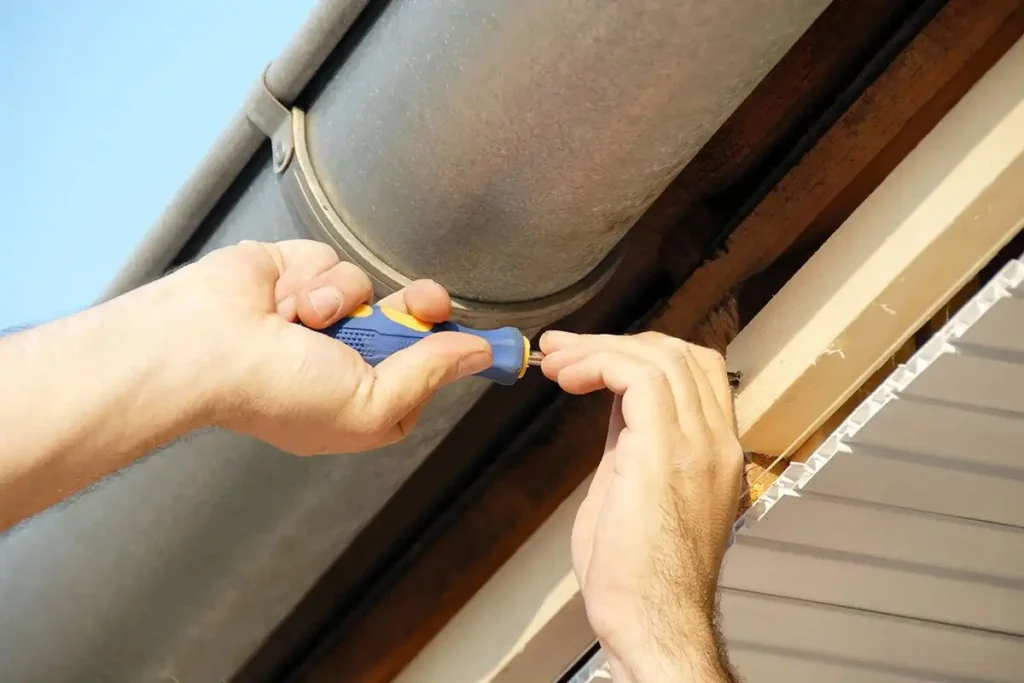

construction gutters system

Timeline And Permit Considerations For Gutter Downspout Calculator

Across California, gutter work often moves quickly once sizing, materials, and discharge routes are decided. In addition, The timeline usually stretches when you discover fascia repairs, need custom fabrication, or change drainage paths that require extra coordination.

What A Professional Install Should Include

  1. Review your calculator inputs and confirm how you measured roofline and outlets.
  2. Measure every run and corner on site, and inspect fascia for soft spots or rot.
  3. Confirm the downspout discharge plan and identify any problem areas near doors, walkways, or the foundation.
  4. Select gutter profile, material, color, hangers, and any guard system.
  5. Provide a written scope that lists linear feet, downspout count/size, and discharge details.
  6. Install with consistent pitch to outlets, secure hangers, and clean seams.
  7. Run a water test and review maintenance expectations with the homeowner.

Budget Ranges & Timeline (Typical)

  • Scheduling: straightforward replacements often fit into a short install window once materials are selected.
  • Duration on site: many homes can be completed in a day; complex rooflines or repair work can add time.
  • Biggest budget drivers: linear footage, access height, material choice, and downspout routing.

Permits aren’t always required for like-for-like gutter replacement, but the rules depend on jurisdiction and what you’re changing. Also, If you’re altering drainage paths, tying into a storm system, or doing structural fascia work, confirm requirements with the local building department and put permit responsibility in writing.

How To Avoid Costly Mistakes

The most expensive gutter problems show up after the first serious storm. As a result, You can avoid most of them by using the gutter downspout calculator as a planning tool, then verifying the physical details before installation day.

Common Mistakes Homeowners Make

  • Buying materials based on roof area while ignoring long runs with no outlets.
  • Placing downspouts where they dump water onto patios, walkways, or landscaping beds that erode.
  • Mounting new gutters to compromised fascia without repairs.
  • Mixing metals in gutters, fasteners, and hangers without checking compatibility.
  • Assuming gutter guards mean zero maintenance.
  • Skipping a final water test to confirm pitch, outlets, and leak-free seams.

Hypothetical Before/After Example (Based On A Common Scenario)

Before: A homeowner runs the calculator and plans one downspout at each end of a long run. Additionally, The number looks reasonable, yet a roof valley feeds that run and overwhelms the nearest outlet during heavy rain.

After: A site check spots the valley and adjusts the plan: an added outlet near the high-flow area, a larger downspout at that outlet, and a discharge route that moves water away from the foundation. Overall, The materials list changes a bit, and the finished system performs better in real weather.

If you’re not sure whether your layout will perform, get the outlet and discharge plan reviewed before you buy parts. Additionally, A short consult now can prevent rework later.

home additions man and woman inspecting their future wooden frame

Next Step For Homeowners In Sacramento

US Construction & Remodeling Corp. Additionally, helps Sacramento homeowners turn a calculator estimate into a buildable gutter and downspout plan—measured on site, matched to the roofline, and routed so water discharges where it won’t cause problems.

Free estimate to confirm your gutter sizing and downspout layout, or call +1 (916) 234-6696 if you’d rather talk through options.

Online Permitting And Tracking

For some scopes in Sacramento, permit applications and status tracking typically run through the City of Sacramento Accela Citizen Access portal. As a result, Requirements can vary by address and scope, so confirm early whether any approvals apply to drainage changes and who will handle submittals.

Practical Trust Checks Before You Hire

  • License verification: confirm the contractor’s status with the California Contractors State License Board and make sure the classification matches the work.
  • Insurance: ask for current proof of liability coverage and workers’ compensation where required.
  • Scope clarity: expect a written scope that lists linear feet, profile/material, downspout count/size, and discharge plan.
  • Permit responsibility: clarify in writing who pulls permits if the scope requires them.
  • Workmanship checks: look for consistent pitch, solid hanger attachment, clean seams, and a final water test.
  • Communication: agree on a point of contact and how changes are approved before work starts.

Helpful Links

Frequently Asked Questions

It estimates sizing needs based on the information you enter, such as roof area assumptions and outlet choices. Use it as a planning draft, then verify roofline length, corners, valleys, and discharge routing before you order materials.

If the discharge plan is incomplete, the system can still overflow or dump water in the wrong place even when the “math” looks right.

Gather a few field measurements so the output reflects your actual roof conditions:

  • Linear feet of each gutter run and number of corners
  • Roof features that concentrate water (valleys and steep sections)
  • Current or planned downspout locations and where each will discharge
  • Number of stories and any access constraints
  • Any areas with past overflow, staining, or erosion

Place downspouts based on water flow and safe discharge, not just symmetry. Long runs often perform better with more than two outlets, and valleys may need an outlet nearby.

  • Prioritize high-flow areas under valleys
  • Keep discharge away from foundations and walkways
  • Plan extensions or splash blocks where needed
  • Consider how downspouts blend with trim while still staying accessible

The biggest cost drivers tend to be total linear footage, home height/access, material choice, downspout count/size, and how water is routed after it leaves the downspout.

Condition matters too. Fascia repairs, hanger upgrades, and replacing damaged sections can change the scope once old gutters come off.

It depends on your jurisdiction and scope. Like-for-like replacement may be straightforward, while drainage changes, storm system tie-ins, or structural repairs can trigger approvals.

Check with your local building department early, and confirm in writing who is responsible for any permits and inspection scheduling.

Ask for a written scope and verify the basics before work begins:

  • Confirm license status through CSLB
  • Request proof of insurance (liability and workers’ compensation where required)
  • Review a scope that lists linear feet, materials, downspouts, and discharge plan
  • Clarify permit responsibility and change-order rules
  • Expect a final water test and walkthrough of workmanship details

Licensed, insured & trusted local contractor

US Construction & Remodeling Corp.
9821 Business Park Dr, Sacramento, CA, 95827
Phone: +1 (916) 234-6696

CSLB License #: 1117562 Fully licensed and insured.

View our Google Business Profile

This website uses cookies to improve your web experience.
Explore
Drag