

Skip links

Kitchen Remodeling Cost in San Francisco: Budget + Timeline Guide

Pricing out Kitchen Remodeling cost in San Francisco usually comes down to two questions: will you keep the layout. And how far are you upgrading finishes? This guide breaks downkitchen remodel cost remodeling ranges by scope, the decisions that move the number, and what a realistic timeline looks like.

Quick checklist:

  • List the biggest cost drivers for your scope (layout changes, finishes, plumbing/electrical work).
  • Confirm what work is involved and the order of operations.
  • Finalize measurements and key selections before ordering long-lead materials.
  • Collect 2–3 quotes and compare line-by-line (scope, allowances, cleanup, warranty).
  • Create a simple schedule and pre-order the items that most often cause delays.

TL;DR: Keeping plumbing, gas, and walls where they are typically saves the most money and time. Cabinets and labor often drive the budget, while permitting and lead times drive the schedule. If you want a tailored range for your exact kitchen, schedule a site-based estimate.

  • Choose your scope: refresh, mid-range, or full gut
  • Decide early: keep the layout or change it
  • Confirm appliance specs before cabinet ordering
  • Set clear allowances for cabinets, counters, and fixtures
  • Plan for permits/inspections if trades or structure change
  • Hold a 10–15% contingency for hidden conditions

Free estimate, or call +1 (916) 234-6696.

Kitchen Remodeling In San Francisco Budget Planning Guide In San Francisco For Kitchen Remodel Cost Remodeling

When homeowners ask about Kitchen Remodeling pricing in San Francisco. As a result, They’re usually trying to avoid two pain points: a budget that drifts mid-build and a schedule that keeps shifting. You can reduce both by locking the scope early, choosing materials on a realistic lead-time. And keeping a contingency for the unknowns behind walls or under floors.

Cost Drivers That Move The Needle

  • Layout changes: Moving plumbing, also gas, electrical, or walls tends to raise labor and often triggers more inspections.
  • Cabinet level: Stock vs semi-custom vs custom changes both price and ordering time.
  • Countertop material: Slab choices, edge details, and fabrication complexity can swing the number fast.
  • Electrical scope: New lighting plans, added circuits, or panel-related work can add meaningful cost.
  • Access and protection: Stairs, tight entries, and required surface protection add labor hours.

Who This Guide Is For

  • Homeowners comparing a cosmetic update versus a full gut remodel
  • Anyone trying to prioritize cabinets, counters, lighting, and layout without overspending
  • Owners who want a week-by-week expectation before they commit to dates

Typical Price Ranges By Scope Level

Below are realistic planning ranges for San Francisco. Also, Your final price depends on the exact scope, selections, and site conditions. So use these numbers as a budgeting tool—not a substitute for a detailed, written estimate.

  • Cosmetic refresh (layout stays): $35,000–$65,000. For this reason, New paint, lighting updates, flooring, minor electrical/plumbing work, and countertops/backsplash in many cases.
  • Mid-range remodel (selective rework): $65,000–$120,000. In addition, New cabinets, improved lighting plan, updated counters/backsplash, and targeted rough-trade changes.
  • Full gut / layout change: $120,000–$250,000+. Overall, Relocated plumbing/gas, potential structural work, higher-end cabinetry, and more extensive inspections.

If you’re comparing options, a helpful way to think about kitchen remodel cost remodeling is to separate scope (what changes) from finish level (what you choose). Meanwhile, Keeping scope tight while choosing durable finishes is often the best value.

Major Line Items (Sample)

Line itemTypical rangeWhat moves itSchedule impact
Design + measurements$2k–$8kDetail level, revisions, engineering needs1–3 weeks
Demolition + site protection$3k–$10kAccess, disposal, protection requirements2–5 days
Rough trades (plumbing/electrical)$8k–$25kRelocations, added circuits, lighting plan complexity1–2 weeks
Cabinets$15k–$60kStock vs custom, layout, accessoriesLead time varies
Countertops + backsplash$6k–$20kMaterial, slab count, edge/detail workTemplate + install 1–2 weeks
Flooring + paint$4k–$15kSubfloor repairs, material choice3–7 days
Permits + inspections$1k–$5kScope, plan review requirementsVaries
Contingency10–15% of budgetHidden conditions, scope decisionsBuffers changes

Want a clean range tied to your actual kitchen and priorities? Free estimate and we’ll walk through scope options and material tiers.

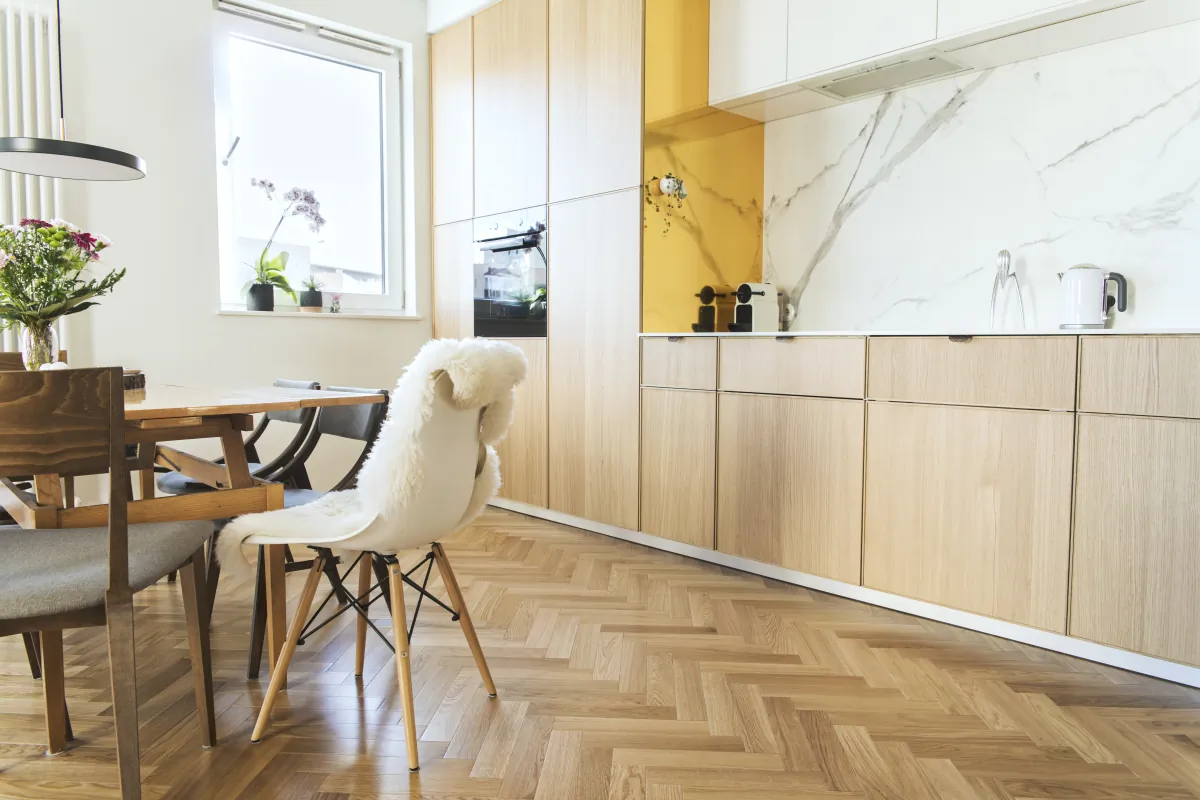
kitchen flooring slim caucasian female cook countertop

Trade-Offs: Finishes Vs Layout Changes

Two kitchens can have the same footprint and still land at very different budgets. For example, The difference usually comes from whether you’re investing in finish upgrades (materials you see and touch) or layout changes (work you don’t see that takes time and inspections).

Upgrades That Feel Big Without Moving Walls

  • New cabinet fronts or new cabinet boxes (depending on condition)
  • Countertop + backsplash upgrade with a coordinated lighting plan
  • Better task lighting and under-cabinet lighting
  • Storage improvements like pull-outs and organized drawer systems
  • Fresh flooring and paint to unify the space

Changes That Add Cost And Time (And Why)

  • Relocating plumbing or gas: Rough-trade labor rises, and inspections often become more involved.
  • Electrical rework: New circuits, appliance loads, and lighting layouts can expand quickly.
  • Opening walls: Great for flow, but it can uncover framing changes and additional documentation needs.
  • Ventilation changes: Duct routing and equipment choices affect both labor and coordination.

What To Prioritize

A kitchen remodel can support resale, but ROI depends on your finish choices, your buyer pool, and market conditions. In addition, For most homeowners, the safest approach is to prioritize function and durability over highly personalized details.

  • Function first: clear work zones, enough outlets, and comfortable clearance around key paths.
  • Durable surfaces: counters and floors that handle real cooking without constant maintenance.
  • Timeless coordination: consistent hardware, lighting temperature, and a simple color palette.
  • Documented work: keep product manuals and any inspection sign-offs you receive.

How To Avoid Change-Order Surprises

Change orders aren’t always a problem—sometimes you discover a better option once you see the space opened up. Meanwhile, The issue is when changes happen because key decisions weren’t made early, or because the scope wasn’t documented clearly.

Practical Ways To Reduce Budget Drift

  • Finalize appliance specs early so cabinet and electrical plans match reality.
  • Use written allowances for cabinets, counters, fixtures, and tile so the budget reflects your taste level.
  • Confirm what stays vs goes (windows, soffits, flooring transitions, and paint scope).
  • Plan for lead times before demo so the kitchen isn’t waiting on a key delivery.
  • Protect the contingency for hidden conditions; don’t spend it on wish-list upgrades on day one.

Common Mistakes Homeowners Make

  • Ordering cabinets before the final layout and appliance list are locked
  • Picking finishes as you go, which creates rework and delays
  • Skipping a lighting plan and ending up with too few task lights
  • Underestimating the impact of “small” layout moves on trades and inspections
  • Assuming every existing surface is level and square without verification

Milestones You Can Plan Around (High Level)

  • Pre-build: scope + selections + ordering (often 2–8+ weeks depending on decisions and lead times)
  • Jobsite week 1: protection + demolition + rough-in discovery
  • Mid-build: rough trades, inspections (as required), then drywall/patch and paint prep
  • Finish phase: cabinets, countertops, backsplash, flooring touch-ups, fixtures and trim
  • Closeout: punch list, final checks, cleanup, and handoff

If you’re aiming for a firm kitchen remodel cost remodeling number, the fastest path is a site visit plus a clear list of selections or allowances. Also, Book online, and we’ll help you structure the scope so the price holds.

kitchen flooring stylish scandinavian open space interior of kitche

Planning, Build, And Closeout

Kitchen remodel timelines in San Francisco vary based on scope, lead times, and whether permits are necessary. Also, Even with the same finish level, a layout change usually adds steps because it affects rough trades and inspections.

Typical Timeline By Phase

  • Site visit + scope alignment: 1 week. Measurements, constraints, and options review.
  • Selections + documentation: 1–4+ weeks. For example, Cabinets, counters, fixtures, lighting, and any drawings needed to price accurately.
  • Permitting (when required): timing varies. For example, Plan review and inspections can add time depending on scope.
  • Ordering + lead time: often overlaps with permitting. For example, Cabinets and specialty materials can be the pacing item.
  • Construction: commonly 4–10+ weeks depending on scope and coordination.
  • Closeout: 1–2 weeks for punch list, final checks, and handoff items.

Week-By-Week Build Snapshot (Hypothetical Example)

This is a hypothetical example to make the sequence easier to picture. Additionally, Your kitchen may move faster or slower based on scope and lead times.

  • Week 1: protection, demolition, initial rough-in assessment, confirm any field adjustments
  • Week 2: rough plumbing/electrical, ventilation work, inspections as required
  • Week 3: drywall/patch, prep for paint, flooring coordination
  • Week 4: cabinet install, ongoing trim and paint work
  • Week 5: countertop template and fabrication window, backsplash prep
  • Week 6: countertop install, backsplash, fixtures, electrical finish, punch list

Permits And Inspections In San Francisco

Permits and inspections are commonly needed when a kitchen remodel includes structural changes or modifications to plumbing, gas, electrical, or ventilation. For example, For San Francisco projects, the Department of Building Inspection (DBI) provides online permit tracking. And some common residential scopes may qualify for faster or online processes depending on the details.

  • Often permit-triggering work: moving plumbing/gas, adding circuits, relocating walls, or changing ventilation paths
  • Typically simpler scopes: finish-only work that doesn’t alter rough trades (still confirm based on your scope)
  • Inspections: scheduled around rough-in and completion checkpoints when applicable

What To Verify Before You Sign Off

  • Punch list items are completed and documented
  • All fixtures and appliances operate correctly
  • Cabinet doors/drawers align, and hardware is tightened and consistent
  • You receive product manuals and care instructions for installed materials
  • Any applicable inspection sign-offs are provided or confirmed

US Construction & Remodeling Corp. For example, helps San Francisco homeowners plan scope, pricing, and timing with fewer surprises. Free estimate (preferred), or call +1 (916) 234-6696.

How To Estimate Kitchen Remodel Cost Remodeling In San Francisco

To get a price that holds, bring clarity to the parts that usually change: layout decisions. Appliance specs, and finish levels. Additionally, When you can’t pick exact products yet, allowances keep the estimate realistic without forcing rushed choices.

  • A simple wish list: what must change vs what can stay
  • Appliance spec sheets (or links) with exact sizes
  • Photos of the current kitchen, plus any problem areas
  • Your preferred cabinet tier (stock, semi-custom, custom) and target finish level
  • Any building/HOA requirements that affect working hours or protection

Helpful Links

Frequently Asked Questions

Size matters, but scope matters more. A small kitchen that keeps the layout can still land in the $35,000–$65,000 planning range, while a small kitchen with relocated plumbing/gas or major electrical work can move into higher tiers. The cleanest way to narrow it down is to decide whether the layout stays and what cabinet tier you want.

Cabinets and labor are often the biggest drivers. Cabinets vary widely by tier and configuration. While labor rises when you change the layout, add lighting/circuits, or need more coordination between trades. Countertops can also swing the budget quickly depending on material and fabrication details.

Many projects have two timelines: pre-build (selections, ordering, and any permitting) and construction (demo through closeout). Construction commonly runs 4–10+ weeks depending on scope. Layout changes and permit needs can extend the schedule, while finish-only updates often move faster.

Often, yes—especially if you move plumbing, gas, electrical, walls, or ventilation. Finish-only work may be simpler, but the right answer depends on the exact scope. San Francisco DBI provides online permit tracking, and inspections are scheduled around key checkpoints when applicable.

  • Keep the layout if you can
  • Lock appliance specs before cabinet ordering
  • Use written allowances for big selections
  • Plan lead times before demolition
  • Hold a 10–15% contingency for hidden conditions

When you want a tighter number, schedule a site visit so the estimate matches the real conditions and your finish level.

Many homeowners do, but expect disruption. You’ll likely be without a full kitchen for a portion of the build. And there will be noise and dust despite protection. A temporary cooking setup (microwave, hot plate, and a dishwashing plan) helps. If you have tight schedule needs, discuss phasing and milestones early.

Licensed, insured & trusted local contractor

US Construction & Remodeling Corp.
9821 Business Park Dr, Sacramento, CA, 95827
Phone: +1 (916) 234-6696

CSLB License #: 1117562 Fully licensed and insured.

View our Google Business Profile

Start with the pillar guide

For a complete overview (scope, timeline, and planning tips), see our main page: Kitchen Remodeling.

Leave a comment

This website uses cookies to improve your web experience.
Explore
Drag