Skip links

Solar Panels Contractor In Davis

Hiring a solar installer should feel straightforward, but the details that affect cost and timing usually live in the fine print. If you’re comparing a solar panels contractor davis homeowners can hire with confidence, this checklist helps you vet companies, understand the rough permit path, and lock in a realistic schedule before signing.

Quick checklist:

  • Verify roof condition first; plan reroof timing before installing panels.
  • Size the system from real kWh usage and shading, not just panel count.
  • Compare inverter options (microinverters vs string + optimizers) and monitoring.
  • Confirm permitting and utility interconnection responsibilities and timeline.
  • Review the contract (warranties, production assumptions, exclusions, roof penetrations).
  • Confirm any electrical panel upgrades and inspection steps.
  • Verify license/insurance where required, and compare bids line-by-line (allowances, exclusions, change orders).

TL;DR: Pick the contractor who can explain the steps in writing—design, permitting, installation, inspection, and final approval—then communicate updates without you chasing them. Also, insist on a site visit and an itemized scope so your “quote” doesn’t turn into change orders later. Want to confirm your timeline? Book a planning call at Free estimate or call +1 (916) 234-6696.

  • Confirm the company’s active license and insurance match the contract name.
  • Ask who pulls permits and who schedules inspections (get it in writing).
  • Require a site visit before accepting a final price or design.
  • Get a written timeline with clear milestones (design → permits → install → inspection → final approval).
  • Clarify roof repair and electrical upgrade assumptions upfront.
  • Match payment milestones to completed work, not calendar dates.

Permits, Timeline, And What To Expect

DecisionWhy it mattersQuick check
Roof conditionInstalling over an aging roof risks rework later.Inspect first and plan reroof timing if needed.
System sizeDetermines cost and energy offset.Size from real kWh usage and shading.
Inverter typeAffects monitoring and shade performance.Compare microinverters vs string + optimizers.
Permits & interconnectionApprovals can drive the schedule.Ask who handles permits/utility and expected timelines.

A solar project is part construction and part paperwork. In addition, The right contractor sets expectations early: what will be installed, what needs approval, and how the schedule can shift if the roof or electrical service needs work. Meanwhile, That clarity matters because homeowners usually compare quotes on price, while the biggest headaches come from vague scope and unclear responsibility.

This guide is also for Davis homeowners who want to (1) compare solar companies fairly, (2) avoid preventable delays, and (3) understand what “permit-ready” means in everyday terms—without pretending every home is the same.

  • Good fit: You want a written plan for design, permitting, installation, inspection, and final approval.
  • a good fit: You’re unsure whether your roof or electrical panel will need updates before install.
  • Not ideal: You only want a ballpark price with no site visit or scope detail.

Solar Panels Contractor Davis

When you talk to a contractor, you’re really hiring their planning and coordination skills—not just their install crew. Also, Use the checklist below to judge how they work before you sign anything.

  • Ask for the full legal business name on the contract and confirm it matches the license holder.
  • Request proof of insurance and clarify whether any work will be subcontracted.
  • Insist on a site visit (roof, attic access if needed, and a look at the main electrical panel).
  • Require an itemized scope: equipment list, attachment method, electrical work included, and what’s excluded.
  • Get a schedule that names milestones and who owns each step (design updates, permit submission, inspection scheduling).
  • Watch for red flags: pressure to sign “today,” vague allowances, or a refusal to put commitments in writing.

In California, you can verify a contractor’s license status using the Contractors State License Board search: CheckLicense.aspx. Use the exact business name from the proposal so you’re checking the right entity.

Contractor Interview Questions (Bring This List)

  • Who prepares the plans/drawings, and who submits them to the building department?
  • Who pays permit and inspection fees, and are they included in the quote?
  • What is the expected communication cadence during plan review and scheduling?
  • If the main panel needs an upgrade, how do you price it and how does it affect timing?
  • What roof work is assumed (repairs, replacement, or none), and how do you coordinate with roofing if needed?
  • Who will be on-site for inspection, and who handles corrections if something is flagged?
  • What warranty terms apply to labor and workmanship, and who handles service calls after install?

Bid Comparison Checklist (Apples-To-Apples)

Two proposals can look similar and still be worlds apart. For example, Before choosing a contractor, confirm these basics are clearly stated.

  • System size and equipment: panel brand/model, inverter type, and monitoring method.
  • Roof attachment approach and how penetrations are flashed and sealed.
  • Electrical scope: disconnects, conduit routing approach, labeling, and any trenching if applicable.
  • Who handles permit paperwork, inspection scheduling, and any re-submittals.
  • Payment schedule tied to deliverables (design complete, install complete, inspection passed).
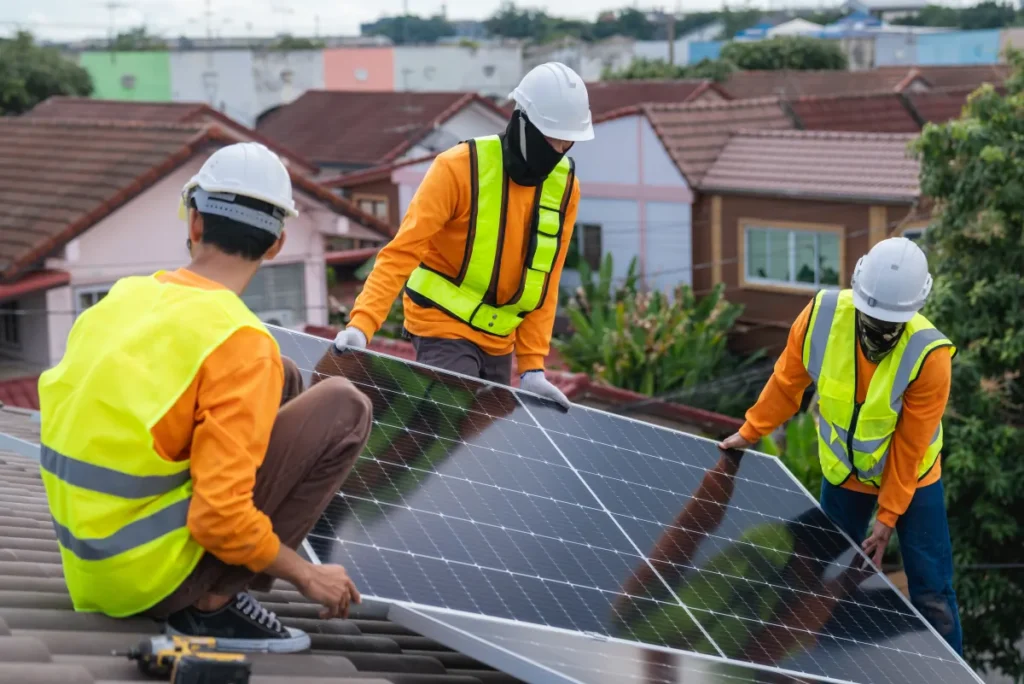
solar panel service engineer installing solar cell on the roof

When Permits Are Typically Necessary (General)

Most residential solar installations involve permits and at least one inspection because the work touches structural mounting and electrical systems. As a result, Requirements vary by scope and address, so your contractor should explain the high-level path, then confirm details with the local building department before installation begins.

  • Rooftop arrays typically trigger a permit review for mounting and electrical work.
  • Battery storage or major electrical changes can add additional review and inspection steps.
  • If a main service panel upgrade is necessary, treat it as its own mini-project with its own schedule impacts.

What To Clarify In Writing

Use this as a quick “paperwork responsibility” checklist when comparing bids.

  • Who submits the application package and who responds to plan check comments?
  • Will the contractor provide stamped drawings if required, or is that outsourced?
  • Who schedules inspections, and what lead times do they anticipate?
  • What happens if the plan reviewer requests a change to equipment placement or electrical scope?
  • Who is responsible for posting permit cards on-site and being present for inspection?

Typical Milestones

A realistic timeline depends on design complexity, review cycles, material availability, and inspection scheduling. For this reason, Even so, a professional solar panels contractor davis homeowners hire should be able to map the sequence clearly and tell you what could slow it down.

  1. Site assessment: roof measurements, shading review, and electrical panel evaluation.
  2. Proposal + scope lock: equipment selections and an itemized statement of work.
  3. Design + submittal: plans prepared and submitted for review.
  4. Approval + scheduling: installation date coordinated once approvals are in.
  5. Installation: roof work, electrical tie-in, and system labeling.
  6. Inspection: local inspection(s) scheduled and passed.
  7. Final approval to operate: documentation finalized so the system can be turned on.

The table below shows common decisions that move the schedule most. It’s also a good way to test how experienced your contractor is—if they can’t talk through these items, expect surprises later.

DecisionWhat it can changeQuestion to ask
Roof conditionMay require repairs or replacement before mountingWhat roof issues would stop install day?
Main panel capacityCould add an electrical upgrade stepDo you see signs an upgrade is necessary?
Equipment selectionAvailability can shift ordering and install datesWhat’s your lead time on the proposed equipment?
Layout complexityMore design time and possible plan review commentsWhat will you submit to show layout and setbacks?
Inspection schedulingLead times can affect final turn-onWho schedules inspections and how do you confirm dates?
solar panel companies near me professional consultation

Decisions That Affect Schedule

Solar projects move faster when key decisions are made early and documented. Meanwhile, If you handle these items before the contract is signed, you reduce change orders and keep the install date from sliding.

Planning Checklist Before You Sign

  • Pull your recent electric bills so the contractor can size the system responsibly.
  • Share roof details: age (if known), roof type, and any planned roof work.
  • Provide clear photos of the main electrical panel and any subpanels.
  • Confirm whether you want future expansion (EV charger, battery, additional circuits) so the design can account for it.
  • If an HOA is involved, ask what documentation they require and when they review submissions.
  • Decide where you want conduit runs to be visible vs. Overall, concealed—then make sure it’s written into the scope.

If You’re Remodeling A Small Kitchen Or Bathroom, Coordinate The Layout

Davis bundle home upgrades together. Additionally, When a kitchen or bathroom is tight on wall space and access, coordination matters because electrical work and finished surfaces don’t mix well with last-minute changes.

  • Keep access to the main electrical panel clear; avoid boxing it in with new cabinets or built-ins.
  • Plan conduit paths before walls are closed so you’re not cutting fresh tile, drywall, or backsplashes later.
  • Avoid placing electrical equipment in wet or high-humidity areas; your contractor should follow code and manufacturer placement rules.
  • If you’re updating ventilation (bath fan or kitchen hood), confirm the roof penetrations won’t conflict with panel layout.

How To Avoid Delays

Delays usually come from unclear scope, incomplete documentation, and late decisions. Also, A little extra prep up front saves weeks of back-and-forth once the project is in motion.

Common Mistakes That Slow Down Solar Projects

  • Signing a contract without a site visit or without confirming roof and electrical constraints.
  • Changing equipment selections after plans are submitted for review.
  • Assuming permits are “included” without spelling out who submits, who pays, and who schedules inspections.
  • Waiting to address roof repairs or panel upgrades until after materials are ordered.
  • Not preparing access for install day (locked side yards, blocked attic access, pets not secured).

Local note for Davis: the City of Davis Building Division supports electronic submittals; depending on scope, permitting and inspection steps may be coordinated online or via email. For example, Your contractor should confirm the current requirements for your address and keep you updated when the city requests revisions or scheduling changes.

If you want a timeline-first plan that covers the critical checkpoints, contact US Construction & Remodeling Corp. As a result, We’ll walk through your goals, confirm what could affect scheduling, and outline the plan before you commit. Additionally, Call +1 (916) 234-6696 or book a planning call at Free estimate.

Helpful Links

Licensed, insured & trusted local contractor

US Construction & Remodeling Corp.
9821 Business Park Dr, Sacramento, CA, 95827
Phone: +1 (916) 234-6696

CSLB License #: 1117562 Fully licensed and insured.

View our Google Business Profile

Leave a comment

This website uses cookies to improve your web experience.
Explore
Drag