Skip links

Solar Panels vs DIY in San Francisco: A Practical Homeowner Guide

Thinking about putting panels on your own roof? In San Francisco, the solar panels vs diy decision usually comes down to roof safety, electrical work, and the paperwork that gets you to a legal, inspectable installation.

Quick checklist:

  • Verify roof condition first; plan reroof timing before installing panels.
  • Size the system from real kWh usage and shading, not just panel count.
  • Compare inverter options (microinverters vs string + optimizers) and monitoring.
  • Confirm permitting and utility interconnection responsibilities and timeline.
  • Review the contract (warranties, production assumptions, exclusions, roof penetrations).
  • Confirm any electrical panel upgrades and inspection steps.

DIY can make sense for the right homeowner, but solar is a different category than a weekend remodel. You’re attaching equipment to your roof, tying into your electrical system, and coordinating inspections and utility sign-off.

TL;DR: DIY may look cheaper at first, yet the real costs often show up as rework, delays, and avoidable roof or electrical risk. A licensed team scopes the whole job, coordinates permitting/inspections, and documents the install so it’s serviceable later.

  • Confirm your roof has usable sun exposure and enough clear space
  • Decide whether you want battery readiness now or later
  • Plan equipment locations (inverter, shutoffs, conduit runs)
  • Check electrical panel capacity and any upgrade needs
  • Understand permitting, inspections, and utility sign-off steps
  • Compare warranty coverage and ongoing service options

What To Expect From A Licensed Team For Solar Panels Vs DIY

DecisionWhy it mattersQuick check
Roof conditionInstalling over an aging roof risks rework later.Inspect first and plan reroof timing if needed.
System sizeDetermines cost and energy offset.Size from real kWh usage and shading.
Inverter typeAffects monitoring and shade performance.Compare microinverters vs string + optimizers.
Permits & interconnectionApprovals can drive the schedule.Ask who handles permits/utility and expected timelines.

DIY solar kits are tempting if you like hands-on projects. However, most homeowners in San Francisco want a system that stays watertight, passes inspections, and remains easy to service years later. As a result, That’s where a licensed contractor team earns its keep: coordination, accountability, and a finished install that matches the approved plans.

Where DIY Usually Breaks Down

When homeowners compare solar panels vs diy, the risk isn’t just “Can also I bolt this together?” The bigger question is whether you can confidently manage roof penetrations, electrical tie-ins, code details, and inspection expectations—without learning those lessons the hard way.

Here are practical items a licensed team should plan and deliver (and you should expect to see in writing):

  • Roof attachment plan that protects waterproofing and preserves reroofing access
  • Array layout that avoids shading and keeps required clearances
  • Conduit routing that looks clean and stays protected from damage
  • Safe, accessible shutoffs and labeling for future service
  • Electrical load evaluation and panel capacity checks
  • Equipment placement that considers heat, noise, and maintenance access
  • Documentation package: plans, spec sheets, and as-built notes/photos
  • Inspection coordination so you’re not chasing appointments
  • Commissioning checks to confirm safety features and production settings
  • Clear handoff on warranty coverage and service responsibilities

If you want a quick reality check before you commit either way, call +1 (916) 234-6696 and talk through your roof, goals, and constraints.


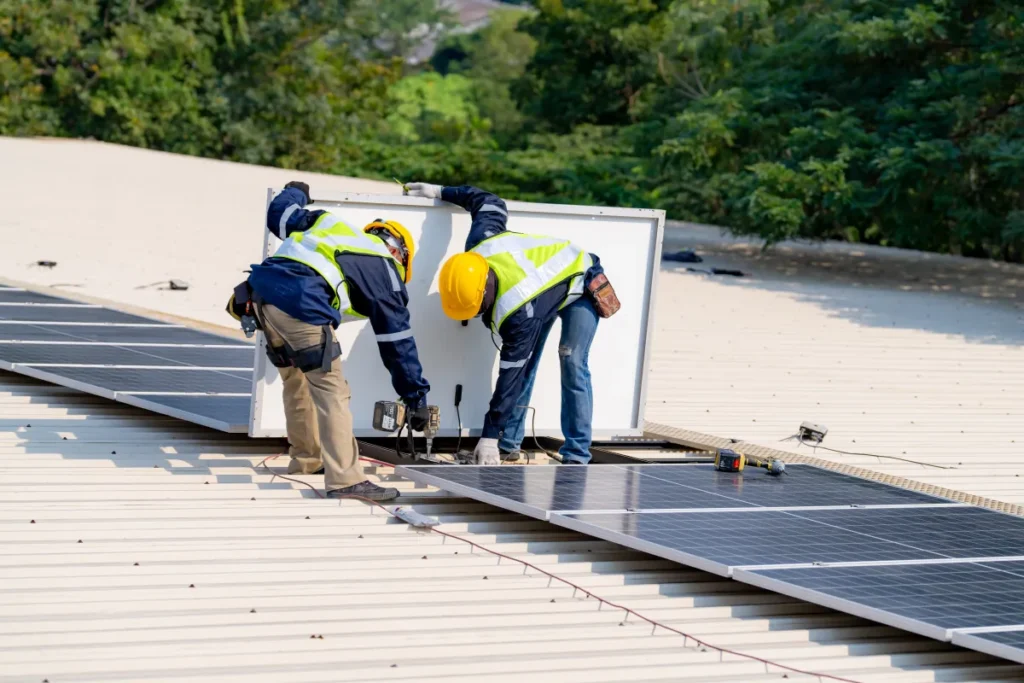
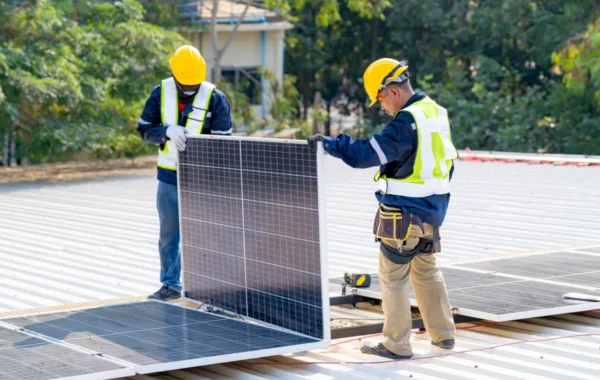
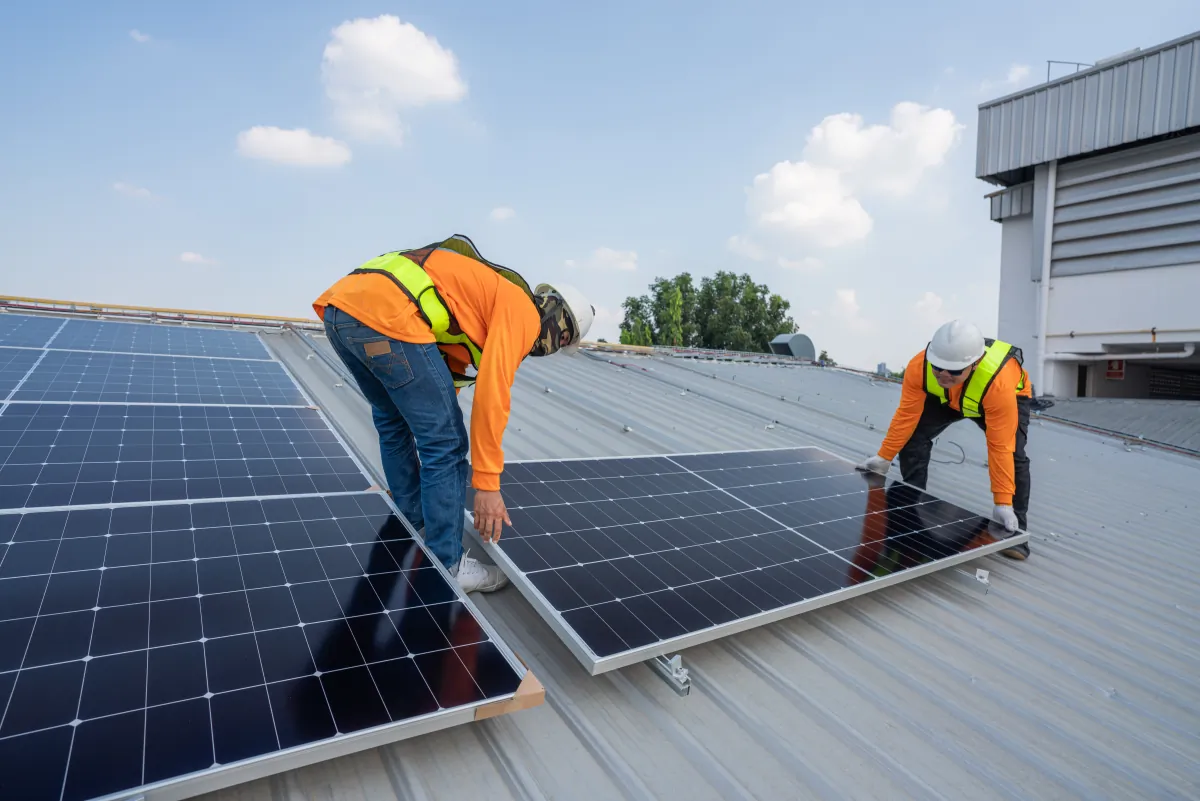
metal roof installation technicians carrying photovoltaic solar module whi

Planning And Scope Decisions For Solar Panels Vs DIY

Most frustration happens before the first panel goes up. Additionally, The planning stage is where you define the scope, map the layout, and decide what “done” looks like for your household. In practice, a clean plan also prevents change orders and inspection delays.

Roof Layout Planning (What “Good Design” Looks Like)

A solar layout isn’t just about fitting panels. Overall, You’re balancing exposure, shading, service access, and clearances around roof features.

  • Single-plane array: Simplest look and wiring path when one roof plane has strong sun exposure.
  • Split array: Useful when vents, skylights, or limited space force panels onto multiple roof areas.
  • Panel orientation choices: The same roof can fit different counts depending on how panels are oriented and spaced.
  • Equipment routing: Plan the cleanest path for conduit and shutoffs before drilling anything.

When Roof Space Is Tight

Small or complex roofs can still work, but you have fewer “easy wins.” Instead of cramming panels into every corner, prioritize a layout that stays serviceable and passes inspection.

  • Choose a layout that preserves walk paths and access to roof penetrations
  • Consider higher-efficiency panels if the usable roof area is limited
  • Plan for the electrical panel reality early; bottlenecks there can derail a DIY plan
  • Keep future roof work in mind so the system can be removed/reinstalled cleanly

ROI And Resale Priorities

Solar can support resale value when the install looks professional and the paperwork is complete. For this reason, Buyers and inspectors tend to ask for permits, plans, and warranty info. A tidy equipment layout and a clear documentation packet also make future service simpler.

For many homeowners, solar panels vs diy becomes a choice about attention: do you want to spend your weekends learning code details and managing approvals, or would you rather focus on choosing the right system and letting a team execute it?

DecisionWhy it mattersBig cost/timeline driver
Roof conditionBad decking or an aging roof can force redesign or reworkRoof repair/replacement coordination
Electrical panel capacityLimited capacity can trigger additional electrical workPanel upgrades and inspection steps
Array size & placementShading and layout drive performance and aestheticsDesign time and mounting complexity
Battery readinessSpace and wiring needs change the plan even if you add laterEquipment selection and rough-in planning

Budget & Schedule (Typical)

  • System size, roof work, and electrical upgrades drive most costs
  • Permitting, inspections, and utility approvals often set the overall pace
  • Complete plans and paperwork reduce back-and-forth
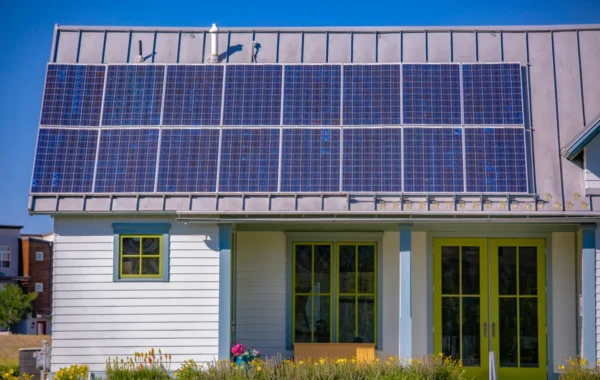
energy efficient upgrade expertise happy family near their house with solar panels

Serving Homeowners In San Francisco

US Construction & Remodeling Corp. Meanwhile, helps San Francisco homeowners make clear decisions on solar—whether you want a full licensed installation or you want a professional review before attempting DIY. For this reason, You’ll get a scope that matches the house, the roof, and the electrical realities, not just a generic kit list.

Call+1 (916) 234-6696 for a quick consult. In addition, If you prefer online scheduling, request a free estimate here: https://usconstructioncali.com/free-estimate/.

Trust Signals You Should Expect (And Ask For)

  • Licensing & insurance: Confirm the contractor is properly licensed and insured for the scope of work.
  • Permit responsibility in writing: The agreement should state who handles plans, permits, and inspections.
  • Clear communication: You should know who your point of contact is and how updates happen.
  • Workmanship verification: Ask how roof penetrations are protected and how electrical work is tested.
  • Documentation at closeout: Expect equipment details, labels, and a clean handoff for future service.

Local Considerations That Matter In San Francisco

San Francisco Department of Building Inspection (DBI) supports online permit tracking, and some common residential scopes may qualify for faster or more streamlined permit paths. Also, Even so, timelines vary by scope and workload. Also, The smart move is to align your design, paperwork, and inspection scheduling early so you don’t stall at the finish line.

Need help deciding? For example, If solar panels vs diy is on your mind, a short consult can clarify your roof constraints, electrical panel capacity, and what approvals you’ll need.

Helpful Links

Frequently Asked Questions

Many homeowners can do work on their own property, but solar typically involves permits, inspections, and utility approval. The safest path is to confirm what your specific scope requires before you buy equipment, especially if roof penetrations or electrical tie-ins are involved.

Labor is only one piece. The biggest cost drivers usually include:

  • Roof condition and any required repairs
  • Electrical panel capacity or upgrade needs
  • Mounting complexity and conduit routing
  • Equipment choices (panel quality, inverter approach, optional battery)
  • Time spent managing permits, inspections, and corrections

On-site installation can be quick, but the overall schedule often depends on planning, permitting, inspections, and utility sign-off. If you want an accurate timeline, start with a site assessment and a defined scope.

Most solar installs require permitting and inspections. A licensed contractor should confirm which permits apply to your home, prepare the submittals, and coordinate inspections so the job closes out cleanly.

Focus on components that affect durability and serviceability:

  • Roof mounting and flashing quality
  • Clean, protected wiring and conduit routing
  • Inverter approach and accessibility for service
  • Clear labeling and shutoff placement
  • Warranty terms that match your expectations

Don’t just buy “the panels.” Buy a system that someone can maintain later.

Keep it practical:

  • Who handles permits and inspection scheduling?
  • How will you protect roof penetrations and prevent leaks?
  • Where will conduit and equipment be placed, and why?
  • What closeout documents will I receive?
  • How do service calls work if something fails later?

If you want to talk through your project, call +1 (916) 234-6696 or use the estimate form at https://usconstructioncali.com/free-estimate/.

Leave a comment

This website uses cookies to improve your web experience.
Explore
Drag