
A flooring calculator is a fast way to turn room measurements into an estimated amount of material to buy. It helps you plan square footage, waste, and where you will need transitions (the strips that bridge two floor types). In California homes, the biggest mistakes usually come from missed closets, stairs, or uneven subfloors (the layer under the finished floor).
Quick checklist:
- Define the scope and your must-have outcome (performance, budget, timeline).
- Confirm what work is involved and the order of operations.
- Finalize measurements and key selections before ordering long-lead materials.
- Collect 2–3 quotes and compare line-by-line (scope, allowances, cleanup, warranty).
- Create a simple schedule and pre-order the items that most often cause delays.
TL;DR: Use the calculator number as a starting point, then confirm pattern, trim, and subfloor prep before you order. If your timeline matters, US Construction & Remodeling Corp. can review your measurements and map out the work so you know what happens when.
- Measure each room and closet, room by room.
- Decide whether flooring runs under cabinets or vanities.
- Pick a pattern (straight, diagonal, or herringbone) and plank or tile size.
- Add a waste factor and keep matching extras for future repairs.
- List transitions, baseboards, and any stair pieces you need.
- Flag moisture areas and uneven spots for an onsite check.
Options And What Each Includes For Flooring Calculator
| Decision | Why it matters | Quick check |
|---|---|---|
| Scope | Defines what is included and prevents surprises. | Write a line-item scope and allowances list. |
| Site constraints | Access and hidden conditions can change the plan. | Check access and existing surfaces before work starts. |
| Selections | Long-lead items can drive the schedule. | Confirm availability before starting. |
| Permits | Some scopes require approvals and inspections. | Ask your city/county what applies to your project. |
- Room-by-room takeoff: Separate areas for bedrooms, also halls, and closets so cuts do not surprise you.
- Plank direction: Running planks with a hallway or toward a focal wall changes cuts and waste.
- Pattern choice: Straight lay uses less waste than diagonal or herringbone patterns.
- Mixed materials: Plan where tile meets wood-look plank and add the right transition pieces.
- Trim plan: Reusing baseboards versus replacing them changes time, paint touch-ups, and budget.
- Stairs and landings: Treads, risers, and stair nosing are often separate items from the main flooring.
- Subfloor prep level: Minor sanding and patching differs from self-leveling compound (a pourable cement used to flatten dips).
- Underlayment needs: Some floors need a sound pad or moisture barrier, while others have it built in.
- Door and appliance clearance: A thicker floor may require trimming doors or adjusting appliances.
- Finish and texture: Matte versus glossy and smooth versus embossed changes how scratches and dust show.
Most homeowners use a flooring calculator for a first pass, but the best results come from treating it like a checklist, not a final order. Also, Your goal is a realistic material takeoff (a quantity estimate) that includes the parts people forget: transitions, trims, and waste from cuts.
Common Calculator Options
- Area input: A single total square-foot number, or room-by-room entries for more accuracy.
- Waste factor: Extra material to cover cuts, bad pieces, and future repairs.
- Packaging: Converting square feet into boxes, planks, or tiles based on coverage per carton.
- Stairs: A separate count for treads and risers, when you plan to match the main floor.
Measure irregular rooms by breaking them into rectangles, then add the areas together. Meanwhile, If you are unsure about what is included under a kitchen island, cabinets, or a bathroom vanity, put that question on the list for your installer before you buy material.
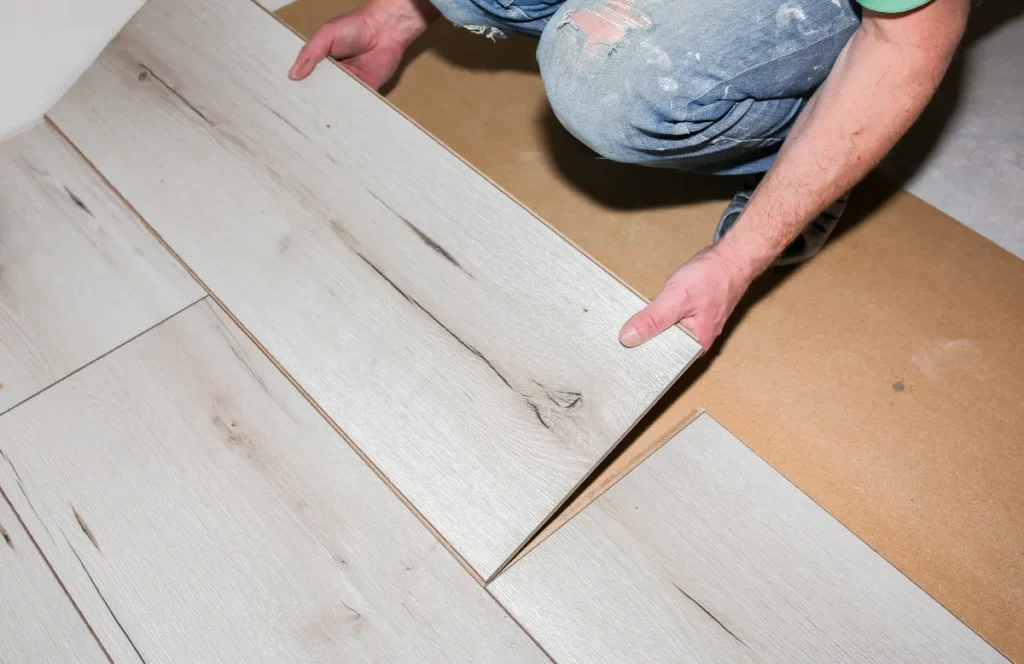
Scope Options (Refresh Vs Full Remodel) For Flooring Calculator
Two projects can start with the same square footage and end up very different. For example, Scope is what separates a simple floor replacement from a remodel that changes trim, subfloor, adjacent rooms, or plumbing and electrical.
Refresh Scope (Common For Occupied Homes)
- Remove the existing flooring and haul away debris.
- Repair minor squeaks or loose areas in the subfloor.
- Install new flooring in the same footprint, with clean edges and expansion gaps (space at the perimeter that lets flooring move).
- Install transitions at doorways and changes in height.
- Reinstall baseboards or install new trim, then handle small paint touch-ups.
Full Remodel Scope (When The Floor Is Part Of Bigger Changes)
- Adjust layouts in kitchens or bathrooms, which can change where the new flooring starts and stops.
- Replace cabinets, vanities, countertops, or fixtures, which affects floor coverage and sequencing.
- Correct major floor dips with leveling work before new material goes down.
- Update lighting or outlets, which may require opening walls or coordinating trades.
- Address water issues around tubs, showers, or exterior doors before installing new finishes.
Layout Planning That Changes Your Takeoff
Flooring looks best when you plan transitions and sight lines. That planning also changes how much material you need and how much waste to add.
- Galley kitchens: Two parallel cabinet runs often create narrow walk paths. Overall, Plank direction and seam placement matter, and you may not run flooring under existing cabinets.
- L-shape kitchens: Corner turns create more cuts. In addition, A consistent layout line helps keep the room from looking skewed.
- U-shape kitchens: Doorways and appliance openings increase detail work. Additionally, Plan transitions early, especially when tying into dining areas.
- Island-centered kitchens: Islands add cut lines around the footprint. As a result, If the island is staying, you usually floor up to the toe-kick, not under the cabinetry.
Small Bathrooms And Compact Kitchens: Space-Saving Layout Ideas
In small rooms, flooring and layout choices can make the space feel calmer and easier to clean.
- Use one continuous floor into an adjacent hall when practical to reduce visual breaks.
- Choose larger-format tile or planks to reduce busy grout lines and seams.
- Pick a lighter, matte finish when the room has limited natural light.
- In bathrooms, prioritize slip resistance and a clear plan for wet zones around tubs and showers.
- Consider a wall-hung vanity or open-toe cabinetry to show more floor area.
Resale And ROI Priorities (Without Overbuilding)
Flooring can help resale because buyers notice it immediately. For this reason, Focus on durable finishes, consistent transitions, and colors that work with the rest of the home. No material guarantees a return, but avoiding obvious mismatches and poor trim work usually protects value.
Hypothetical Before-And-After Snapshot
Before (hypothetical example): A homeowner enters the square footage into a flooring calculator, selects a click-lock luxury vinyl plank, and plans a straight layout to keep waste low.
After (hypothetical example): An onsite check finds a few low spots in the subfloor, plus two doorways that need height transitions. Additionally, The plan adds leveling time before installation and includes the right transition pieces, so the finished floor looks intentional and doors swing freely.
Materials And Finish Selections
Your calculator number becomes meaningful once you choose a material, size, and edge detail. Additionally, A wider plank or a large tile can change cut patterns. Some materials also require a flatter subfloor than homeowners expect.
Practical Pros And Tradeoffs
- Luxury vinyl plank (LVP): Water resistant and durable for busy households. Additionally, It can feel less solid if the subfloor is not flat, so prep matters.
- Laminate: Scratch resistant and budget friendly. Overall, Standing water can damage seams, so it is not a great fit for bathrooms.
- Engineered hardwood: Real wood look with better stability than solid wood. In addition, It can still scratch, and refinishing depends on the thickness of the wood layer.
- Solid hardwood: Classic and refinishable. As a result, It needs careful moisture control and acclimation (letting wood adjust to indoor humidity) before install.
- Porcelain or ceramic tile: Excellent for wet areas and easy to wipe clean. Overall, It feels harder underfoot and requires grout maintenance.
- Carpet: Warm and quiet in bedrooms. In addition, Plan for padding, seams, and stain resistance based on how you use the room.
If Your Flooring Ties Into A Kitchen Update
Floors do not live in isolation. Also, Cabinet door styles like shaker, slab, and raised-panel change the look of the space, and countertop choices like quartz, granite, or butcher block shift your color balance. Layered lighting matters too: ambient lighting (overall light), task lighting (work areas), and accent lighting (highlighting features) can make the same floor read warmer or cooler.
Maintenance Tips After Installation
- Use felt pads under furniture and avoid dragging heavy pieces across the floor.
- Clean with products recommended for your material, and skip steam mops on wood or laminate.
- Wipe spills quickly, especially at kitchen sinks, tubs, and exterior doors.
- Use entry mats and a no-shoes area to reduce grit that scratches finishes.
- For tile, clean grout with gentle cleaners and reseal when recommended by the manufacturer.
| Decision | Why it matters | What to decide early |
|---|---|---|
| Material type | Changes moisture handling and prep needs | Pets, kids, wet zones, comfort underfoot |
| Pattern and direction | Changes waste and install complexity | Straight, diagonal, or herringbone layout |
| Subfloor condition | Uneven areas telegraph through the finish | Repair or leveling plan before ordering |
| Trim and transitions | Controls the finished look and trip edges | Baseboard reuse, doorway thresholds, height changes |
| Schedule constraints | Affects room access and disruption | Move-out days, furniture plan, pet and kid safety |
Timeline And Site Disruption (Typical)
Flooring moves fast when material is ready and the subfloor is in good shape. Overall, Prep work and drying time usually drive the schedule more than the installation itself.
How The Work Usually Unfolds
- Protect nearby surfaces and set up a clean path for debris.
- Remove old flooring and inspect the subfloor (the layer under your finished floor).
- Handle repairs or leveling, then allow cure time when products require it.
- Install underlayment when needed, then lay the new flooring.
- Install trim and transitions, then do a detailed cleanup.
Plan for some disruption. For this reason, You may need to move furniture in stages, keep pets away from work areas, and expect noise during demolition. If you work from home, ask about staging so at least one room stays usable.
Budget And Timeline (Typical)
- Use the calculator for a rough order, then confirm measurements onsite before you purchase.
- Install time often ranges from a day for one room to several days for multiple rooms, plus cure time for leveling products or tile mortar.
- Big cost swings usually come from subfloor repairs, demo and disposal, and trim work, not from the square footage math.
How To Get Started In Sacramento
US Construction & Remodeling Corp. helps Sacramento homeowners turn calculator numbers into a real flooring scope by confirming measurements, checking site conditions, and matching materials to how the home is used.
Want a timeline-first plan? Book a planning call to talk through lead times, install days, and how to keep your home livable during the work.
When Permits Enter The Picture
Many flooring replacements do not require permits, but the rules change when you move walls, modify structural framing, relocate plumbing, or add new electrical. In Sacramento, larger residential scopes often run through the City of Sacramento Community Development portal for plan review and tracking, so it helps to clarify the full scope early.
Trust Checklist Before You Hire
- Confirm the contractor is properly licensed and insured for the work, and verify details through official state resources.
- Get a written scope that lists floor prep, leveling assumptions, trim work, and who moves furniture and appliances.
- Make sure the proposal names the exact product (material type, thickness, and finish) so bids compare fairly.
- Agree on how changes get priced and approved before work starts.
- Ask what the completion check includes, such as transitions, door clearances, and edge gaps.
Prefer to talk it through by phone? Call +1 (916) 234-6696 and we will help you plan the timeline and the decisions that affect the budget.
Helpful Links
Frequently Asked Questions
for the math, but it cannot see site conditions. Accuracy depends on careful room-by-room measurements, the waste factor you choose, and whether you include closets, stairs, and transitions. Use it for a starting estimate, then confirm details with an onsite measure before you buy material.
Waste covers off-cuts and mistakes. Common starting points are:
- 5 to 10 percent for straight layouts in simple rooms
- 10 to 15 percent for diagonal layouts or lots of angles
- 15 to 20 percent for herringbone or other pattern-heavy designs
Check the manufacturer instructions and add more if your rooms have many small cutups.
Square footage matters, but these items often move the budget more:
- Material choice and thickness
- Subfloor repairs or leveling
- Demolition and debris disposal
- Trim, baseboards, and doorway transitions
- Stairs and landings
Many like-for-like flooring replacements do not require a permit. Permits are more common when you change walls, structural framing, plumbing, electrical, or other major building systems. When in doubt, check with your local city or county building department for your address and scope.
Kitchens and bathrooms see more water and more cleaning. Tile performs well in wet areas. Luxury vinyl plank can work if you keep water from sitting at seams and you follow the manufacturer installation rules. Avoid materials that swell with water in bathrooms, and choose slip-resistant finishes where the floor gets wet.
Ask each contractor to quote the same scope and product, then compare apples to apples:
- Exact material and underlayment
- What subfloor prep is included versus assumed
- Trim, thresholds, and transitions
- Debris hauling and protection for nearby areas
- Schedule and how rooms will be staged
If anything is vague, request a written clarification before you sign.
Timeline depends on room count, material, and prep. A single room can be done in a day, while multi-room projects often take several days. Add time for subfloor repairs, leveling cure time, tile mortar cure time, or wood acclimation when required.
Licensed, insured & trusted local contractor
US Construction & Remodeling Corp.
4424 Freeport Blvd, Sacramento, CA, 95822
Phone: +1 (916) 234-6696
CSLB License #: 1117562 Fully licensed and insured.