

Gutters Permit Requirements in Placer: Checklist + Timeline
Replacing or adding gutters can feel straightforward, yet details around gutters permit requirements placer can change depending on your address and scope. This guide lays out what to check, what to ask, and how to avoid preventable delays before you schedule work.
Quick checklist:
- Decide the scope: cleaning, repair, guards, or full replacement.
- Confirm gutter size/material and how many downspouts you need for runoff.
- Plan downspout discharge and drainage so water moves away from walls, stairs, and the foundation.
- Ask whether fascia/rot repair is included and how corners/seams will be sealed.
- Compare 2–3 itemized quotes (linear feet, downspouts, guards, disposal, warranty).
- Schedule around weather and run a hose test at the final walkthrough.
TL;DR: Many like-for-like gutter swaps are simple, but upgrades (size changes, fascia repairs, new downspout locations, or related exterior work) can trigger additional review. Confirm jurisdiction, document the scope, and plan access early so installation stays smooth.
- Confirm whether your address is city or county jurisdiction
- Define scope: replace vs. new runs, size change, number of downspouts
- Check fascia/roof edge condition before ordering materials
- Choose material, color, and leaf protection before scheduling
- Plan access: ladders, landscaping protection, and parking
- Ask how inspections (if needed) affect start and finish dates
Ready to get clarity on your home? Free estimate or call +1 (916) 234-6696.
Step-By-Step Timeline + Checklist For Gutters Permit Requirements Placer
Homeowners usually search this topic for one reason: they want to fix water issues without running into surprises from a missed requirement. In addition, In Placer, the safest approach is to treat permitting as a quick verification step—not an assumption—because jurisdiction and scope matter.
When Permits And Inspections May Apply
Gutter work often falls into a grey area: some straightforward replacements may be treated as maintenance, while other changes can be reviewed as part of exterior building work. Additionally, Rather than guessing, confirm the rules for your address and the exact scope.
- More likely to be reviewed: changes to roof edges, also fascia or soffit repairs, altering the number/location of downspouts, or tying work into broader exterior remodeling.
- Less likely to be reviewed: like-for-like replacement that keeps the same layout and doesn’t involve structural repairs.
- Property specifics: multi-story access, unusual rooflines, and prior unpermitted changes can add questions during review.
Typical Timeline (What Happens When)
Timelines vary based on material availability and whether the scope needs review. As a result, Still, most projects follow a predictable sequence if you prepare the right information up front.
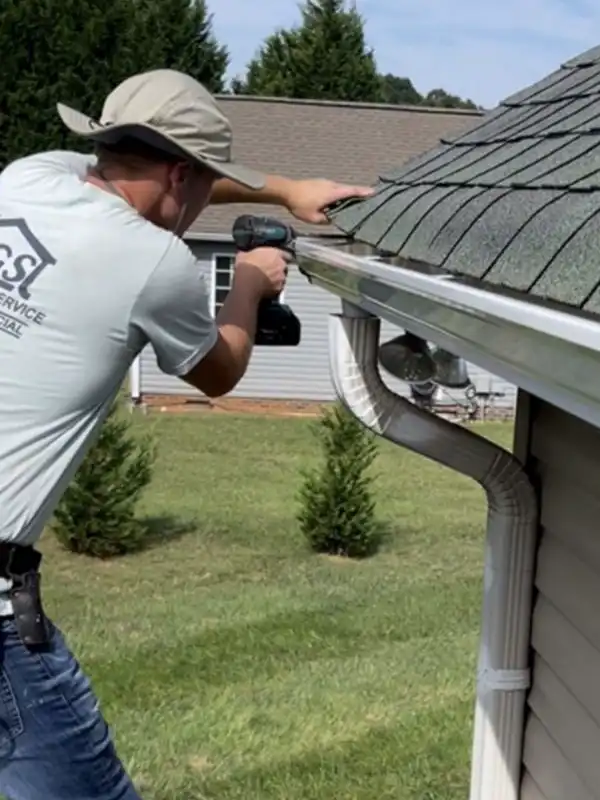
- Site check: measure runs, count corners/downspouts, verify fascia condition, and confirm access.
- Scope confirmation: finalize gutter size/profile, color, and leaf protection choice.
- Permit check (if applicable): confirm jurisdiction and any submittal requirements tied to your scope.
- Installation: remove old system (if any), prep edges, install gutters/downspouts, test flow.
- Closeout: cleanup, walkthrough, and any required sign-offs.
| Decision | Why it matters | What it changes |
|---|---|---|
| 5" vs 6" gutter size | Capacity and overflow risk | Material cost and appearance |
| Leaf protection type | Maintenance frequency | Upfront cost and cleaning plan |
| Number/location of downspouts | Water control around the home | Labor, routing complexity |
| Fascia repairs needed | Hanger strength and alignment | Schedule and scope |
| Permit/inspection check | Avoid delays or rework | Start date and coordination |
If you want us to confirm the scope and walk you through what to expect, book online at Free estimate. We’ll also answer questions by phone at +1 (916) 234-6696.
Pre-Work Checklist (Design, Materials, Access)
Pre-work planning is where most homeowner headaches start—and where you can prevent them. For this reason, The goal is simple: define what’s being installed, confirm what the home needs at the roof edge, and make installation day easy for crews and safe for everyone on site.
Design And Materials
- Choose gutter profile and size (K-style, half-round, 5" or 6").
- Pick material (aluminum, steel, copper) with a realistic maintenance plan.
- Decide whether you want leaf protection now or later; adding it later can mean extra labor.
- Confirm color expectations in writing (photos help).
Access Planning (And Protecting Your Property)
- Identify ladder locations and any fragile landscaping or hardscape to protect.
- Plan driveway/curb space for materials and debris pickup.
- Make sure pets and kids have a safe path away from work areas.
- Clarify how exterior lighting, cameras, or wires near roof edges will be handled.
Accessibility And Safety Upgrades To Consider
Even though gutters aren’t “accessibility” work in the traditional sense, you can make the home safer and easier to maintain—especially for aging-in-place households.
- Choose leaf protection to reduce ladder trips for cleaning.
- Add cleanout options (where practical) so maintenance doesn’t require roof access.
- Confirm safe water control away from walkways to reduce slip hazards.
- Ask for a maintenance plan that matches your comfort level with heights and ladders.
Build Phase Checklist (Daily/Weekly) For Gutters Permit Requirements Placer
The build phase is short for most gutter projects, which makes it tempting to “just get it done.” A quick daily and weekly checklist keeps work clean, protects your exterior, and prevents small issues from turning into callbacks.
Daily Checklist (Installation Days)
- Confirm start time and where materials will be staged.
- Walk the perimeter before work begins and note fragile areas (plants, sprinklers, décor).
- Verify the planned downspout locations before holes or straps are set.
- Ask for a water test after installation so you can see flow and identify leaks.
- Do a quick end-of-day sweep for fasteners and metal offcuts.
Weekly Checklist (Multi-Day Scopes Or Exterior Bundles)
- Review any scope changes in writing (faster decisions keep the schedule intact).
- Confirm any material backorders early so you’re not waiting mid-project.
- Check that debris removal is staying under control around the home.
Common Mistakes That Slow Projects Down
- Assuming jurisdiction: Placer addresses can fall under different rules depending on where the property sits. Confirm this before scheduling.
- Skipping fascia evaluation: hidden rot or soft spots can change the scope once old gutters come off.
- Changing downspout locations late: last-minute moves can affect routing, labor, and aesthetics.
- Buying materials before measurements: “close enough” ordering often leads to seams, mismatched parts, or delays.
- Overlooking access: tight side yards, locked gates, and landscaping obstacles can slow a one-day job into two.
If you’d rather not manage these details alone, schedule an estimate online. Overall, We’ll confirm measurements, access, and the best install plan for your home.
Inspections And Sign-Offs
Not every gutter job involves inspections, but when they do apply, planning around them matters. Meanwhile, It’s easier to coordinate early than to pause work after installation.
What To Expect If Sign-Offs Are Necessary
- Confirm the inspection type (if any) and what the inspector will verify.
- Keep product information handy (gutter size/profile and leaf protection details).
- Plan access on inspection day (gates unlocked, pets secured).
- Leave time for minor corrections, especially when exterior repairs are included.
For Placer County projects, permitting is typically handled through the county permit portal (Accela / e‑Permits), depending on jurisdiction and scope. Also, If you’re unsure where to start, we can point you to the right place for your address during your estimate.

Final Walkthrough Checklist
A solid walkthrough takes ten minutes and saves weeks of frustration. For example, The goal is to confirm the system functions the way it should—and that the details match what you approved.
- Look for straight gutter lines and consistent spacing at roof edges.
- Confirm seams, corners, and end caps are sealed and clean.
- Verify downspouts are secured and routed as planned.
- Ask for a quick water test and watch for leaks at corners and joints.
- Confirm cleanup: removed debris, swept walkways, and hauled old materials.
Working With US Construction & Remodeling Corp.
US Construction & Remodeling Corp. For example, helps Placer homeowners plan gutter work with clear scope and straightforward coordination. For this reason, You can book online in minutes, then we’ll confirm measurements, material choices, and any permit-related checkpoints tied to your specific address.
Free estimate or call +1 (916) 234-6696.
Helpful Links
Frequently Asked Questions
It depends on your jurisdiction and the exact scope. Many straightforward, like-for-like replacements may be treated as maintenance, while changes that involve exterior repairs or reconfiguration can be reviewed. Because rules can vary by address, confirm requirements for your property before scheduling work.
If you want help defining the scope and the right questions to ask, Free estimate or call +1 (916) 234-6696.
Projects are more likely to get extra scrutiny when the work goes beyond swapping a gutter in the same place.
- Repairing or replacing fascia/soffit at the roof edge
- Changing gutter size or profile (for example, moving from 5" to 6")
- Relocating downspouts or adding new ones
- Bundling gutter work with other exterior remodeling or structural repairs
When in doubt, document the scope and confirm it with the permitting authority for your address.
Most gutter jobs move quickly once decisions are made, but the overall timeline depends on material lead times and whether your scope needs review.
- Estimate and scope: usually within a few days of the site visit
- Material ordering: commonly several business days, depending on color/profile
- Installation: often 1 day for typical homes; longer for complex rooflines
- Sign-offs (if applicable): timing varies by jurisdiction and inspection availability
During your estimate, ask for the earliest realistic start window and what could move it.
Gutter pricing is driven by scope and access. A clear measurement and written scope is the best way to compare options.
- Total linear footage and number of corners
- Stories/height and roofline complexity
- Material choice (aluminum vs steel vs copper)
- Number and placement of downspouts
- Condition of fascia and roof-edge surfaces
- Leaf protection type and coverage
Aluminum is common for many homes because it balances cost, appearance, and corrosion resistance. Steel can be durable but may require more attention over time, while copper offers a premium look and long service life at a higher price.
For size, 5" K-style is common, and 6" is often selected for higher flow capacity or tricky rooflines. The best choice depends on your roof area, layout, and how you want to manage water around the home.
Yes—installing leaf protection during the gutter project is usually more efficient than adding it later. Still, the “best” guard depends on the debris you deal with and how often you want to clean.
- Ask what maintenance is still required (no system is truly zero-maintenance).
- Confirm compatibility with your roof edge and gutter size.
- Make sure the guard choice is listed in the written scope.
A written estimate should make it easy to compare bids and avoid misunderstandings. Look for clear, specific details rather than general promises.
- Linear footage, gutter size/profile, material, and color
- Number and locations of downspouts, plus how they’ll be secured
- How fascia issues will be handled if found during removal
- Debris removal and property protection expectations
- How permit-related coordination (if applicable) will be handled
- Warranty terms and what’s excluded
Licensed, insured & trusted local contractor
US Construction & Remodeling Corp.
9821 Business Park Dr, Sacramento, CA, 95827
Phone: +1 (916) 234-6696
CSLB License #: 1117562 Fully licensed and insured.