Skip links

Soapstone Countertops: California Installation & Care Guide

If you love the feel of natural stone but want something that can handle real life, soapstone countertops are a smart option for many California homes. They’re smooth, warm to the touch, and they develop a lived-in patina instead of looking “worn out.”

Quick checklist:

  • Define the scope and your must-have outcome (performance, budget, timeline).
  • Confirm what work is involved and the order of operations.
  • Finalize measurements and key selections before ordering long-lead materials.
  • Collect 2–3 quotes and compare line-by-line (scope, allowances, cleanup, warranty).
  • Create a simple schedule and pre-order the items that most often cause delays.

TL;DR: Soapstone is dense and repairable, but it will show character over time—so the right choice depends on how you cook and how “perfect” you want the surface to stay. For a fast, honest assessment of your layout and existing cabinets, book a free estimate online at https://usconstructioncali.com/free-estimate/. Prefer to talk first? Call +1 (916) 234-6696.

  • Decide where seams should land (and how visible is acceptable).
  • Choose sink style and faucet hole count before templating.
  • Confirm cabinets are level and ready to support stone.
  • Select your edge profile and any backsplash height.
  • Plan dust protection and a clear path for install day.
  • Understand care basics: cleaning, oiling (optional), and scratch touch-ups.

What To Expect From A Licensed Team For Soapstone Countertops

DecisionWhy it mattersQuick check
ScopeDefines what is included and prevents surprises.Write a line-item scope and allowances list.
Site constraintsAccess and hidden conditions can change the plan.Check access and existing surfaces before work starts.
SelectionsLong-lead items can drive the schedule.Confirm availability before starting.
PermitsSome scopes require approvals and inspections.Ask your city/county what applies to your project.
  • Honed (matte) soapstone for a soft, also non-gloss look.
  • Optional mineral-oil finish for a deeper, darker tone.
  • Eased or micro-bevel edge for a clean modern line.
  • Bullnose edge for a softer, family-friendly feel.
  • Matching 4-inch soapstone backsplash to simplify wipe-downs.
  • Full-height soapstone slab backsplash behind the range.
  • Undermount sink to keep the counter visually continuous.
  • Apron-front sink paired with a simple edge profile.
  • Waterfall edge on an island or peninsula end panel.
  • Warm under-cabinet lighting to bring out the stone’s variation.

Soapstone feels different than most countertop materials. In addition, It’s smooth and quiet, and it handles day-to-day messes without drama. As a result, Because it’s softer, though, you should expect small marks over time—especially near sinks and prep zones.

If you’re comparing soapstone countertops to quartz or granite, focus on the lived-in look. Additionally, Soapstone can be refreshed with simple touch-ups, while harder stones keep a more uniform surface.

What A Professional Install Should Include

You shouldn’t have to guess what’s included. Also, A solid scope and careful prep protect both the stone and the cabinets it’s sitting on.

  • Protection for floors, walkways, and nearby appliances.
  • Cabinet and subtop check: level, flat, and structurally sound.
  • Written seam plan (especially around sinks and corners).
  • Clear decisions on sink mounting, reveal, and faucet holes.
  • Plan for outlets, backsplash height, and transitions at walls.
  • Cleanup plus a final walkthrough of fit, caulk lines, and support.

Who This Works Best For

  • You like a matte, natural look that ages with character.
  • You cook often and want a surface that won’t etch from acidic foods.
  • You value repairability more than hardness.
  • You’re OK with a countertop that looks “lived in” over time.
  • You want a surface that feels warm and understated, not glossy.
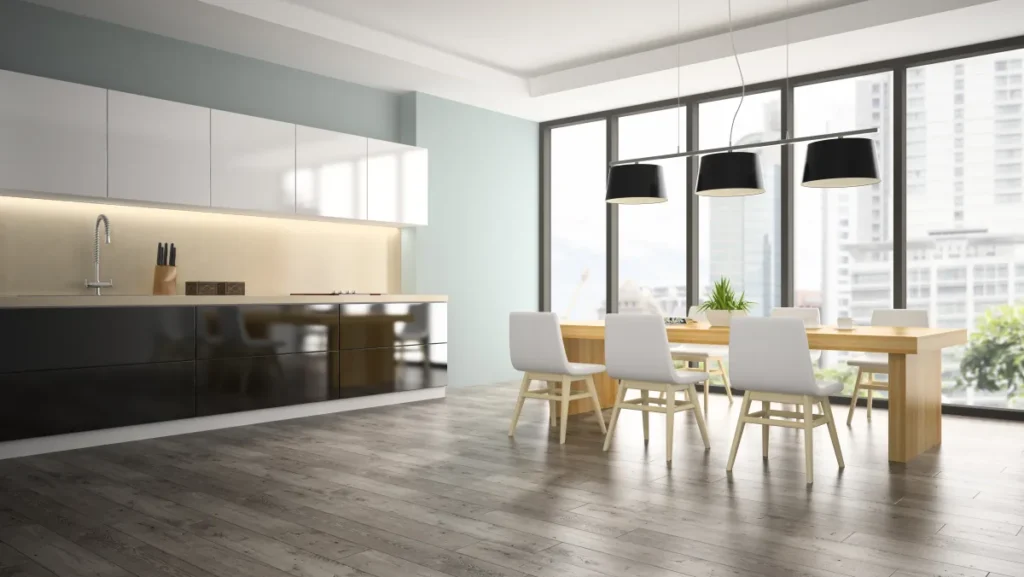
kitchen flooring part of interior dining room 3d rendering

Planning And Scope Decisions For Soapstone Countertops

The stone is only part of the decision. Meanwhile, Layout, cabinet condition, sink choice, and lighting determine how the counters look and how they function day to day. Tight planning also keeps the install smooth, because the shop can only cut what gets decided.

Layout Choices That Change Countertop Performance

Soapstone works in most kitchens, but seam placement and support details shift with the layout. Overall, These are the common patterns homeowners talk through:

  • Galley: prioritize continuous runs and strong task lighting; keep clear walkways and avoid oversized overhangs.
  • L-shape: plan the corner carefully so seams don’t land where you prep most; consider corner storage solutions early.
  • U-shape: expect more seams and more corners; think through landing zones near the sink, cooktop, and fridge.
  • Island-centered: decide on seating overhangs, support brackets, and whether you want a waterfall edge.

Cabinet Door Styles And Finishes That Pair Well With Soapstone

Soapstone plays well with classic and modern cabinets, so the cabinet door style becomes the bigger visual driver.

  • Shaker: a balanced, timeless match for matte stone.
  • Slab/flat-panel: clean lines that make the stone the focal point.
  • Raised-panel: a traditional look that benefits from simpler edge profiles.
  • Inset: premium detailing that looks sharp with honed stone and minimal seams.

Small-Space Layouts: Make Every Inch Count

In compact kitchens and baths, your countertop choices can make the room feel bigger without moving walls.

  • Use an undermount sink to keep the visual line clean and gain usable surface.
  • Choose a simple edge profile so corners feel lighter.
  • Run one continuous backsplash material to reduce visual breaks.
  • Prioritize drawers over base cabinet doors for easier access in tight aisles.
  • Keep the island smaller or swap to a peninsula if the walkway feels cramped.

Countertop Options (And Why Homeowners Still Pick Soapstone)

It’s worth comparing alternatives so you’re confident in your choice. For example, Here are the most common countertop options people weigh against soapstone:

  • Quartz: very consistent appearance and low daily maintenance, but it’s less heat-friendly.
  • Granite: hard and durable with natural variation, though the look can be busier.
  • Marble: classic and bright, but it can etch and stain more easily in busy kitchens.
  • Porcelain: thin and heat-friendly with huge design range, but edge detailing differs.

Flooring And Layered Lighting

Countertops read differently depending on what’s around them. As a result, Flooring choices (tile, hardwood, engineered wood, LVP) affect contrast, while layered lighting makes the stone look intentional instead of dark. For this reason, Aim for ambient lighting overhead, task lighting at the counters, and accent lighting (like pendants) to highlight the island or feature wall.

Storage Upgrades That Pair Well With New Counters

If you’re already touching the countertop, it’s a good moment to fix day-to-day annoyances that waste space.

  • Deep drawer bases for pots, pans, and prep tools.
  • Pull-out trash and recycling near the main prep zone.
  • Tray dividers for baking sheets and cutting boards.
  • Spice pull-outs or drawer inserts to keep counters clear.
  • Vertical dividers for lids and serving boards.
  • Under-sink organization that doesn’t block plumbing access.

Projects That Often Pair With New Countertops

Homeowners commonly bundle countertop work with backsplash tile installation, under-cabinet lighting, sink and faucet replacement, cabinet refacing, or a broader kitchen remodeling scope. For this reason, When you coordinate these pieces up front, you reduce rework and keep the finished look consistent.

kitchen flooring positive african american couple looking at camera

Materials, Permits, And Scheduling

US Construction & Remodeling Corp. As a result, helps homeowners in Sacramento and across California plan soapstone countertops with clear decisions on seams, sink details, and cabinet readiness before fabrication begins. You get a straightforward scope, realistic scheduling, and clean communication while the work is underway.

Request a free estimate online and we’ll review your layout, current cabinets, and sink/plumbing details. Also, If you’d rather call, reach us at +1 (916) 234-6696.

Seams, Thickness, And Edges

Soapstone slabs vary in color and veining, so slab selection matters. For this reason, Your installer should talk through where seams land, how corners get supported, and what edge profile best fits your household (simple profiles often look best and hold up well).

When A Countertop Swap Is Simple Vs. When It Isn’t

Replacing countertops without moving plumbing, electrical, or walls is often a straightforward upgrade. However, once you change sink locations, add new outlets, relocate gas lines, or adjust structural framing, permits and inspections may come into play. For example, A contractor should confirm the rules for your specific jurisdiction and build inspection timing into the schedule when required.

How A Soapstone Countertop Job Typically Runs

  1. Site visit: confirm scope, measure, and check cabinet condition.
  2. Selections locked: sink, faucet hole count, edge profile, backsplash plan, and seam preferences.
  3. Template and fabrication: precise templating, then shop cutting and finishing.
  4. Demo and prep: remove existing counters, protect surfaces, and correct support/level issues.
  5. Install: set slabs, secure sink, finish seams, and complete caulking at walls.
  6. Walkthrough: confirm fit, function, and care instructions before closeout.

Budget Ranges & Timeline (Typical)

  • Cost drivers: slab size, thickness, edge detail, and the number of cutouts/seams.
  • Scope drivers: backsplash work, sink swaps, and any cabinet repairs or leveling.
  • Timing drivers: slab availability and fabrication workload at the shop.
  • On-site work: many installs happen in a day, but prep and coordination can add time.

Decision Snapshot

DecisionWhy it mattersImpact on timeline
Slab selectionColor range, veining, seam planningIn-stock vs. special order
Sink typeCutout, support, faucet holesMay add fabrication steps
Edge profileLook and durability at cornersMore detailing can take longer
Backsplash planTemplate height, outlets, transitionsCan add an extra visit
Cabinet readinessFlat support helps prevent crackingRepairs can add days

Frequently Asked Questions

Most homeowners don’t “seal” soapstone the way they would some other stones. Many people apply mineral oil (or a wax) to deepen the color and even out early patina, but it’s usually optional.

  • Oil darkens the surface temporarily and can reduce the look of dry spots.
  • Scratches can often be sanded out and re-oiled.
  • Daily cleaning is typically mild soap and water.

Timing depends on slab availability and fabrication workload. Many installs happen in a day, while templating, shop work, and coordination can take longer.

  • Plan extra time if you’re changing sinks, adding backsplash work, or repairing cabinets.
  • Permits and inspections (when triggered by scope) can also affect scheduling.

The biggest cost drivers are the stone itself and the complexity of fabrication.

  • Slab size and thickness
  • Number and location of seams
  • Sink type and number of cutouts/faucet holes
  • Edge profile complexity
  • Backsplash, waterfall edges, and on-site prep or cabinet leveling

Often, a like-for-like countertop replacement is a simple upgrade. However, moving plumbing or electrical, changing walls, or modifying structural framing may trigger permits and inspections. Confirm requirements with your local building department, and make sure your contractor plans for inspections when needed.

Look for clear documentation and a realistic plan, not just a low number.

  • Verify license status and ask for proof of insurance.
  • Request a written seam plan and sink mounting details.
  • Ask who does templating and who installs (in-house or subcontracted).
  • Get the change-order process in writing.
  • Confirm closeout standards and warranty terms.

Yes. Soapstone can make small spaces feel calm and cohesive when you keep the details simple.

  • Use an undermount sink to maximize usable surface.
  • Choose a simple edge profile to keep sightlines clean.
  • Add task lighting so the space doesn’t feel dark.
  • Pair with smart storage (drawers, pull-outs) to keep counters clear.

Frequently Asked Questions

Most homeowners don't "seal" soapstone the way they would some other stones. Many people apply mineral oil (or a wax) to deepen the color and even out early patina, but it's usually optional.

  • Oil darkens the surface temporarily and can reduce the look of dry spots.
  • Scratches can often be sanded out and re-oiled.
  • Daily cleaning is typically mild soap and water.

Timing depends on slab availability and fabrication workload. Many installs happen in a day, while templating, shop work, and coordination can take longer.

  • Plan extra time if you're changing sinks, adding backsplash work, or repairing cabinets.
  • Permits and inspections (when triggered by scope) can also affect scheduling.

The biggest cost drivers are the stone itself and the complexity of fabrication.

  • Slab size and thickness
  • Number and location of seams
  • Sink type and number of cutouts/faucet holes
  • Edge profile complexity
  • Backsplash, waterfall edges, and on-site prep or cabinet leveling

Often, a like-for-like countertop replacement is a simple upgrade. However, moving plumbing or electrical, changing walls, or modifying structural framing may trigger permits and inspections. Confirm requirements with your local building department, and make sure your contractor plans for inspections when needed.

Look for clear documentation and a realistic plan, not just a low number.

  • Verify license status and ask for proof of insurance.
  • Request a written seam plan and sink mounting details.
  • Ask who does templating and who installs (in-house or subcontracted).
  • Get the change-order process in writing.
  • Confirm closeout standards and warranty terms.

Yes. Soapstone can make small spaces feel calm and cohesive when you keep the details simple.

  • Use an undermount sink to maximize usable surface.
  • Choose a simple edge profile to keep sightlines clean.
  • Add task lighting so the space doesn't feel dark.
  • Pair with smart storage (drawers, pull-outs) to keep counters clear.

Leave a comment

This website uses cookies to improve your web experience.
Explore
Drag