
Skip links

Solar Panels Timeline in Sacramento: Permits & Checklist

Homeowners often ask for a realistic solar panels timeline before they sign anything. In Sacramento, the schedule usually depends on roof readiness, permit review, inspections, and your utility’s approval to energize the system.

Quick checklist:

  • Verify roof condition first; plan reroof timing before installing panels.
  • Size the system from real kWh usage and shading, not just panel count.
  • Compare inverter options (microinverters vs string + optimizers) and monitoring.
  • Confirm permitting and utility interconnection responsibilities and timeline.
  • Review the contract (warranties, production assumptions, exclusions, roof penetrations).
  • Confirm any electrical panel upgrades and inspection steps.

TL;DR: Installation can be quick, while design, permitting, and utility approvals can take longer. Choose a contractor who commits to milestones in writing and manages the permit/inspection workflow. If you want a walkthrough for roof prep or related construction work, Free estimate (or call +1 (916) 234-6696).

  • Confirm the roof condition and any planned roof work
  • Confirm electrical panel capacity and available breaker space
  • Decide whether you want a battery or backup capabilities
  • Ask who pulls the permit and who schedules inspections
  • Get equipment model numbers and availability in writing
  • Set communication expectations (updates, milestones, and change orders)

Contractor Selection Checklist For Solar Panels Timeline

DecisionWhy it mattersQuick check
Roof conditionInstalling over an aging roof risks rework later.Inspect first and plan reroof timing if needed.
System sizeDetermines cost and energy offset.Size from real kWh usage and shading.
Inverter typeAffects monitoring and shade performance.Compare microinverters vs string + optimizers.
Permits & interconnectionApprovals can drive the schedule.Ask who handles permits/utility and expected timelines.

A proposal that looks complete can still hide schedule risks. Meanwhile, The install day is often the shortest part of the project; design revisions, permitting, inspections, and coordination with roof and electrical conditions usually drive the calendar.

Use the checklist below to compare contractors on the items that actually control the schedule and the paperwork.

Contractor Selection Checklist (Homeowner-Friendly)

  • Does an on-site assessment (roof, also access, and electrical panel) before final pricing
  • Explains how roof penetrations get waterproofed (flashing and sealing details)
  • Provides a written scope that lists equipment model numbers (panels, inverter, and battery if applicable)
  • States who pulls permits and who books/attends inspections
  • Shares a milestone schedule (design → permit → install → inspection → utility activation)
  • Explains how unexpected findings get handled (roof repairs or electrical changes) and how pricing gets documented
  • Discloses whether subs are used and who manages them day-to-day
  • Gives you a single point of contact and a clear update cadence
  • Provides warranty documents and service contact information in writing

Common Mistakes That Create Delays

  • Signing before confirming who is responsible for permits and inspection scheduling
  • Assuming the roof is fine without a real condition check
  • Leaving equipment selection vague (this can stall engineering and ordering)
  • Not planning for the utility activation step after the city inspection
  • Letting communication drift (no weekly update and no milestone dates)
  • Skipping clear change-order rules for added work discovered on site

What To Ask Before You Hire

These questions help you spot scope gaps early. For example, You’re looking for clear answers in plain language, especially around permits, inspections, roof work, and who owns each milestone.

Contractor Interview Questions

  • Who will pull the permits for my address and provide copies of approvals?
  • What do you need from the home (photos, attic access, panel photos) to finalize engineering?
  • What install window are you quoting, and what are the top reasons that date moves?
  • How do you schedule city inspections, and what happens if a re-inspection is necessary?
  • How will you confirm the roof can support the attachment plan and waterproofing method?
  • If the roof or electrical scope changes, how do you price and document it?
  • Which exact equipment models are included, and what happens if availability changes?
  • Who is my day-to-day contact, and how often will I get updates?
  • What documentation do you provide at completion (permits, inspection sign-off, warranty, manuals, monitoring setup)?
  • What are the payment milestones, and which milestone triggers each payment?

If you’re planning solar along with roof repairs or a remodel in Sacramento, US Construction & Remodeling Corp. Additionally, can help you evaluate the construction scope that is easier to handle before panels go on. Free estimate or call +1 (916) 234-6696.
remodel cost in

Red Flags And How To Verify Licensing For Solar Panels Timeline

Solar work can overlap roofing and electrical tasks, so the contractor’s license and insurance aren’t small details—they help protect your home and your budget. As a result, Spend a few minutes verifying the basics before you put a deposit down.

Red Flags To Watch For

  • Claims you don’t need permits or inspections
  • Pushes for cash-only payments or demands full payment upfront
  • Refuses to list equipment model numbers in the contract
  • Won’t provide a written schedule with milestones
  • Avoids questions about roof waterproofing and attachment details
  • Uses high-pressure tactics (sign today, price disappears tomorrow)

How To Verify Licensing (California)

Use the CSLB online lookup to confirm license status, classifications, and insurance information. For this reason, Match the business name on the license to the name on your contract and proposal.

CSLB license check (State of California)

  • Confirm the license is active and in good standing.
  • Make sure the classification fits the work being performed (solar, electrical, roofing, and any structural changes).
  • Check for workers’ compensation coverage when the contractor has employees.
  • Ask for a certificate of insurance and keep it with your project file.
  • Get a clear statement of who will pull permits and who will be present for inspections.

Permits, Inspections, And Paperwork

Most roof-mounted solar installs require permits and inspections. Overall, In Sacramento, permitting and plan review typically run through the City of Sacramento Community Development portal (Accela Citizen Access), where applications, payments, and status tracking happen online.

City of Sacramento Community Development permit portal

Paperwork Steps That Commonly Affect The Schedule

  • Site survey and final plan set: layout, attachment details, and electrical diagram based on your roof and panel.
  • City review and permit issuance: plan review may come back with corrections that require a revision and resubmittal.
  • Installation and inspection scheduling: your contractor should book inspections and coordinate access.
  • Utility interconnection and activation: approval to turn the system on can take additional time after the inspection passes.

Documents You Should Receive And Save

  • Signed scope of work with equipment model numbers
  • Permit application/receipt and the approved permit card (once issued)
  • Final inspection sign-off (or inspection record)
  • Utility activation confirmation (often called permission to operate)
  • Warranty paperwork and manuals for the inverter and monitoring

Keep the project moving by asking for a weekly status update that includes where the permit sits, what the next milestone is, and what (if anything) the contractor needs from you.

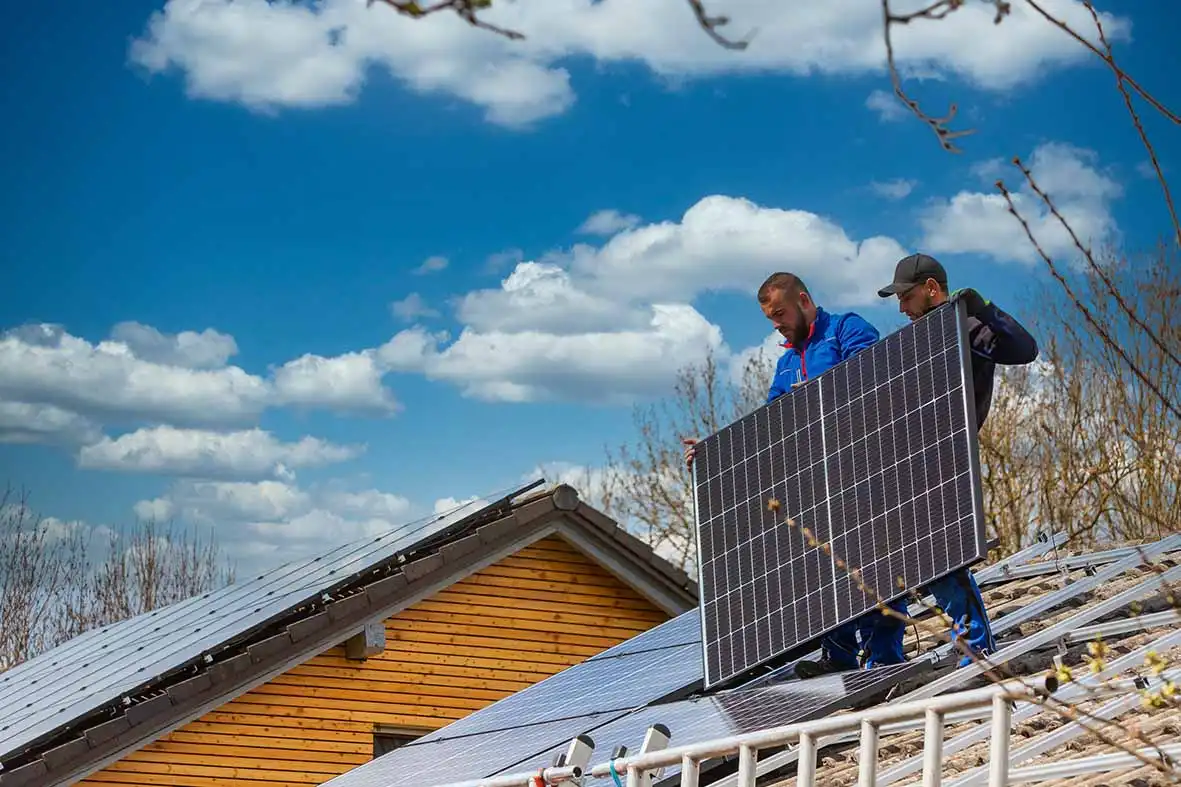
solar panel men technicians carrying photovoltaic solar moduls

Timeline And Communication Expectations

Think of the schedule as a chain of milestones rather than a single install date. In addition, When you and your contractor agree on what done means at each step, you reduce surprises and avoid last-minute rescheduling.

Typical Phase-By-Phase Schedule (Ranges)

Every home is different; however most projects follow the same sequence. Also, These ranges vary based on roof complexity, city review workload, equipment availability, and utility processing.

  • On-site check + final design: about 3–10 business days.
  • Engineering and permit package: roughly 1–3 weeks.
  • City permit review and issuance: commonly 2–6 weeks (longer when revisions are necessary).
  • Installation: often 1–3 days once materials are on site.
  • City inspection: typically scheduled within days to a couple of weeks, depending on availability.
  • Utility activation: may take 1–4 weeks after a passed inspection.

Decisions To Confirm Early (What Drives Cost And Schedule)

DecisionWhy it mattersConfirm this early
Roof scopeRepairs or reroofing can change attachment details and timing.Roof condition, warranty approach, and who owns repairs.
Main electrical panel readinessLimited capacity can require additional electrical work and permits.Panel photos, available breaker space, and any upgrade needs.
Equipment choicesPanel/inverter/battery selections affect design and lead times.Exact model numbers and the availability window.
Battery or backup goalsBackup capability can add equipment and additional coordination.Critical loads list and where equipment will be located.
Access and aestheticsConduit routing and placement decisions prevent rework.Preferred routes, visible areas, and access constraints.

Communication Expectations That Keep Projects On Track

  • One point of contact for schedule and paperwork questions
  • Milestone dates shared in writing (even if they are ranges)
  • Weekly update message with permit status and next action
  • Clear plan for inspection day access and any required homeowner presence
  • Change-order rules: what triggers them, how pricing works, and how you approve

After Activation: Simple Maintenance And Monitoring

Solar systems don’t need daily attention, yet a few habits protect performance and warranties.

  • Check the monitoring app periodically for alerts or unusual drops in production.
  • Keep trees trimmed so new shade doesn’t quietly cut output over time.
  • Rinse dust and pollen when needed; avoid abrasive tools and harsh chemicals.
  • Save your permit, inspection, and warranty documents in one folder for easy reference.
  • Call a qualified pro if you see roof leaks, damaged wiring, or recurring system errors.

Want a construction-focused walkthrough before you commit to a solar contract? Free estimate, and we’ll help you identify roof or remodeling items that are easier to handle before panels go up. You can also reach us at +1 (916) 234-6696.

Helpful Links

Frequently Asked Questions

Many homeowners see the physical install completed quickly, but the full solar panels timeline usually runs several weeks because design, permits, inspections, and utility activation all stack up.

As a rough planning range, expect:

  • Design/engineering and permit submittal: days to a couple of weeks
  • City review and permit issuance: a few weeks (sometimes longer if revisions are necessary)
  • Installation and city inspection: days to a couple of weeks, depending on scheduling
  • Utility activation: additional time after the inspection passes

If the project includes roof repairs or electrical changes, add time for that construction scope as well.

In most cases, yes. Roof-mounted solar typically triggers building and/or electrical permits, plus at least one inspection before the utility turns the system on.

  • Ask your contractor to confirm which permits apply to your exact scope and address.
  • Make sure the contract states who will pull the permit and who will schedule inspections.
  • Request copies of the issued permit and the final inspection record for your files.

Permitting rules can vary by scope, so treat this as a normal planning step, not an afterthought.

Pricing depends on the home and the scope, so two similar-looking bids can still be apples-to-oranges. Focus on what is included and what could become an add-on later.

  • System size and layout: more panels and more complex roof geometry typically increase labor and materials.
  • Roof condition: repairs or reroofing can add construction cost and time.
  • Electrical scope: changes to support the system can affect pricing and permitting.
  • Equipment choices: panel and inverter types, plus any battery backup, change the total cost.
  • Permitting and utility steps: confirm these are included and handled by the contractor.

Ask for equipment model numbers and a clear list of what is included so you can compare bids fairly.

They can. Equipment selection affects the engineering package, the permit set, and sometimes availability. Batteries and backup features can add extra coordination, especially when the project needs additional electrical work.

  • Confirm the exact model numbers in writing (not just brand names).
  • Ask if any items are on backorder and what the realistic delivery window is.
  • If you want backup power, ask where the battery and related equipment will be located and whether any additional approvals are necessary.

Clear equipment decisions early reduce redesign and help the contractor give you a more reliable schedule.

If the roof is near the end of its service life, handling roof work before solar often saves money and frustration later. Removing and reinstalling panels to redo a roof adds labor and can complicate warranties.

  • Ask for an honest roof condition check before finalizing the solar design.
  • Coordinate who is responsible for any roof repairs discovered during the project.
  • Make sure the waterproofing approach is documented (attachments, flashing, and sealing details).

A little planning up front can prevent the most common schedule disruption: unexpected roof work mid-project.

In many residential projects, the contractor prepares and submits the paperwork, but you should confirm this in writing. Utility approval can become the final schedule driver after the city inspection passes.

  • Confirm who submits the interconnection paperwork and who tracks status.
  • Ask what information you need to provide (account details, signatures, or site access).
  • Request a copy of the final utility approval for your records.

Build PTO time into your expectations so you don’t plan around the install day alone.

Verify licensing early and treat it as standard due diligence. In California, you can check license status and basic details through the CSLB.

  • Match the business name on the license to the name on your proposal and contract.
  • Confirm the license is active and the classification fits the work being performed.
  • Ask for proof of insurance and keep a copy with your project paperwork.
  • Be cautious of high-pressure sales, cash-only demands, or promises that permits are unnecessary.

If something feels off, pause and verify before you sign or pay a deposit.

Licensed, insured & trusted local contractor

US Construction & Remodeling Corp.
9821 Business Park Dr, Sacramento, CA, 95827
Phone: +1 (916) 234-6696

CSLB License #: 1117562 Fully licensed and insured.

View our Google Business Profile

Leave a comment

This website uses cookies to improve your web experience.
Explore
Drag