Skip links

solar panels timeline arden | Week-by-Week Guide

Planning solar for an Arden home gets much easier when you treat it like a mini-remodel: roof condition, electrical capacity, paperwork, and scheduling all matter. If you’re looking for a realistic solar panels timeline arden homeowners can plan around, the checklist and week-by-week outline below will help you set expectations before you sign anything.

Quick checklist:

  • Verify roof condition first; plan reroof timing before installing panels.
  • Size the system from real kWh usage and shading, not just panel count.
  • Compare inverter options (microinverters vs string + optimizers) and monitoring.
  • Confirm permitting and utility interconnection responsibilities and timeline.
  • Review the contract (warranties, production assumptions, exclusions, roof penetrations).
  • Confirm any electrical panel upgrades and inspection steps.

TL;DR: The “waiting” phase (design, review, utility steps) usually takes longer than the on-site install. Tighten your scope early and you avoid redesigns, resubmittals, and missed inspection windows. For a quick consult, call +1 (916) 234-6696.

  • Confirm your roof’s remaining life and any needed repairs before panels go up
  • Decide whether you want a battery, generator tie-in, or solar-only setup
  • Check main panel capacity, breaker space, and any upgrade needs
  • Pick equipment locations (inverter, shutoffs) and a clean conduit route
  • Collect HOA or neighborhood rules early, if they apply to your address
  • Plan for permitting, inspections, and utility “permission to operate” time

Step-By-Step Plan For Solar Panels Timeline Arden

DecisionWhy it mattersQuick check
Roof conditionInstalling over an aging roof risks rework later.Inspect first and plan reroof timing if needed.
System sizeDetermines cost and energy offset.Size from real kWh usage and shading.
Inverter typeAffects monitoring and shade performance.Compare microinverters vs string + optimizers.
Permits & interconnectionApprovals can drive the schedule.Ask who handles permits/utility and expected timelines.

Homeowners usually ask one question: “How long until it’s actually producing power?” A solid timeline starts by separating the fast parts (site assessment and install) from the slow parts (plan review, also inspection scheduling, and utility approval).

To keep expectations realistic, this solar panels timeline arden guide focuses on the decisions that prevent rework and shorten the back-and-forth with reviewers.

What You Can Control

  • Decisions: system size, battery choice, equipment locations, and conduit routing
  • Prep work: roof repairs, attic access, and any electrical panel changes
  • Documents: HOA sign-off (if required), utility account info, and quick responses to revision requests

What Typically Sets The Pace

  • Roof condition and complexity: steep pitches, multiple roof planes, and reroof needs add time and labor
  • Electrical capacity: limited panel space or an undersized service can trigger upgrades and additional inspections
  • Paperwork cycles: a single design change can restart parts of review, so it pays to lock the plan before submittal
  • Equipment lead times: specialty panels, batteries, or matching hardware can stretch delivery windows

If you want a timeline you can actually schedule around (vacation dates, roof work, electrician availability), call US Construction & Remodeling Corp. As a result, at +1 (916) 234-6696 for a quick planning conversation.
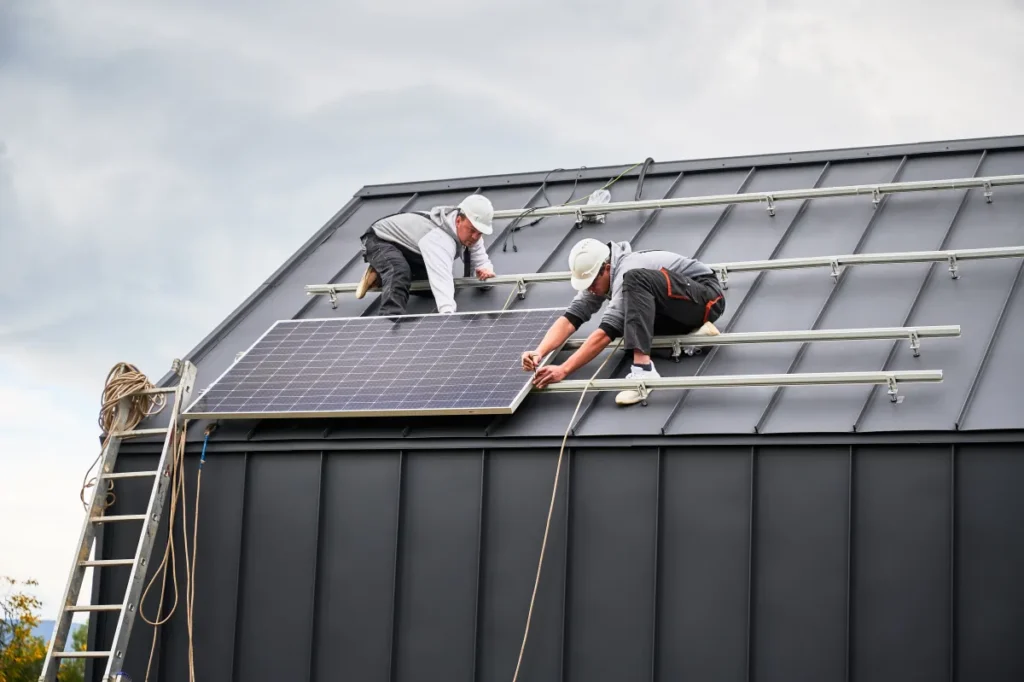
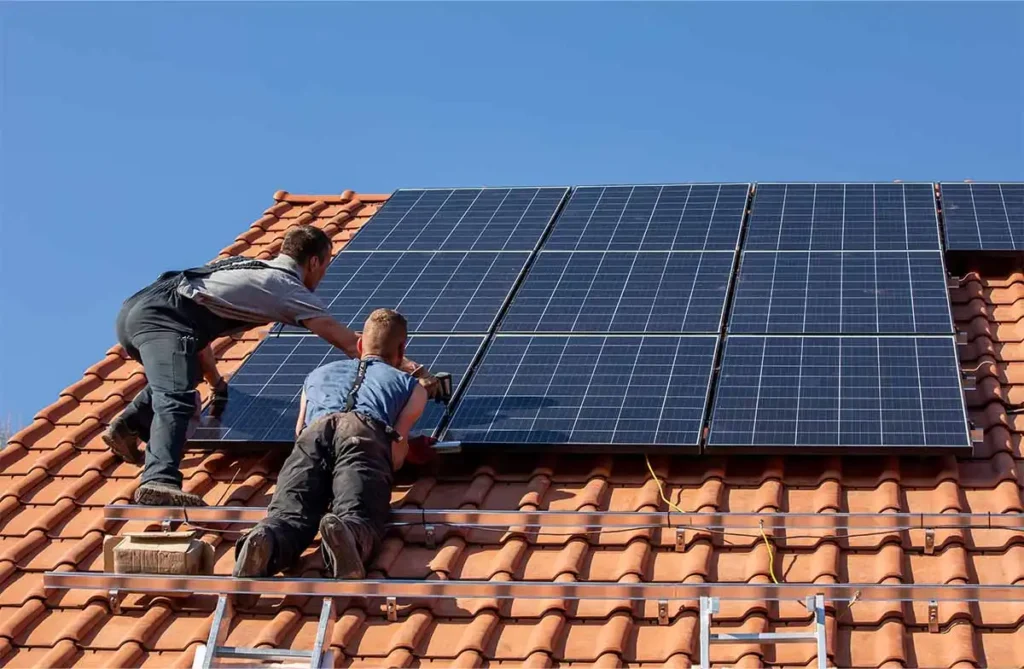
metal roof installation technicians installing photovoltaic solar panels o

Decisions To Make Before Demo For Solar Panels Timeline Arden

“Demo” on a solar project usually means the start of physical work—roof prep, running conduit, or opening a wall/ceiling for an electrical upgrade. Overall, Sorting these decisions early keeps the job moving and avoids cosmetic surprises.

Design And Performance Choices

  • Goal: lower bills, backup power, EV charging support, or a mix
  • System size: match expected usage, future appliances, and roof space
  • Battery (yes/no): decide now because it affects equipment placement and wiring
  • Aesthetics: panel layout, visible conduit, and where shutoffs will sit

Roof, Attic, And Electrical Readiness

  • Roof life: if the roof is near end-of-life, plan the reroof before panels to avoid paying for removal later
  • Structural review: confirm the roof can support the racking and wind loads for your exact layout
  • Attic access: choose wire paths that minimize drywall cuts and keep serviceable junction points
  • Main panel space: verify breaker capacity and label locations so the inspection goes smoothly

Accessibility And Safety (Aging-In-Place Friendly)

Solar work involves ladders, cords, and temporary shutoffs. For this reason, If someone in the home has mobility limits, plan the jobsite setup in advance so the house stays usable.

  • Ask for a clear, taped-off walkway to the main entry during install days
  • Request shutoff labels that are easy to read, especially in low light
  • If you rely on medical devices, talk through backup power options and outage planning
  • Consider adding brighter exterior lighting while crews are already working around the property

Prefer to talk it through before you commit? Call +1 (916) 234-6696. You can also request an estimate online.

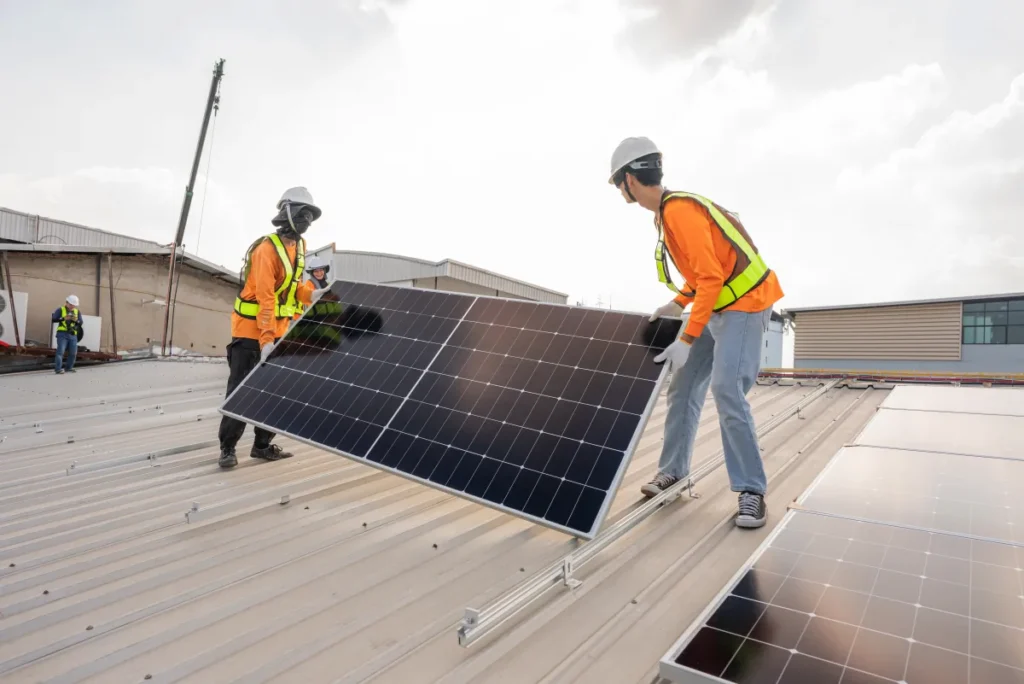
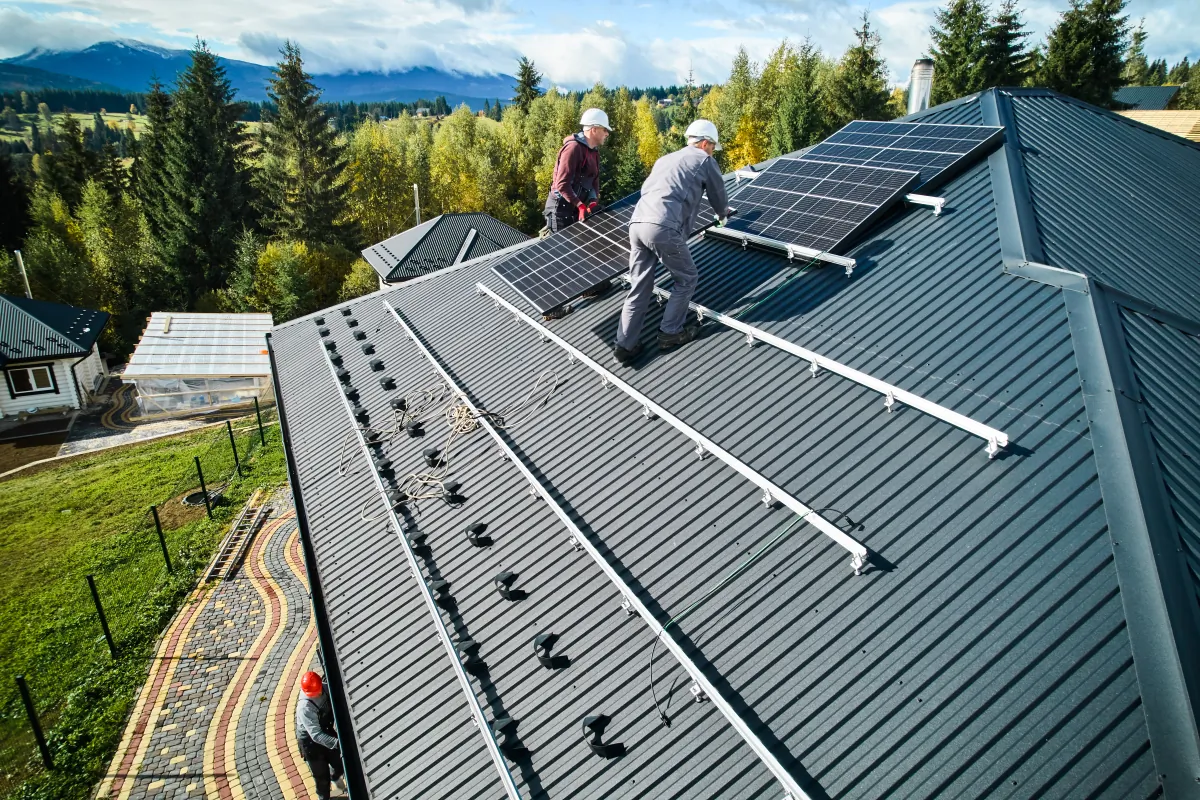
metal roof installation technicians carrying photovoltaic solar module whi

Permits, Inspections, And Local Requirements

Arden-Arcade is largely unincorporated, which means many residential projects route through Sacramento County for building permits and electronic plan submittals (depending on the exact address). Meanwhile, Because jurisdictions can vary street by street, confirm who has authority before your installer finalizes drawings.

Permitting And Inspection Checkpoints (High Level)

  • Plan submittal: your installer typically submits a plan set showing layout, attachments, and electrical details
  • Review and revisions: if reviewers request changes, respond quickly to avoid a stalled queue
  • Permit issuance: work should start only after the permit is approved and posted, where required
  • Inspections: expect at least a final inspection, and sometimes additional electrical or structural checks based on scope

Utility Coordination

Installation doesn’t always equal “on.” Many projects also require utility interconnection steps and an approval to energize the system (often called permission to operate, or PTO). Additionally, Build that buffer into your schedule, especially if you’re coordinating other electrical work.

Need help mapping the sequence—roof work, electrical prep, install day, inspection, and utility approval? Also, Call +1 (916) 234-6696 and we’ll walk through it with you.

Helpful Links

Frequently Asked Questions

Many homeowners see a multi-week timeline from signed design to permission to operate, with the on-site installation itself often taking only a day or two. The schedule depends on permit review timing, inspection availability, and utility processing.

  • Planning + design: often 1–3 weeks
  • Permit review: commonly 2–6+ weeks
  • Install + inspection: often 1–2 weeks
  • Utility approval (PTO): often 1–4+ weeks

For a project-specific schedule, call +1 (916) 234-6696.

Delays usually come from coordination issues, not the installation work. A few common causes:

  • Roof repairs or reroof decisions made after drawings are submitted
  • Electrical panel limitations that require redesign or added scope
  • Slow responses to plan-check corrections or missing documents
  • Inspection windows that don’t line up with the installer’s schedule
  • Utility interconnection steps that extend beyond the final inspection

You can reduce risk by locking equipment choices early and keeping one decision-maker for approvals.

In many cases, yes—roof-mounted solar and related electrical work typically require permits and inspections. Arden-Arcade is largely unincorporated, so many addresses go through Sacramento County, although the exact jurisdiction depends on where the property sits.

Your installer should confirm the local authority and submit the plan set. If you’re unsure who has jurisdiction for your address, ask before you sign so you don’t lose time on the wrong submittal path.

Costs vary widely, so the most useful approach is to understand the drivers and get a written scope. The biggest cost factors typically include:

  • System size and panel quantity
  • Roof complexity (pitch, multiple planes, access)
  • Electrical work (main panel upgrades, subpanels, added circuits)
  • Battery storage and backup power configuration
  • Conduit routing and finish work (hidden vs. surface runs)

If you want help scoping the related construction work and avoiding surprise add-ons, call +1 (916) 234-6696 for a consult.

If the roof is near the end of its service life, replacing it first usually saves money and downtime. Removing panels later to reroof can cost additional labor and can also complicate warranties and scheduling.

  • If you’re within a few years of needing a new roof, plan the reroof first
  • If the roof is solid, focus on targeted repairs and proper flashing details
  • Ask how the installer will protect penetrations and seal around attachments

Often, yes—but planning for it now can make the future upgrade faster and cleaner. Even if you skip the battery today, you can set yourself up for success with smart layout and electrical prep.

  • Leave wall space for future equipment near the main service area
  • Confirm your main panel has room (or plan an upgrade) for added breakers
  • Ask for a conduit path that allows additional wiring later

After installation, the project usually moves through inspection and utility approval. The system may not be energized until the jurisdiction signs off and the utility completes interconnection processing.

  • Installer walkthrough: equipment locations, shutoffs, monitoring basics
  • Inspection: verifies code compliance for the solar and related electrical work
  • Utility steps: final processing before the system can operate (PTO)

If you’re coordinating other remodeling work at the same time, keep that post-install window in mind so schedules don’t collide.

Leave a comment

This website uses cookies to improve your web experience.
Explore
Drag