
Skip links

Kitchen Remodeling Permit Requirements In Folsom

Planning a kitchen remodel in Folsom starts with understanding kitchen remodeling permit requirements so your layout, trades, and inspections stay aligned from day one.

Quick checklist:

  • Define the scope and your must-have outcome (performance, budget, timeline).
  • Confirm what work is involved and the order of operations.
  • Finalize measurements and key selections before ordering long-lead materials.
  • Collect 2–3 quotes and compare line-by-line (scope, allowances, cleanup, warranty).
  • Create a simple schedule and pre-order the items that most often cause delays.

If you want a quick sanity-check before you invest in drawings, call +1 (916) 234-6696 or request a free estimate.

TL;DR: Cosmetic swaps usually move fast, but changes to plumbing, electrical, walls, windows, or ventilation often require permits. In Folsom, many residential permits run through the City’s ePermit Center (eTRAKiT) for submittals, plan review tracking, payments, and inspection scheduling. Lock your scope early and you avoid rework later.

  • Confirm whether you’re moving plumbing, gas, or electrical.
  • Decide on the appliance package and hood/vent plan.
  • Identify any wall changes (load-bearing or not).
  • Choose cabinet layout, countertop type, and backsplash material.
  • Plan lighting and outlet locations (including under-cabinet).
  • Set a target start date, then plan around permit review.

Step-By-Step Plan For Kitchen Remodeling Permit Requirements

DecisionWhy it mattersQuick check
ScopeDefines what is included and prevents surprises.Write a line-item scope and allowances list.
Site constraintsAccess and hidden conditions can change the plan.Check access and existing surfaces before work starts.
SelectionsLong-lead items can drive the schedule.Confirm availability before starting.
PermitsSome scopes require approvals and inspections.Ask your city/county what applies to your project.

Permits feel intimidating because they sit between design and construction. For example, The upside is simple: a permit-ready scope forces decisions early, which keeps the job moving once work starts.

This approach fits homeowners who want a functional upgrade (layout, storage, lighting, ventilation) and want inspections to go smoothly, without last-minute surprises. A clear scope also makes kitchen remodeling permit requirements easier to manage because everyone works from the same plan.

  1. Define the scope: list what stays, also what moves, and what gets upgraded.
  2. Document existing conditions: note plumbing locations, electrical panel capacity, gas lines, and any soffits or beams.
  3. Choose layout + appliances: sink, range, dishwasher, refrigerator, hood, and any specialty appliances.
  4. Confirm impacts: moving plumbing, adding circuits, changing ventilation, or modifying walls typically shifts you into permitted work.
  5. Build a plan set: floor plan, electrical/lighting plan, plumbing/vent notes, and product cut sheets where needed.
  6. Submit and track: respond to plan check comments quickly and line up rough-in timing with inspection availability.
  7. Build to the approved plans: keep changes documented so the final sign-off matches the work.

Contractor Interview Questions That Protect Your Schedule

Before you sign, get clear answers on who owns the permit and inspection details.

  • Who will be the permit applicant and who communicates with the City?
  • Which trade permits do you expect (electrical, plumbing, mechanical/vent)?
  • What drawings and specs do you include for plan review?
  • How do you handle corrections and revisions during plan check?
  • Who schedules inspections and who meets the inspector on site?
  • What happens if we change appliances or layout after approval?

Decisions To Make Before Demo

Demo feels like progress, but the smartest “demo day” happens after you lock the decisions that drive your permit set and rough-in work.

  • Plumbing locations: sink, dishwasher, refrigerator water line, and any prep sink.
  • Electrical loads: dedicated circuits, GFCI/AFCI needs, under-cabinet lighting, and island outlets.
  • Ventilation plan: hood size, duct route, termination, and clearances.
  • Cabinet layout: island size, walkways, pantry storage, and where trash/recycling lives.
  • Finish coordination: countertop thickness, backsplash tile pattern, and floor transitions.
  • Scope boundaries: decide whether adjacent flooring, paint, or living-area tie-ins are in or out.

Accessibility And Aging-In-Place Choices (Worth Deciding Early)

Even if you don’t need accessibility upgrades today, a few practical choices can make the kitchen safer and easier to use.

  • Use pull-out shelves and deep drawers for heavy cookware.
  • Choose lever-style handles for faucets and cabinet hardware.
  • Plan brighter task lighting at the sink, range, and prep zones.
  • Keep clear walkways and reduce tripping hazards at transitions.
  • Consider a lower work surface section or a seated prep spot.
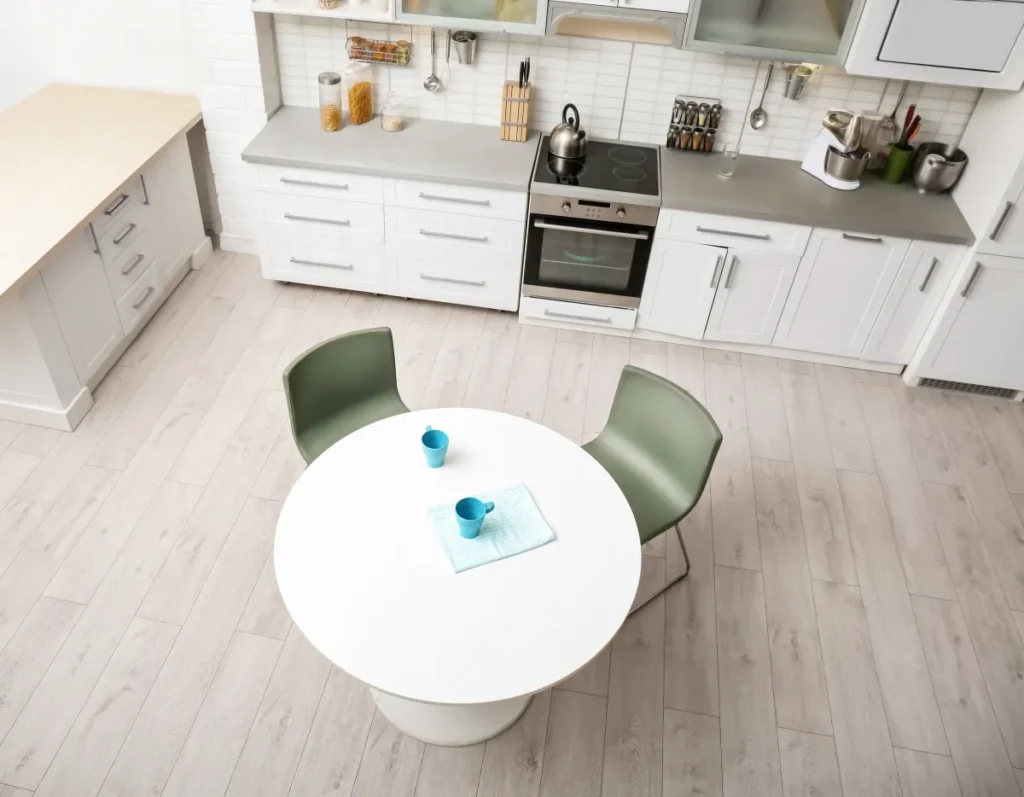
kitchen flooring modern kitchen interior security cctv camera view

Permits, Inspections, And Local Requirements For Kitchen Remodeling Permit Requirements

Kitchen remodeling permit requirements usually depend on what you change, not how big the kitchen is. In addition, If you stay cosmetic—paint, cabinets in the same footprint, countertops, and a like-for-like sink/faucet swap—you may not need a building permit. Also, Once you move plumbing, add or relocate circuits, modify walls, or change how the hood vents, you’re typically in permit territory.

In Folsom, many residential building and trade permits run through the City’s ePermit Center (eTRAKiT). Meanwhile, Homeowners and contractors can use it to submit applications, track plan review, pay fees, and schedule inspections.

What Inspections Commonly Cover

  • Framing/structural: headers, supports, and any engineered details when walls change.
  • Electrical: circuit protection, outlet spacing, dedicated appliance circuits, and safe wiring methods.
  • Plumbing: correct pipe sizing, venting, shutoffs, and leak-free connections.
  • Mechanical/ventilation: proper ducting, termination, and clearances for hood systems.

Decisions That Change Scope

DecisionWhat it affectsPermit/inspection impactCoordination note
Move the sink or dishwasherDrain, vent, water linesPlumbing permit + rough/finalConfirm cabinet layout before rough-in
Add circuits or relocate outletsPanel load, countertop receptaclesElectrical permit + rough/finalAppliance specs drive circuit needs
Change or add a hood ventDuct route, clearances, terminationMechanical review may applyPick hood model early and keep cut sheets
Remove or alter a wallStructure, spans, shearBuilding/framing inspectionSome scopes need engineering
Expand work into adjacent roomsFlooring, transitions, stagingMay affect inspection access/timingPlan dust control and storage

What Happens Week By Week

Every home is different, but the sequence stays consistent. As a result, Permits and inspections sit on the critical path, so you’ll save time when you line up selections and drawings before demo.

  • Week 0 (planning): finalize layout, appliance specs, and a permit-ready scope; submit if required.
  • Week 1 (site prep + demo): protect nearby areas, control dust, demo to a clean stopping point, and verify existing conditions.
  • Week 2 (rough trades): plumbing/electrical/vent rough-in based on approved plans; schedule rough inspections.
  • Week 3 (close-up work): framing touch-ups, then drywall and surface prep.
  • Week 4 (install): cabinets, countertops template/installation, backsplash, and finish electrical/plumbing.
  • Week 5 (finals): final hookups, punch list, final inspections, and a detailed walkthrough.

Want an estimate that matches your scope and permit path? For this reason, Call +1 (916) 234-6696 and we’ll talk through your layout, constraints, and timeline goals.

kitchen flooring positive african american couple looking at camera

Common Pitfalls And How To Avoid Them

Most delays come from mismatched decisions—design changes after plan review, materials arriving late, or trades working off different assumptions. Overall, A short preconstruction check keeps the schedule realistic and inspections clean.

In Folsom, inspection timing can affect cabinet and countertop dates, so it helps to plan rough inspections before you lock in templating and install windows.

Planning Mistakes That Trigger Rework

  • Starting demo before the scope is locked: confirm layout and appliance specs so rough-in lands in the right place.
  • Leaving ventilation undecided: hood size and duct routing can affect framing, electrical, and inspection sign-offs.
  • Underestimating electrical needs: modern kitchens often need more dedicated circuits than homeowners expect.
  • Skipping real measurements: islands, fridge doors, and dishwasher swing need site-verified clearances.
  • Changing materials midstream: countertop thickness or tile changes can shift outlets, trim, and backsplash layout.

Maintenance Tips After The Remodel

Simple habits protect finishes and keep everything working smoothly.

  • Countertops: follow the manufacturer’s cleaner recommendations and avoid abrasive pads.
  • Tile and grout: wipe spills quickly, use pH-neutral cleaners, and reseal grout if your tile type calls for it.
  • Cabinet doors and drawers: re-tighten hardware after the first few months as things settle.
  • Caulked joints: keep water away from seams at sinks and backsplashes; refresh caulk when it cracks.
  • Vent hood filters: clean or replace on schedule so grease doesn’t build up.

Need help confirming kitchen remodeling permit requirements for your Folsom address and scope? Additionally, Call +1 (916) 234-6696 for a quick consult, or request a free estimate online.

Helpful Links

Frequently Asked Questions

It depends on what you change. Cosmetic work (paint, cabinets in the same footprint, countertops, and similar swaps) may not require a building permit. Once you change plumbing, electrical, walls, windows, or ventilation, the City typically requires permits and inspections.

  • Moving the sink, dishwasher, or gas line
  • Adding new circuits, moving outlets, or upgrading lighting layouts
  • Removing or modifying walls (especially if they may be structural)
  • Installing or rerouting a kitchen hood duct
  • Changing doors/windows as part of the remodel

When you’re unsure, treat it like a scope question, not a guessing game. A quick review of your layout and trade changes can clarify what you’ll need to submit through Folsom’s ePermit Center (eTRAKiT) and what can stay permit-free.

In many remodels, the contractor pulls the permits and coordinates inspections because the work ties together multiple trades. That said, the homeowner still owns the outcome, so you should understand exactly who the permit applicant is and who meets the inspector.

  • Ask who submits the application and responds to plan check comments.
  • Confirm who schedules inspections and how much notice the crew needs.
  • Get clarity on change orders if you revise the layout after approval.
  • Verify trade partners (electrical/plumbing) are properly licensed for the work.

If you want, call +1 (916) 234-6696 and we’ll walk through a clean division of responsibilities so nothing falls through the cracks.

Timing varies by scope, submittal quality, and how many correction cycles happen during plan review. For many kitchen projects, plan review can range from a few weeks to several weeks, and inspection availability can shift week to week.

You can usually shorten the timeline by submitting complete plans and making decisions early. In practice, these details help:

  • Lock the appliance package before you submit (it drives circuits and ventilation).
  • Include clear electrical and lighting plans so outlet and circuit questions don’t stall review.
  • Respond quickly to plan check comments and keep revisions organized.
  • Schedule rough inspections as soon as rough-in work is ready.

For a realistic schedule based on your exact scope, call +1 (916) 234-6696.

Most permitted kitchen remodels involve a “rough” phase and a “final” phase. The exact list depends on what you change, but these are common checkpoints:

  • Rough framing (if applicable): wall changes, headers, and supports before closing up.
  • Rough electrical: wiring, box locations, circuit protection, and required devices.
  • Rough plumbing: supply, drain, venting, and shutoffs before cabinets conceal it.
  • Mechanical/vent (if applicable): hood duct routing, termination, and clearances.
  • Final inspections: fixtures installed, devices trimmed out, and the work matches approved plans.

Inspection-ready work starts with access. Keep the site clear, label changes, and have specs available when a detail depends on the manufacturer’s instructions.

Permits can add cost in a few honest, predictable ways: City fees, plan preparation, and the labor needed to meet code requirements. Because kitchen remodeling permit requirements may involve multiple trades, the planning time matters as much as the fee line item. If your scope involves structural changes, you may also need engineering, which adds design time and documentation.

Cost drivers that often show up when permits are involved include:

  • Electrical upgrades (new circuits, panel capacity, lighting plans)
  • Plumbing relocations (drain/vent changes, water line reroutes)
  • Ventilation changes (ducting route, termination, clearances)
  • Wall modifications (framing scope and any required calculations)

Rather than guessing, get a scope-based estimate. Call +1 (916) 234-6696 or request a free estimate online.

Seemingly small choices can change electrical loads, ventilation needs, and rough-in locations. To keep plan review clean, decide on these items early:

  • Range type: induction and electric ranges often require specific circuit capacity.
  • Vent hood: model, duct size, and duct route can drive framing and mechanical details.
  • Dishwasher and disposal: dedicated circuits and plumbing connections may apply.
  • Island design: outlet placement and clearances matter for safety and inspections.
  • Countertops/backsplash: thickness and tile layout can affect outlet heights and finish details.

When you pick products, keep the cut sheets. They help during plan check and can also settle inspection questions fast.

In general, it’s safer to wait if your scope requires permits. Starting work before approval can lead to stop-work orders, rework, or difficulty getting inspections signed off—especially if you remove finishes that hide critical rough-in details.

If you’re eager to move forward, there are productive steps that don’t gamble with compliance:

  • Finalize layout and selections, then confirm trade impacts.
  • Order long-lead items like cabinets, appliances, and specialty fixtures.
  • Plan dust control, staging, and temporary kitchen needs.
  • Prepare a complete plan set so plan review goes smoother.

If you want a quick go/no-go review on your scope, call +1 (916) 234-6696.

Licensed, insured & trusted local contractor

US Construction & Remodeling Corp.
9821 Business Park Dr, Sacramento, CA, 95827
Phone: +1 (916) 234-6696

CSLB License #: 1117562 Fully licensed and insured.

View our Google Business Profile

Explore the full service overview

If you want the big-picture process, pricing factors, and what to expect, start here: Kitchen Remodeling.

Leave a comment

This website uses cookies to improve your web experience.
Explore
Drag