Small Bathroom Sinks: A California Homeowner’s Guide
If your vanity area feels cramped, the right small bathroom sinks can make the room easier to use without expanding the footprint. This guide walks through size, layout, materials, and the practical details that keep a compact bathroom comfortable for everyday use in California.
Quick checklist:
- Define the scope and prioritize daily function (shower, storage, ventilation).
- Confirm what trade work is involved (plumbing, electrical, drywall) and the order of work.
- Choose finishes that hold up in wet areas and are easy to clean.
- Collect 2–3 quotes and compare line-by-line (scope, allowances, cleanup, warranty).
- Decide what needs to be ordered first (tile, fixtures, vanity) to keep the schedule moving.
TL;DR: Choose a sink shape that protects walking space, match the faucet reach to the bowl, and plan storage around what you actually use daily. Keep the existing plumbing if you can; once you move drain or supply lines, the scope and permit needs can change by jurisdiction. Get a written estimate with photos and rough measurements before you buy fixtures.
- Measure wall-to-wall and note door/linen-closet swings
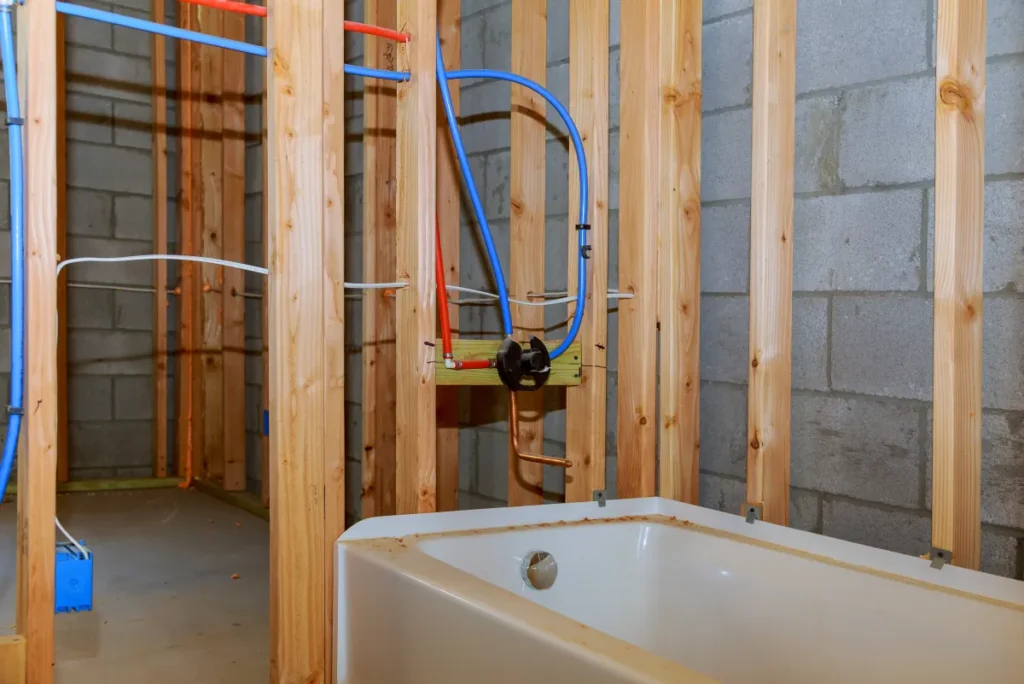
- Photograph current plumbing (supply lines and drain)
- Pick a sink type: compact vanity, wall-mount, pedestal, or corner
- Confirm faucet hole count and spout reach
- Decide where daily items will live (drawers, recessed cabinet, shelves)
- Collect inspiration photos and your must-haves for an estimate
What Changes The Experience The Most For Small Bathroom Sinks
| Decision | Why it matters | Quick check |
|---|---|---|
| Wet-area finishes | Wet zones need durable, easy-clean surfaces. | Choose materials rated for bathrooms and simple maintenance. |
| Ventilation | Helps prevent humidity and long-term damage. | Confirm fan sizing and vent routing. |
| Layout | Good layout improves daily usability. | Verify clearances and door swings. |
| Budget control | Keeps scope creep from blowing up the price. | Use allowances and a written change-order process. |
- Choose a shallower front-to-back sink to open the aisle
- Use an offset drain to maximize drawer space in a compact vanity
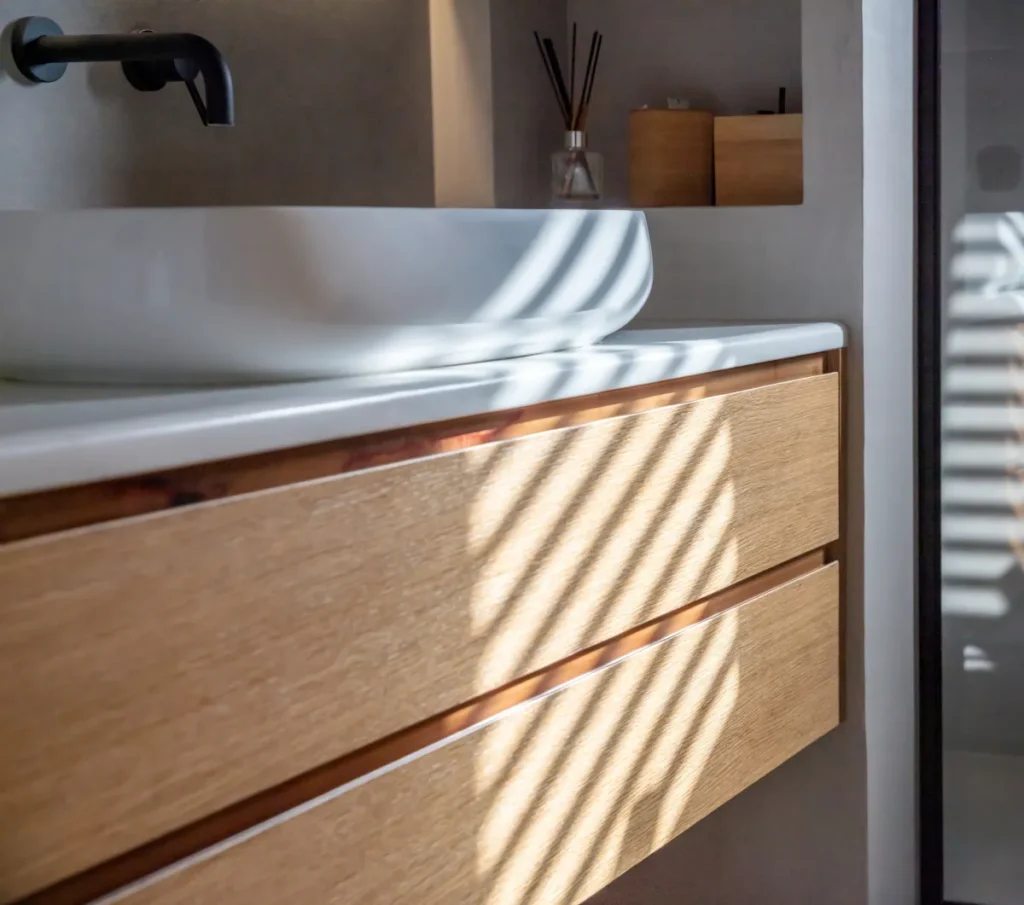
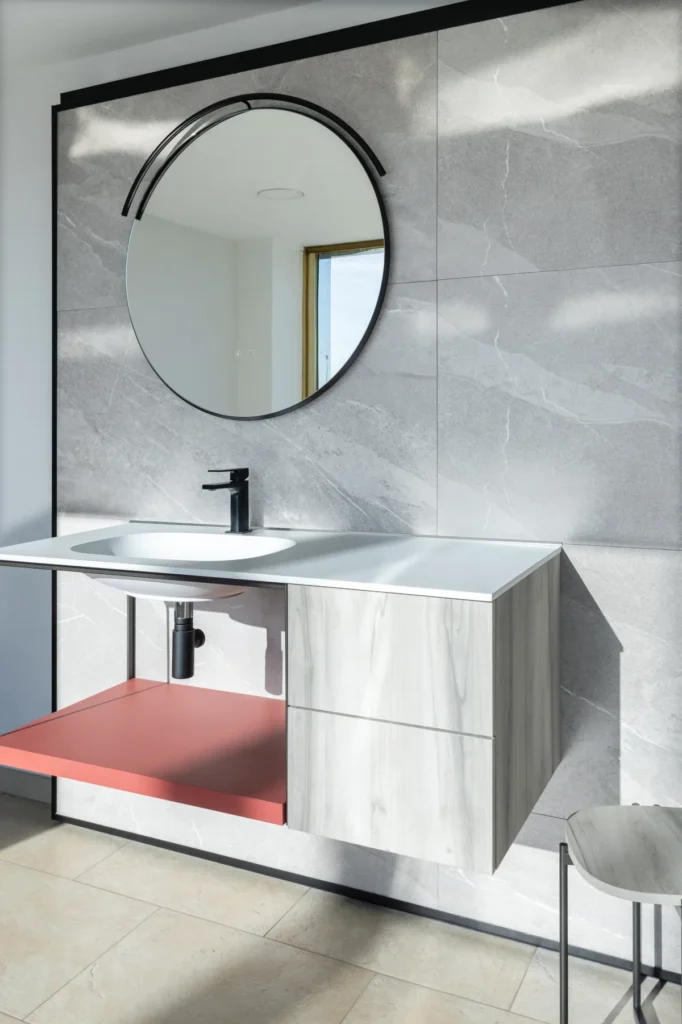
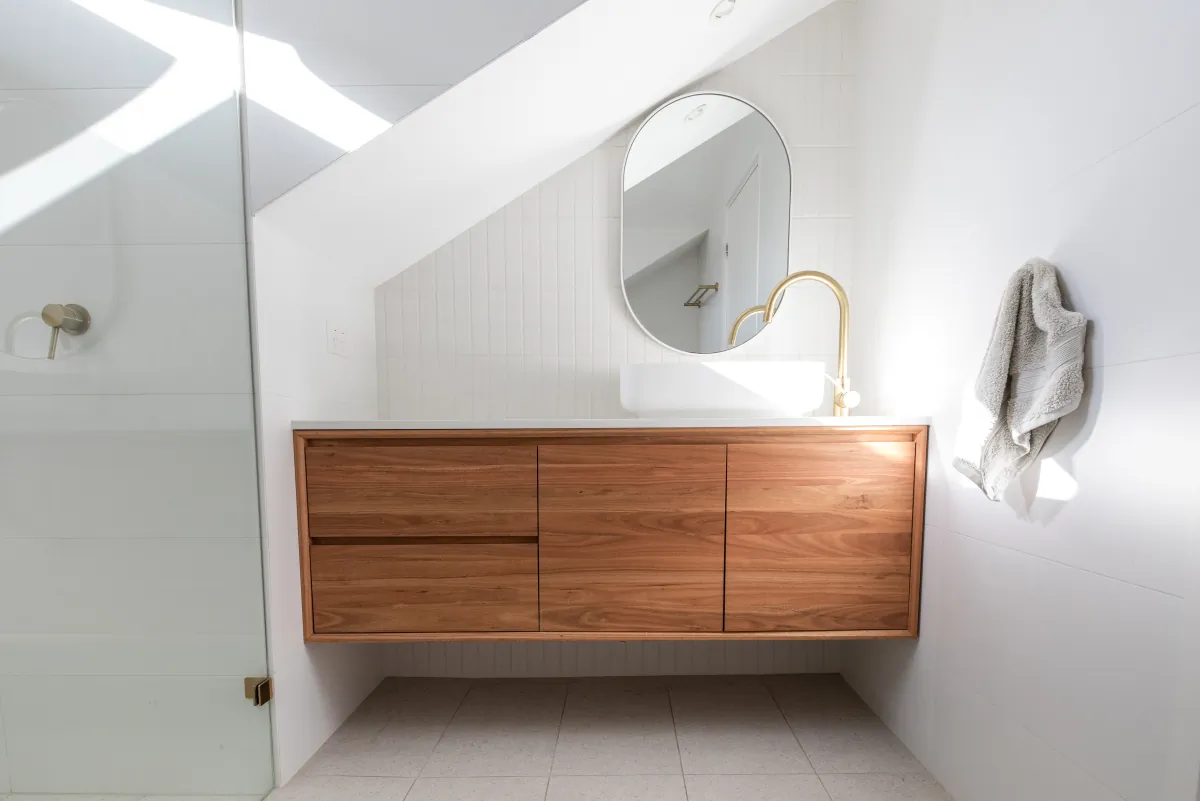
- Wall-mount the sink to show more floor and speed up cleaning
- Pick a rectangular bowl when you need more landing space for soap and toothbrushes
- Go with an integrated sink-and-top to reduce seams and wipe-down time
- Use a single-handle faucet when clearances are also tight
- Add a short backsplash or side-splash to protect paint in splash zones
- Size the mirror to the vanity width to make the room feel larger
- Layer lighting at the sink: ceiling light plus mirror-side task light
- Choose hardware and faucet finishes that hide water spots in hard-water areas
- Consider a recessed medicine cabinet for storage without extra depth
- Place a towel ring within reach so the countertop stays clear
Most problems in a tight bathroom show up at the sink: elbows hitting walls, toiletries taking over the counter, and water splashing where it shouldn’t. In addition, The good news is you can often improve comfort with smart fixture choices and a few layout tweaks, even if you keep the toilet and shower exactly where they are.
If a “simple” sink swap uncovers bigger issues (like damaged flooring edges or weak lighting), a broader bathroom remodeling plan can prevent doing the same work twice.
Storage That Hides In Plain Sight
Counter space is limited, so storage needs to move up the wall or into drawers.
- Recessed medicine cabinet for daily items
- Deep drawers with dividers instead of a single open cabinet
- Toe-kick drawer for extra rolls or cleaning supplies
- Over-toilet cabinet or narrow tower where clearance allows
- Floating shelf above the towel bar for lightweight items
- Built-in hair-tool outlet station inside a drawer (when feasible)
Hypothetical Before-And-After (Example)
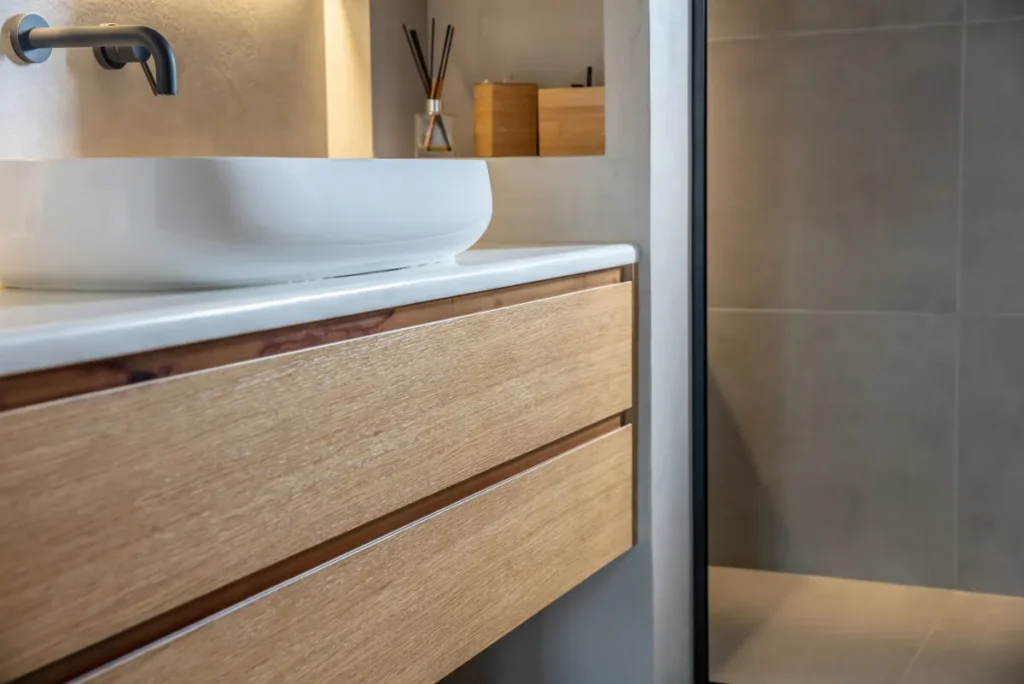
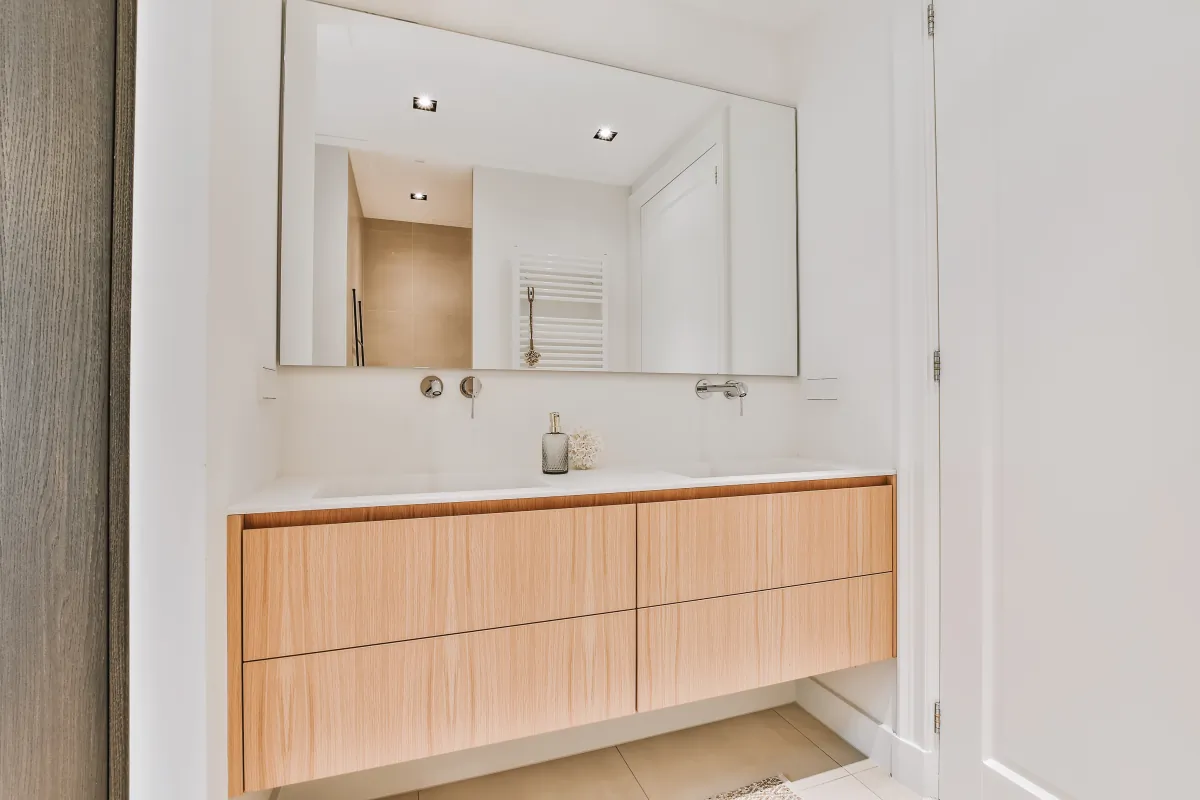
Hypothetical example: A small hall bath has a pedestal sink, no drawers, and a door that swings close to the bowl. Overall, After a sink upgrade, the room uses a 24-inch compact vanity with an offset drain, a single-handle faucet, and a recessed medicine cabinet. In addition, The walking lane stays clear, daily items move off the counter, and cleaning takes less time because the countertop and backsplash wipe down in one pass.
Layout And Function Improvements For Small Bathroom Sinks
Before you pick a new sink, map the room like a mini floor plan. Also, A sink that looks perfect online can feel awkward if it blocks the door swing, crowds the toilet, or leaves no landing space for soap and hand towels.
Choose The Footprint That Fits
- Galley: A long, narrow bath with fixtures on opposite walls. For example, Keep the sink shallow and consider a wall-mount to protect the walkway.
- L-shape: A vanity that turns a corner (or a vanity plus a small side cabinet). Additionally, This can add counter space without increasing depth at the main aisle.
- U-shape: Counter space on three sides, often with the sink centered. As a result, It can work in larger baths; in small rooms it usually feels tight unless the pieces stay very shallow.
- Island-centered: A freestanding, furniture-style vanity in the middle of the room. For this reason, It’s uncommon for small bathrooms, but the concept matters: leaving clearance all the way around is non-negotiable.
Function Upgrades That Pay Off Daily
- Swap to soft-close drawers and doors to reduce noise and wear
- Move frequently used items into drawers with organizers, not the counter
- Use a wider mirror to improve sightlines and reflect light
- Add task lighting at the mirror so shaving and makeup feel easier
- Confirm towel placement so drips don’t land on painted drywall
Materials And Finish Options
For compact vanity areas, durability and cleanability matter as much as style. Meanwhile, Start with the surfaces you touch every day, then match finishes so the sink zone looks intentional instead of pieced together.
Sink And Countertop Materials (Quick Pros/Cons)
- Vitreous china/ceramic: classic look, easy to clean, good value; avoid abrasive cleaners that dull the glaze.
- Solid surface: seam-friendly and repairable; can scratch, so use mild cleaners.
- Quartz top with undermount sink: strong and consistent; seams and cutouts need careful sealing around fixtures.
- Laminate: budget-friendly and light; protect edges from standing water.
Vanity Cabinet Door Styles
- Shaker: works in most homes and hides minor wear well.
- Slab/flat panel: clean lines and easy wipe-down; fingerprints show more on dark colors.
- Raised panel: traditional look; more grooves to clean.
Flooring And Vanity Transitions
Even if you only replace the sink, think about how the vanity meets the floor. In addition, A new vanity can expose old flooring lines, so plan base trim and transitions early.
- Porcelain tile: hard-wearing and water-friendly; grout needs periodic care.
- LVP: softer underfoot and fast to install; confirm manufacturer limits for bathrooms.
- Sheet vinyl: few seams and good water resistance; choose a thicker wear layer.
Layered Lighting At The Sink
A good lighting plan uses ambient light for the room, task light for the mirror, and accent light for polish. For example, In a small bath, that can be as simple as a ceiling fixture plus two vertical lights flanking the mirror.
Finish tip: chrome cleans easily, brushed nickel hides water spots, and matte black can show mineral buildup faster in some homes. Meanwhile, Match the faucet, drain, and cabinet hardware so the sink area feels cohesive.

Cost Drivers + Timeline (Typical)
US Construction & Remodeling Corp. Also, helps homeowners plan sink and vanity upgrades by confirming measurements, plumbing realities, and finish selections, then putting the scope into a written estimate before work begins.
Request a written estimate and send rough dimensions, a few photos of the existing sink area, and your preferred sink style. Overall, If you’d rather talk it through, call +1 (916) 234-6696.
What Typically Drives Cost
- Keeping plumbing in place: like-for-like swaps usually cost less than moving the drain or supply lines.
- Vanity size and storage: more drawers, custom sizes, and specialty organizers add cost.
- Countertop and sink pairing: integrated tops install differently than undermount or vessel setups.
- Wall and floor patching: old holes, paint touch-ups, or flooring gaps can add labor.
- Fixture and finish choices: faucets, drains, and hardware vary widely in price and lead time.
- Electrical and lighting changes: adding or relocating lighting/outlets can expand the scope.
- Permit/inspection needs: requirements change by city and by how much you alter the plumbing or walls.
Budget Ranges & Timeline (Typical)
- Simple sink swap (same footprint): often 1 day once materials are on site.
- Compact vanity + faucet replacement: commonly 1–2 days, depending on plumbing fit and wall patching.
- Vanity area refresh (vanity, top, lighting, paint touch-ups): often 2–5 working days with coordination.
- Plumbing moves or wall work: timelines vary and may include plan review/inspections.
| Decision | Why it matters | Best default for small baths |
|---|---|---|
| Sink depth | Controls walking clearance and door swing conflicts | Shallow front-to-back bowl |
| Drain location | Affects drawer space and plumbing labor | Offset drain when possible |
| Countertop seams | Changes wipe-down and long-term staining risk | Integrated top or well-sealed joints |
| Lighting plan | Improves function more than décor alone | Ambient + mirror task lighting |
Trust Checklist Before You Hire
- Ask for proof of proper licensing and current insurance, and keep it with your project file.
- Clarify in writing who handles permits when the scope requires them.
- Expect a written scope, material allowances, and change orders documented before extra work starts.
- Verify workmanship at the finish line: faucet alignment, drain seal, caulk lines, and drawer operation.