Skip links

Gutters Contractor in Berkeley: Planning Checklist

If you’re interviewing a gutters contractor berkeley homeowners can hire with confidence, start by writing the scope down. Small details like downspout placement and gutter slope decide whether you get leaks and stains later.

Quick checklist:

  • Decide the scope: cleaning, repair, guards, or full replacement.
  • Confirm gutter size/material and how many downspouts you need for runoff.
  • Plan downspout discharge and drainage so water moves away from walls, stairs, and the foundation.
  • Ask whether fascia/rot repair is included and how corners/seams will be sealed.
  • Verify license/insurance where required, and compare bids line-by-line (allowances, exclusions, change orders).
  • Schedule around weather and run a hose test at the final walkthrough.

TL;DR: Get written, itemized estimates that spell out materials, downspout locations, and any wood repair around the fascia (the board behind the gutter). Confirm material lead time before you pick a start date. Call +1 (916) 234-6696 or book a free estimate at https://usconstructioncali.com/free-estimate/.

  • Photo the overflow spots, stains, and pooling.
  • Decide where each downspout will discharge.
  • Pick seamless or sectional gutters.
  • Choose your gutter guard preference (or skip for now).
  • Ask what’s included: removal, disposal, cleanup, and final testing.
  • Plan a final water test and walkthrough before the last payment.

Gutters Contractor In Berkeley: The Planning Checklist That Prevents Rework For Gutters Contractor Berkeley

Decision Why it matters Quick check 
Gutter size (5-inch vs 6-inch) Capacity affects overflow risk during heavy rain. Ask the installer to size based on roof area and runoff. 
Downspout locations Where water lands affects erosion and slip hazards. Map discharge points and confirm extensions/splash blocks. 
Guards/screens Reduces clogs but still needs maintenance. Choose based on debris type and confirm cleaning access. 
Fascia condition Weak/rotted fascia causes sagging and leaks. Inspect before install; include repair allowance in scope. 

Most gutter problems show up after the installer leaves: drips at corners, overflow at one spot, or downspouts that dump water where you don’t want it. In addition, You can prevent a lot of that by choosing a contractor who measures carefully and writes the scope down.

Keep the conversation focused on drainage, details, and what’s included in writing. As a result, That’s how you avoid callbacks and surprise add-ons.

Who This Service Is For

  • Gutters overflow during normal rain.
  • You see water lines on siding or peeling paint near roof edges.
  • Sections sag, also pull away, or leak at seams.
  • Downspouts dump water close to the foundation.
  • You want guards, new downspout routes, or a full replacement instead of patching.

Contractor Interview Questions (Bring These To Every Bid)

  • Will you provide a written, itemized estimate (not a single total)?
  • Who will be on site: your crew, or subcontractors?
  • What gutter material will you use, and is it seamless (formed on site) or sectional?
  • How will you set gutter slope (also called pitch) so water flows to downspouts?
  • How many downspouts do you recommend, and where will each one discharge?
  • What’s the plan if you find damaged fascia or soffit (the underside of the roof overhang)?
  • How do you fasten the gutters (hidden hangers, spikes, brackets), and how often?
  • Is removal and haul-away of old gutters and debris included?
  • What warranty do you provide in writing, and what’s excluded?
  • Can you share recent local references I can call?

Common Mistakes That Lead To Rework

  • Choosing the lowest bid with a vague scope.
  • Not writing down downspout discharge locations.
  • Ignoring fascia damage until install day.
  • Assuming gutter guards mean zero maintenance.
  • Paying most of the cost upfront before materials arrive.
  • Skipping a water test after installation.
  • Allowing extra work without a signed price change.
  • Forgetting to protect landscaping and move vehicles for safe ladder access.

Want a written, itemized estimate from US Construction & Remodeling Corp.? For example, Call +1 (916) 234-6696 or use https://usconstructioncali.com/free-estimate/.
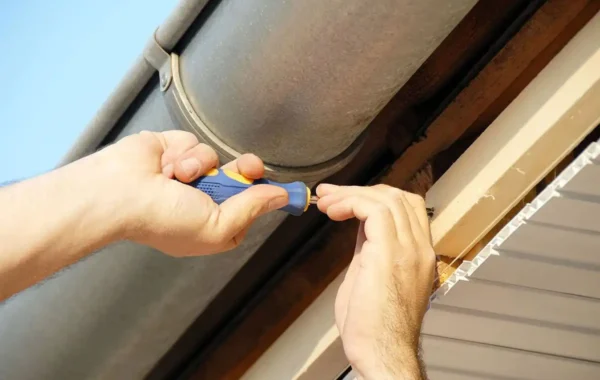
Professional rain gutter installation team mounting new gutters

Define Scope And Must-Haves For Gutters Contractor Berkeley

Vague scopes create surprise add-ons. A clear scope also lets you compare bids fairly. For this reason, Write down what you want replaced, where water should go, and what “done” looks like for your home.

Bring this list to every site visit so any gutters contractor berkeley homeowners talk to can price the same work.

Pre-Bid Planning Checklist

  • List the gutter runs you want replaced (front, sides, back) and any areas you want repaired only.
  • Choose a target gutter size: 5-inch is common; 6-inch may handle higher roof flow. Meanwhile, Ask for a recommendation and the reason.
  • Pick a downspout style (rectangular or round) and how visible you want it to be.
  • Decide where water will go at the bottom: splash blocks, extensions, or an existing drain (if present).
  • Confirm color/finish expectations (match trim, match gutters you keep, or go neutral).
  • Decide on gutter guards now or plan to add them later.
  • Ask for a line item or clear plan for fascia repair in case hidden wood damage shows up.
  • Clarify what happens to old gutters, nails, and debris (haul-away included or separate).
  • Confirm how the crew will protect siding, windows, and landscaping.
  • Agree on how changes get approved (written only is best).

Typical Phases

Timelines vary by workload, weather, and material availability. Overall, These ranges help you plan and spot unrealistic promises.

  • Site visit and measurements: often 30 to 60 minutes for a typical house.
  • Written estimate and revisions: commonly a few days to about a week.
  • Material order (if needed): may be same-week for standard materials; specialty colors or metals can take longer.
  • Installation: many homes finish in 1 day; complex layouts can run longer.
  • Final water test and walkthrough: about 15 to 30 minutes.
Decision/driverWhy it affects costWhat to put in writing
Stories and accessMore setup time and safety planningAccess plan and any special equipment
Gutter size and profileMaterial, hangers, and labor changeSize, profile, and color
Downspouts and dischargeMore parts and routing laborCount, locations, and extensions/splash blocks
Wood repair at fasciaHidden damage can change scopeHow repairs are priced if discovered
Gutter guardsMaterial and install time add costType selected and maintenance expectations

Use the table to check that the estimate matches your decisions. Additionally, If a line is missing, ask the contractor to add it before you sign.

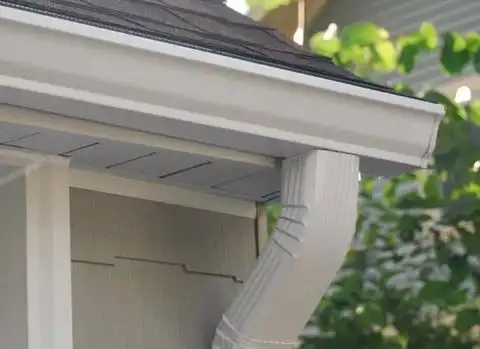
construction gutters system

Material Selections And Lead Times

Materials affect durability and how soon the job can start. Also, Ask the contractor to confirm availability before you lock in a start date.

Seamless Vs Sectional (Plain-Language)

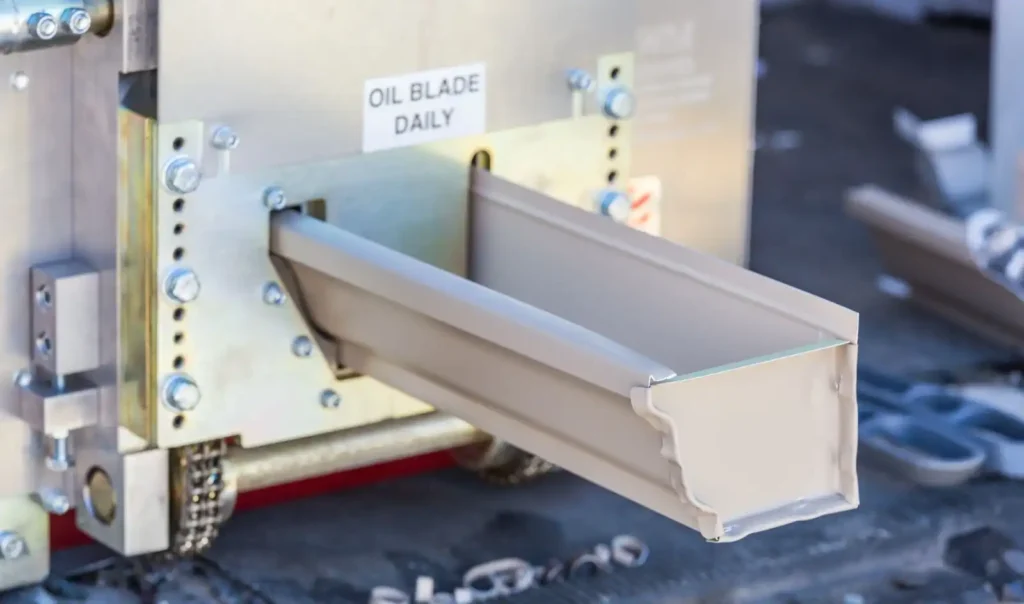
Seamless gutters are formed on site from a continuous coil of metal, so they have fewer joints. As a result, Sectional gutters come in pieces that get joined together. Meanwhile, Fewer joints often means fewer places to leak, but the install quality still matters most.

Material And Guard Choices To Compare

  • Aluminum gutters: common, lightweight, and rust-resistant. Also, Ask about thickness and finish quality.
  • Steel gutters: stronger, but scratches can lead to rust over time if they aren’t addressed.
  • Copper gutters: durable and distinctive, typically higher cost and sometimes longer lead times.
  • Downspout size: larger downspouts move more water and clog less, but they can be more visible.
  • Gutter guards: micro-mesh can block small debris; screens cost less but may let fine debris through. Also, Either way, plan on occasional checks and cleaning.

Ask each bidder to write the exact material, size, color, and guard type on the estimate. “Standard materials” is not specific enough to compare.

Permits, Inspections, And Scheduling

Many gutter replacements count as maintenance, but permit needs depend on scope. Meanwhile, If your project includes structural wood repair, drainage changes, or work tied into other trades, confirm what applies before work starts.

Permit Notes For Berkeley Projects

  • Like-for-like gutter replacement may not trigger a permit, but confirm based on your exact scope.
  • If you repair or replace fascia boards, framing, or other structural elements, a building permit may apply.
  • If you change where water discharges (for example, tying into a drain line), additional review may be needed.
  • If an inspection is necessary, build inspection windows into your schedule before the install day.

Berkeley homeowners can typically track many building and trade permits through the City of Berkeley Permit Service Center’s online system (often labeled “Permits Online”). Additionally, If you’re unsure, ask the city first, then ask the contractor how they coordinate around approvals.

Paperwork That Protects You

  • A written contract with scope, materials, and a start date.
  • A payment schedule tied to milestones, not just calendar dates.
  • A clear rule for changes: no extra work without a signed price change.
  • Insurance documentation provided on request.
  • Warranty terms in writing, plus who to call for service.
  • A cleanup plan: where debris goes and how nails will be collected.

Frequently Asked Questions

Sometimes a straight replacement does not require a permit, but it depends on the exact scope and what you touch while doing the work. If the project includes structural wood repair (like fascia replacement) or changes to drainage, permit requirements are more likely.

  • Ask the City of Berkeley whether your scope needs a permit.
  • Ask the contractor who handles permit questions and how approvals affect scheduling.

A good estimate makes it easy to compare bids and prevents disagreements later.

  • Material type and whether gutters are seamless or sectional
  • Gutter size, color, and downspout count/locations
  • Discharge plan (extensions, splash blocks, or existing drains)
  • Guard type (if included) and what maintenance is still needed
  • Removal/haul-away and cleanup details
  • How unexpected wood repair is handled and priced

Gutter size and downspout layout should match how much roof area drains into each run. More roof flow usually needs larger gutters, more downspouts, or both.

  • Ask the contractor to explain why they recommend a specific size.
  • Make sure every downspout has a clear discharge point away from the home.
  • Confirm the plan in writing so it doesn’t change on install day.

Seamless gutters are formed on site in long runs with fewer joints. Sectional gutters come in pieces that get joined together. Fewer joints can reduce leak points, but correct slope and solid fastening matter either way.

They can reduce big debris, but they don’t make gutters maintenance-free. Fine debris can still collect, and downspouts can still clog.

  • Ask what type of guard is included (mesh, screen, foam) and why.
  • Plan on periodic checks, especially after windy weather.

Use a simple checklist so you compare companies the same way.

  • Verify the contractor’s license with the state board.
  • Ask for insurance documentation and a written contract.
  • Get an itemized scope, not a one-line total.
  • Call references and ask if the contractor handled callbacks.
  • Avoid large upfront payments that aren’t tied to materials or milestones.

Leave a comment

This website uses cookies to improve your web experience.
Explore
Drag