Kitchen Remodeling Vs DIY In Berkeley
Thinking about tearing out your own cabinets? If you’re weighing kitchen remodeling vs diy in Berkeley, the decision usually comes down to risk, time, and how much you plan to change behind the walls. A quick refresh can be satisfying; a bigger scope can snowball without a plan.
Quick checklist:
- Define the scope and your must-have outcome (performance, budget, timeline).
- Confirm what work is involved and the order of operations.
- Finalize measurements and key selections before ordering long-lead materials.
- Collect 2–3 quotes and compare line-by-line (scope, allowances, cleanup, warranty).
- Create a simple schedule and pre-order the items that most often cause delays.
TL;DR: DIY works best when you keep the layout and utilities in place and you can live with a slower pace. Once the scope touches plumbing, gas, electrical, or walls, a permitted remodel with coordinated trades usually protects your schedule and your home. Use this checklist to decide what’s realistic before you start buying materials.
- Are you changing the sink, range, dishwasher, or refrigerator locations?
- Will you touch electrical circuits, lighting layout, or the service panel?
- Are you removing walls, altering a doorway/window, or changing the footprint?
- Do you have exact appliance specs and cabinet measurements (not guesses)?
- Can you live without a functioning kitchen while work is underway?
- Who will coordinate permits, inspections, and trade scheduling if needed?
Planning, Permits, And Practical Decisions For Kitchen Remodeling Vs DIY
| Decision | Why it matters | Quick check |
|---|---|---|
| Scope | Defines what is included and prevents surprises. | Write a line-item scope and allowances list. |
| Site constraints | Access and hidden conditions can change the plan. | Check access and existing surfaces before work starts. |
| Selections | Long-lead items can drive the schedule. | Confirm availability before starting. |
| Permits | Some scopes require approvals and inspections. | Ask your city/county what applies to your project. |
- Full-extension base drawers so pots and pans don’t disappear into back corners
- A dedicated prep zone with task lighting and outlets where you actually work
- Quartz or other low-maintenance counters for daily wipe-down durability
- Backsplash coverage behind the range and up to the hood for easier cleaning
- Under-cabinet lighting on a dimmer for bright prep and softer evenings
- A quieter, also properly sized vent hood to control heat, grease, and odor
- Pull-out trash/recycling and a narrow pull-out pantry to cut countertop clutter
- A workstation sink and pull-down faucet for faster cooking and cleanup flow
- Slip-resistant, water-tolerant flooring with clean transitions at adjoining rooms
- A tall cabinet bank (pantry wall) to hide small appliances and charging stations
Most homeowners don’t choose between “DIY” and “full remodel” in one step. They choose a scope. Overall, That scope determines how much risk you carry, how many trades you need, and whether you’re likely to run into inspections. In other words, kitchen remodeling vs diy isn’t just about confidence with tools; it’s about how interconnected the work becomes once you start changing layout and utilities.
DIY-Friendly Upgrades (When You Want The Biggest Visual Change)
If you want a noticeable upgrade without opening walls, DIY can make sense. In addition, Keep the work focused, keep the kitchen usable, and avoid touching systems you can’t easily verify.
- Painting walls, replacing cabinet hardware, and adding organizers
- Upgrading a faucet or sink when connections stay the same
- Replacing a light fixture with a like-for-like swap (when wiring is straightforward)
- Installing a backsplash when substrate and clearances are ready
Signs You’re In Remodel Territory (Where DIY Gets Expensive Fast)
- You’re moving plumbing, gas, or major electrical locations
- You want to remove or modify a wall, soffit, or structural element
- You need new circuits, more lighting zones, or updated ventilation
- You’re ordering custom cabinets and need accurate field verification
Storage And Organization Upgrades That Change Daily Life
Smart storage is often the best “quality of life” return, regardless of budget. It also tends to reveal whether your cabinets should be refreshed or fully replaced.
- Deep drawer stacks for cookware, food containers, and small appliances
- Blind-corner pullouts or a reworked corner to avoid dead space
- Vertical tray dividers for sheets, cutting boards, and platters
- Spice and oil pullouts near the cooktop (not across the room)
- Toe-kick drawers for flat items when you need every inch
What Buyers (And Appraisers) Actually Notice
Resale value is real, but it follows fundamentals. Also, Buyers respond to a kitchen that feels bright, clean, and easy to use. Meanwhile, Prioritize consistent cabinet alignment, durable counters, ventilation, and lighting. Save bold, ultra-personal finishes for accents you can change later.

Planning Checklist (Scope, Materials, Budget) For Kitchen Remodeling Vs DIY
Good planning is what keeps a remodel from becoming a long series of “quick runs” to the store. For example, Start by writing down the non-negotiables (layout, storage, lighting) and the nice-to-haves (specialty cabinets, statement tile, premium fixtures). As a result, From there, choose materials that match how you live, not just how a showroom looks.
Choose The Right Footprint
Layout is the hardest thing to DIY because one change affects everything else. For this reason, Think about how many people cook at once, where you unload groceries, and where dishes pile up.
- Galley: Efficient when the aisle is clear; great for smaller kitchens that need more storage
- L-shape: Flexible and open; works well when you want a small dining nook nearby
- U-shape: Maximum counter space; best when you can maintain comfortable walkway clearances
- Island-centered: Ideal for prep and seating, but only when circulation stays open
Small-Space Layouts That Still Feel Open
In a compact kitchen, every inch matters. Meanwhile, Focus on circulation first, then add storage that doesn’t pinch your walkways.
- Choose a slim island or a peninsula when a full island blocks traffic
- Use tall uppers to capture vertical storage (and keep counters clearer)
- Limit open shelving to one area so the kitchen still looks calm day to day
- Put the trash/recycling pullout where you prep, not where it’s “convenient” to hide
Materials That Match Real Life (Doors, Counters, Floors)
Cabinet door styles: Shaker is versatile and forgiving. As a result, Slab doors look modern but show fingerprints and alignment more. Raised panel reads traditional and can feel busier in smaller spaces.
Countertop options: Quartz is popular for low maintenance. Additionally, Granite varies by slab and needs periodic sealing. Butcher block warms up a kitchen but needs more care around sinks. Quality laminate can be cost-effective when you want a clean look with less upfront spend.
Flooring choices: Porcelain tile handles water well and wears hard. As a result, Luxury vinyl plank is comfortable underfoot and can be budget-friendly, but details at transitions matter. Engineered wood can look great in open-concept homes, but you need a clear plan for spills and wet zones.
Lighting Plan (Ambient, Task, Accent)
Layered lighting is the difference between “nice photos” and a kitchen that feels good at 6 a.m. and 8 p.m. Plan for ambient light (overall), task light (prep zones), and accent light (visual warmth).
- Ambient: recessed or surface fixtures sized to the room
- Task: under-cabinet lighting at counters and key work areas
- Accent: pendants over an island or a soft toe-kick glow
Budget Guardrails That Prevent Mid-Project Panic
- Layout changes and trade work (plumbing, gas, electrical) usually drive complexity
- Cabinet quality, hardware, and installation accuracy affect day-to-day satisfaction
- Countertops and backsplash choices affect durability and cleaning time
- Long-lead materials can force you to pause mid-project if you order late
Permits And Inspections (General)
Berkeley Permitting Reality Check
Permits aren’t just paperwork; they set the rules for safety and inspections. As a result, In Berkeley, many residential building and trade permits can be started through the City of Berkeley Permit Service Center’s online permitting system (Permits Online). The exact permits you need depend on the scope, especially if you’re changing utilities, openings, or walls.
When the work goes beyond a surface refresh, align on three things early: what triggers permits, who pulls them, and what inspections you’ll schedule. Additionally, That’s often where kitchen remodeling vs diy gets decided.
- Typical permit triggers can include electrical circuit changes, plumbing/gas relocations, structural modifications, or new/altered openings.
- Inspections usually happen at rough-in stages (before surfaces close) and at final completion.
- Even when a permit isn’t required, following code-safe practices protects your investment.
| Decision | DIY-friendly? | What it changes |
|---|---|---|
| Keep the same kitchen layout | Often | Fewer trade touchpoints; simpler scheduling |
| Move sink, range, or dishwasher | Rarely | Plumbing/gas coordination; higher inspection likelihood |
| Add circuits, lighting zones, or a hood upgrade | Sometimes | Electrical planning; possible permit and inspection steps |
| Remove or change a wall | No | Engineering/structural review considerations; plan review impact |
| Order semi-custom or custom cabinets | Yes (with care) | Measurement accuracy becomes critical; delays get expensive |
Key Milestones
A realistic schedule is less about speed and more about sequencing. Also, A well-run remodel keeps trades from stacking on top of each other and protects finishes from getting damaged after installation.
- Measure and document existing conditions
- Finalize layout, appliance specs, and cabinet plan
- Select materials (cabinets, counters, flooring, fixtures, lighting)
- Order long-lead items and confirm delivery windows
- Demo and site prep (dust control, protection, shutoffs)
- Rough-in work (electrical/plumbing/gas as needed)
- Surfaces and paint (drywall, patching, finish prep)
- Cabinet install, then counters and backsplash
- Finish electrical/plumbing, appliances, trim, and punch list
- Final inspection steps (when applicable) and handoff
Budget Ranges & Timeline (Typical)
- Cosmetic refresh: typically low five figures; days to a couple weeks of on-site work
- Cabinets + counters (same layout): typically mid five figures; a few weeks on-site
- Layout change with trade work: typically high five figures to six figures; multiple weeks on-site
- Plan review and inspections: timing varies by scope and city workload, so build in buffer time
Hypothetical Before/After Walkthrough (Anonymized Example)
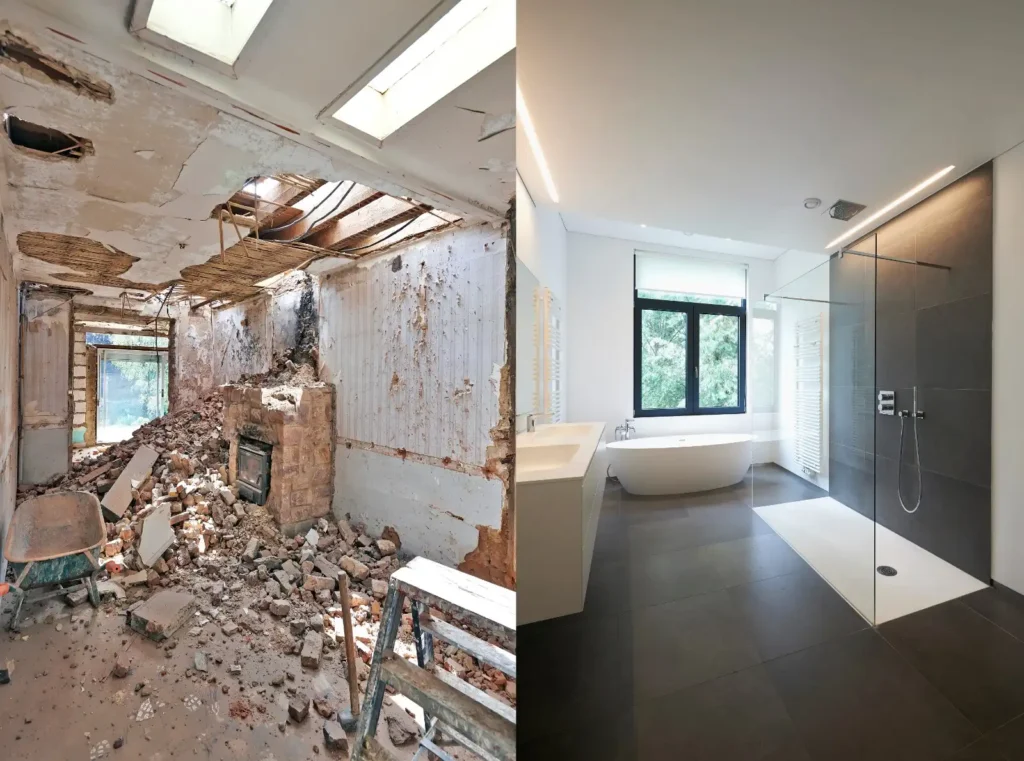
Before: A narrow galley kitchen with limited prep space, a weak hood, and upper cabinets that stop short of the ceiling. For this reason, The homeowner considers DIY cabinet paint and a new backsplash but still feels cramped.
After: The layout stays galley to protect circulation, but storage shifts to full-height cabinets with deep drawer bases. Also, Under-cabinet lighting brightens the prep zone, the hood upgrade improves cooking comfort, and a pull-out pantry plus trash/recycling pullout clears the counters. The result feels larger because the workflow improves, even without expanding the footprint.
Common Mistakes To Avoid
- Starting demo before the cabinet plan, appliance specs, and material lead times are locked
- Assuming “minor” electrical or plumbing changes won’t affect schedule or inspections
- Picking finishes that look great but don’t match your cleaning tolerance (especially around the range)
- Underestimating measurement risk for cabinets and countertops
- Skipping ventilation planning, then fighting smoke and odors later
- Letting storage become an afterthought instead of designing it into the layout
- Choosing DIY for pride, then paying twice after rework becomes unavoidable
When homeowners struggle with kitchen remodeling vs diy, it’s usually because the scope grew quietly. Also, A written plan, a realistic schedule, and clear responsibility for permits and inspections keep that from happening.

Next Step In Berkeley
US Construction & Remodeling Corp. For this reason, helps Berkeley homeowners compare DIY options against a full remodel scope, align choices with permits when needed, and deliver clean, functional finishes. You get clear guidance on layout, materials, and the build sequence so decisions don’t get made mid-demo.
Free Estimate Options
Schedule your free estimate online to review your kitchen goals, measurements, and budget priorities. Additionally, If you’d rather talk it through, call +1 (916) 234-6696.
Trust And Accountability (What To Confirm Before You Sign)
- Licensing and insurance: request current details in writing and verify them independently
- Permits: confirm who pulls which permits and who schedules inspections (before work begins)
- Scope clarity: ask for a written scope that spells out what’s included and what’s excluded
- Change control: understand how changes are priced and approved
- Communication: set expectations for updates, access, and decision deadlines
- Workmanship checks: at walkthrough, inspect door alignment, drawer glide, caulk lines, and transitions
Maintenance Tips After The Remodel
- Use manufacturer-approved cleaners on counters and avoid abrasive pads
- Wipe spills at seams and edges quickly, especially around the sink and dishwasher
- Clean hood filters regularly to keep airflow strong
- Check and refresh sink and backsplash caulk as it ages
- Adjust cabinet hinges early if doors settle in the first months
Helpful Links
Frequently Asked Questions
DIY is realistic when the scope stays cosmetic: paint, hardware, backsplash, and like-for-like fixture swaps. Once you change layout, utilities, or structural elements, DIY often turns into trade coordination, inspections, and schedule risk.
Permits often come into play when you move plumbing/gas, add or modify electrical circuits, change openings, or alter walls. In Berkeley, the Permit Service Center supports online permitting (Permits Online) for many residential scopes, and the exact requirements depend on your plans.
DIY can stretch because you’re working around life and learning as you go. A contractor-led remodel usually moves faster on-site because trades sequence work efficiently, though planning, selections, and any permit/inspection steps still take time.
- DIY: flexible pace, but higher risk of long pauses
- Remodel: tighter schedule, more coordination up front
The biggest cost drivers are scope and complexity. Layout changes, utility relocations, cabinet quality, countertop material, lighting plan, and the amount of trade work typically matter more than any single finish choice.
For most homeowners, practicality comes from durability and easy cleaning. Quartz is popular for low maintenance, while well-built cabinets with full-extension drawers improve daily function. Choose door styles and finishes you can live with, not just what looks trendy.
Ask for a written scope, a clear change process, and a realistic schedule. Confirm who handles permits and inspections. Also verify licensing and insurance through official sources before you sign.
Licensed, insured & trusted local contractor
US Construction & Remodeling Corp.
9821 Business Park Dr, Sacramento, CA, 95827
Phone: +1 (916) 234-6696
CSLB License #: 1117562 Fully licensed and insured.
Service info for Sacramento
For the complete overview of process and planning in Sacramento, visit Kitchen Remodeling.