Gutters Permit Requirements In Berkeley
If you’re researching gutters permit requirements berkeley, you’re usually trying to avoid rework: ordering the wrong materials, moving downspouts twice, or learning late that the city wants a permit for a scope change. This guide is a homeowner-friendly checklist for planning a gutter project in Berkeley.
Quick checklist:
- Decide the scope: cleaning, repair, guards, or full replacement.
- Confirm gutter size/material and how many downspouts you need for runoff.
- Plan downspout discharge and drainage so water moves away from walls, stairs, and the foundation.
- Ask whether fascia/rot repair is included and how corners/seams will be sealed.
- Compare 2–3 itemized quotes (linear feet, downspouts, guards, disposal, warranty).
- Schedule around weather and run a hose test at the final walkthrough.
TL;DR: Many gutter swaps are straightforward, but permit needs can change when you alter drainage, fascia (the board behind the gutter), or the exterior look. Confirm your scope with Berkeley’s Permit Service Center before you order materials. Get a written estimate that lists materials, downspout locations, and any roof-edge wood repair.
- Write a one-paragraph scope (replace vs add vs reroute).
- Photograph each roof edge and downspout.
- Decide where water will discharge (to grade, to a drain, or to a splash block).
- Pick a gutter size and profile (5-inch vs 6-inch; K-style vs half-round).
- Choose guard type, if any, and color/finish.
- Confirm permit needs with the City of Berkeley before ordering.
Want a written estimate? Call +1 (916) 234-6696 or use our free estimate form. Have your address, a few photos, and any leak/overflow notes ready.
The Planning Checklist That Prevents Rework For Gutters Permit Requirements Berkeley
| Decision | Why it matters | Quick check |
|---|---|---|
| Gutter size (5-inch vs 6-inch) | Capacity affects overflow risk during heavy rain. | Ask the installer to size based on roof area and runoff. |
| Downspout locations | Where water lands affects erosion and slip hazards. | Map discharge points and confirm extensions/splash blocks. |
| Guards/screens | Reduces clogs but still needs maintenance. | Choose based on debris type and confirm cleaning access. |
| Fascia condition | Weak/rotted fascia causes sagging and leaks. | Inspect before install; include repair allowance in scope. |
Gutter work looks simple until you run into hidden variables: damaged fascia, a roof edge that needs extra support, or downspouts that dump water where you don’t want it. For example, A short planning pass up front reduces mid-project changes and helps you get clear answers when gutters permit requirements berkeley questions come up.
Who This Checklist Helps
Use this page if you’re replacing worn-out gutters, also adding new runs where none exist, upgrading to larger gutters, or changing where downspouts send water away from the home.
Planning Checklist That Saves Time
- Walk the perimeter and note sagging sections, seam leaks, or overflow points.
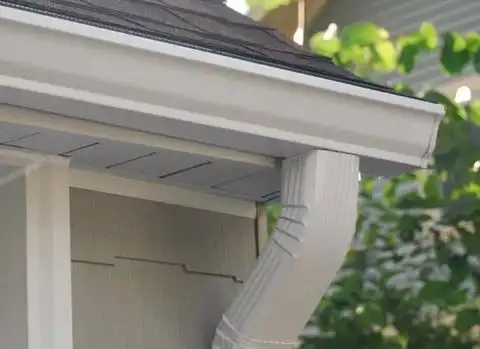
- Check fascia (the board behind the gutter) for soft spots, peeling paint, or rot.
- Count downspouts and mark where each one currently discharges.
- Decide whether you want gutter guards to reduce debris buildup.
- Note access limits: landscaping, gates, patios, or tight side yards.
- Ask for a written scope that lists materials, sizes, and downspout locations.
Homeowners usually benefit from this planning step because gutters protect siding, trim, and foundations by controlling roof runoff. The right scope also keeps the install day shorter and cleaner.
Define Scope And Must-Haves
Scope drives both pricing and permitting. As a result, Start by writing what you’re changing, in plain language. In addition, Then decide what’s non-negotiable for your home and your yard.
Scope Choices To Lock In Early
- Replace or add: like-for-like replacement, or new gutter runs where there were none.
- Size: 5-inch vs 6-inch gutters, based on roof area and flow needs.
- Profile: K-style (most common) vs half-round (a different look).
- Downspout plan: keep locations, add outlets, or reroute for better drainage.
- Wood repair: whether roof-edge repairs may be needed once old gutters come off.
- Guards: none, surface-tension covers, mesh, or micro-mesh.
If you want help scoping it, ask for on-site measurement and a written estimate before you commit to materials.
Material Selections And Lead Times
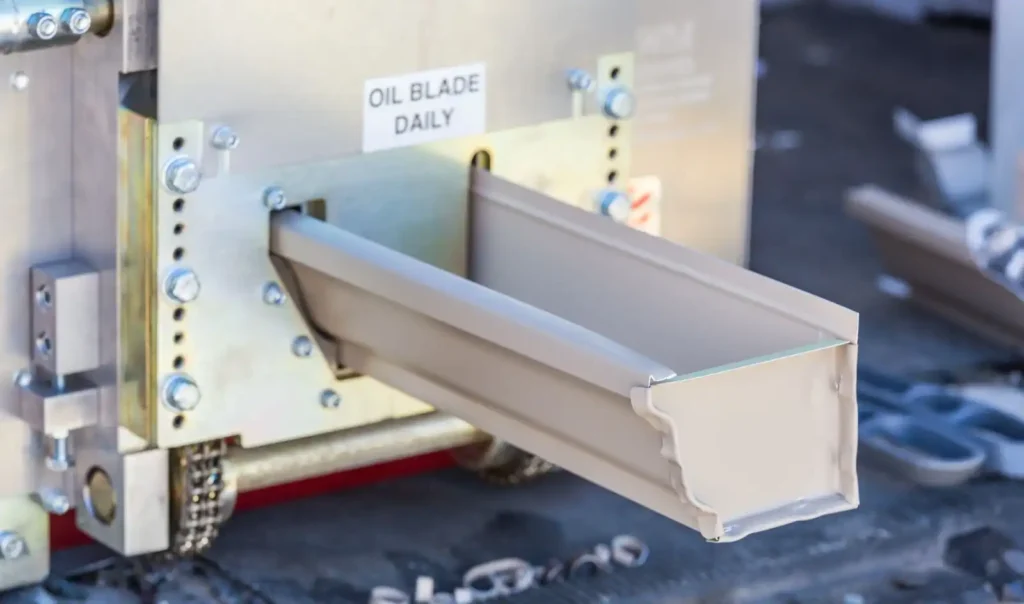
Most homeowners choose seamless aluminum gutters (formed on-site from one continuous piece) because they balance cost, durability, and color options. Meanwhile, Specialty metals and certain guard systems can take longer to source, so decide early if appearance or long-term maintenance is your priority.
Common Gutter Materials
- Aluminum: lightweight, rust-resistant, widely available in many colors.
- Steel: strong, but can rust if the coating gets scratched.
- Copper: premium look and long life, typically higher cost and longer lead times.
Guard Selections And Lead Times
Gutter guards can reduce clogs, but they don’t make gutters “no-maintenance.” Some guard systems attach under the roof edge or require specific brackets, so confirm compatibility with your roof edge before ordering.
- Mesh/micro-mesh: blocks small debris; needs occasional surface brushing.
- Screen: lower cost; may let small debris through.
- Surface-tension covers: sheds leaves well; can struggle with heavy debris if not installed correctly.
Ask your contractor to list the exact product type in writing so you can compare quotes apples-to-apples.
Permits, Inspections, And Scheduling
Berkeley’s Permit Service Center supports online permitting through Permits Online for many residential projects. For this reason, Whether your gutter work needs a permit depends on scope, so treat this as a confirmation step, not a guess. Also, If you’re trying to pin down gutters permit requirements berkeley for your address, start with photos and a one-paragraph scope.
Questions To Confirm Before Install Day
- Is your project considered like-for-like maintenance, or does the scope trigger a building permit?
- If fascia repair is necessary after removal, does that change the permit path?
- If you plan to connect downspouts to existing drains or change discharge locations, are there additional requirements?
- If your home has any historic designation or design restrictions, is extra review needed?
- Will the city expect an inspection, and how do you schedule it?
Timeline Snapshot (Typical)
Most gutter replacements move quickly once scope and materials are set. Additionally, Permitting, when applicable, is the variable that can add days or weeks, so confirm early and schedule accordingly.
| Phase | Typical duration | What happens |
|---|---|---|
| Measure & estimate | 1–3 days | Site visit, photos, written scope and price |
| Permit check (if needed) | Same day to several weeks | City review, fees, and any requested clarifications |
| Material prep | 2 days to 2+ weeks | Color/finish selection, guard parts, scheduling |
| Installation | 1–2 days (typical) | Remove old gutters, repair as needed, install and test flow |
| Closeout | Same day to 1 week | Final walkthrough, touch-ups, and any inspection follow-up |
To avoid delays, clarify who is responsible for permit paperwork, fees, and inspection scheduling in the written estimate.

Site Prep And Living-Through Tips
Gutter work is exterior work, but it still affects your day. Overall, Plan for ladder access, short periods of noise, and debris removal. As a result, A little prep protects your landscaping and helps the crew finish without interruptions.
- Move vehicles away from roof edges so ladders and debris have a clear drop zone.
- Keep pets and kids inside during removal and installation.
- Cover patio furniture and grills near the work area.
- Clear side-yard gates and unlock access points before the crew arrives.
- Point out any sprinklers, low-voltage lighting, or fragile plants at risk.
Safety And Accessibility Ideas (Less Ladder Time)
If you want to reduce future ladder use—especially for aging-in-place—build that into the scope now.
- Choose a guard system designed for your debris type, and schedule periodic ground-level checks.
- Add cleanout access at downspout bottoms so you can flush clogs with a hose.
- Use downspout extensions or splash blocks to keep walkways drier and reduce slip risk.
- Ask for secure hanger spacing so gutters stay tight and don’t pull away over time.
Closeout Checklist And Warranty Notes
Before the crew leaves, do a quick water test and verify that the system moves water where you expect. It’s easier to fix small issues right away than after the next storm.
Closeout Checklist
- Run water in several locations and confirm steady flow to each downspout.
- Check that gutters slope correctly and don’t hold standing water.
- Verify downspouts discharge away from the foundation and don’t stain siding.
- Confirm the crew cleaned debris from patios, landscaping, and walkways.
- Get warranty terms in writing and keep product info for guards, if installed.
Maintenance Tips After The Work
- Inspect after the first heavy rain and look for drips at corners and outlets.
- Clean gutters at least twice a year if you don’t have guards (more often with nearby trees).
- Flush downspouts with a hose and watch for slow drainage.
- Trim back branches that drop debris directly onto the roof edge.
Questions To Ask Before You Hire
- What exact gutter size, profile, and material are you quoting?
- Where will each downspout discharge, and are extensions part of the quote?
- If you find fascia rot, how do you price repairs and how will you document the change?
- Who handles permit checks with the City of Berkeley, and who schedules any inspection?
- How will you protect landscaping and clean up debris at the end of the day?
Berkeley Coordination And Communication
US Construction & Remodeling Corp. Also, works with Berkeley homeowners who want clear scope, clear pricing, and straightforward scheduling. In addition, If your project needs city review, we can help you organize the photos and scope details so the Permit Service Center can answer quickly.
Call +1 (916) 234-6696 or use our estimate form to get started. Share your address, photos, and your must-haves, and we’ll reply with the next questions we need answered to quote accurately.
Helpful Links
Frequently Asked Questions
It depends on what you’re changing. A like-for-like replacement (same locations, similar look, no structural repairs) is often treated differently than work that alters drainage, modifies fascia, or changes the exterior in a more substantial way. Because the rules can vary by scope and address, confirm your specific plan with the City of Berkeley Permit Service Center before you order materials.
- Often simpler: replacing existing gutters with similar new gutters in the same locations.
- May trigger review: adding new gutter runs, rerouting downspouts, repairing fascia/roof-edge framing, or tying downspouts into underground drainage.
If you’re unsure, send photos and a one-paragraph scope when you ask the city so you get a clear answer.
Keep it simple and specific. Write a short scope, attach photos, and ask targeted questions. That gives the city a clean yes/no on whether you need a building permit or any follow-up steps.
- Describe the work in 2–3 sentences (replace, add, resize, reroute).
- Attach photos of each roof edge, corners, and downspouts.
- Note whether downspouts drain to soil, a splash block, or into an existing pipe.
- Call out any expected wood repair at the roof edge.
If you’re requesting an estimate from us, you can send the same info through our free estimate form to speed up quoting and scheduling.
Gutter guards are usually an accessory to the gutter system, so they don’t always change the permit path. The bigger factor is whether you’re replacing gutters, modifying roof-edge materials, or changing where water discharges.
Some guard styles fasten under the roof edge or interact with shingles. Ask the installer to explain the attachment method and list the exact product type in writing so you understand maintenance and roof-edge compatibility.
Once materials are available, many single-family homes can be completed in a day. The timeline gets longer when you add specialty metals, extensive fascia repair, or any city review.
- Estimate & measurement: typically 1–3 days to schedule and write up.
- Materials: a few days for common aluminum; longer for specialty finishes or copper.
- Install: often 1 day, sometimes longer for complex rooflines.
- Closeout: same-day water test, plus any follow-up if an inspection is necessary.
If you have a deadline, mention it when you request the quote so the schedule is realistic from day one.
Pricing is mostly about scope and access. Two homes with the same square footage can price very differently if one is two stories with tight side yards and the other is a simple single-story layout.
- Total linear feet of gutters and number of corners/outlets
- Number of stories and ladder/scaffold access
- Material choice (aluminum, steel, copper) and finish/color
- Number and length of downspouts, plus extensions or splash blocks
- Gutter guards (type and complexity)
- Wood repair at the roof edge, if discovered during removal
- Old gutter removal and disposal
- Any permit fees, if applicable
The best way to avoid surprises is a written estimate that spells out what the price covers and what would change if hidden damage is found.
Gutter size refers to the width of the gutter opening. Larger gutters can carry more water, but they can also look different along the roof edge.
- 5-inch: common for many homes and rooflines.
- 6-inch: useful when larger roof areas drain into one run or when overflow has been an issue.
A contractor can measure roof areas and explain why a larger size makes sense (or doesn’t) for your specific runs and downspout spacing.
We start with measurement, photos, and a clear written scope. If your project needs city review, we can help you gather the details the City of Berkeley typically asks for so you can submit (or we can coordinate, depending on scope and city requirements).
Call +1 (916) 234-6696 or use our estimate form to request a written estimate. Tell us what you want to change, and we’ll confirm the key decisions before work is scheduled.