Seamless Gutters in California: Materials, Layout & Timing
Rainwater that sheets off your roof has to go somewhere, and if it lands next to your foundation it can stain siding, erode landscaping, and leave puddles near walkways. For many California homes, seamless gutters are a clean way to control runoff and route it to safe discharge points.
TL;DR: Rainwater that sheets off your roof has to go somewhere, and if it lands next to your foundation it can stain siding, erode landscaping, and leave puddles near walkways. For many California homes, seamless gutters are a clean way to control runoff and route…
Quick checklist:
- Decide the scope: cleaning, repair, guards, or full replacement.
- Confirm gutter size/material and how many downspouts you need for runoff.
- Plan downspout discharge and drainage so water moves away from walls, stairs, and the foundation.
- Ask whether fascia/rot repair is included and how corners/seams will be sealed.
- Compare 2–3 itemized quotes (linear feet, downspouts, guards, disposal, warranty).
- Schedule around weather and run a hose test at the final walkthrough.
This guide from US Construction & Remodeling Corp. breaks down the choices that affect performance and price—layout, materials, guards, and scheduling—so you can compare quotes with confidence. If you want a quick gut-check on your roofline, call +1 (916) 234-6696.
Seamless Gutters For Homeowners: A Practical Overview
| Decision | Why it matters | Quick check |
|---|---|---|
| Gutter size (5-inch vs 6-inch) | Capacity affects overflow risk during heavy rain. | Ask the installer to size based on roof area and runoff. |
| Downspout locations | Where water lands affects erosion and slip hazards. | Map discharge points and confirm extensions/splash blocks. |
| Guards/screens | Reduces clogs but still needs maintenance. | Choose based on debris type and confirm cleaning access. |
| Fascia condition | Weak/rotted fascia causes sagging and leaks. | Inspect before install; include repair allowance in scope. |
Most seamless systems use long, continuous runs that are formed to length, so there are fewer joints for water to work through. Meanwhile, That’s one reason seamless gutters are popular for long rooflines and wrap-around eaves. A well-installed system also protects fascia boards and keeps roof runoff from carving trenches along the perimeter of the home.
TL;DR: The best gutter upgrade is the one that moves water away from the house without overflow or splashing. Also, Good downspout placement does most of the heavy lifting, and solid fastening keeps lines straight over time. As a result, Measure on-site and insist on a final water test before you sign off.
- Walk the perimeter during a rain and note overflow, also staining, or pooling.
- Confirm where each downspout can discharge safely (splash block, extension, or drain line).
- Decide on gutter size (5-inch vs 6-inch) based on roof area and valleys.
- Choose material and finish, especially if you want color-matching.
- Pick a guard approach if leaf or pine-needle drop is heavy.
- Clear access for ladders and move vehicles the day of installation.
Homeowners usually start shopping when they see one of these warning signs:
- Water spilling over the front edge during moderate rain
- Drips at seams, end caps, or corners
- Sagging lines, loose spikes, or gutters pulling away from fascia
- Staining on stucco or siding below the drip line
- Downspouts dumping water right at the foundation
Before/After Snapshot (Hypothetical Example)
Before: A home has older sectional gutters with multiple leaky joints, one undersized downspout, and a low spot that holds standing water. As a result, During storms, runoff overshoots the gutter and splashes onto walkways.
After: The gutters are replaced with continuous runs, additional downspouts are added where valleys concentrate flow, and discharge points are extended to safer areas of the yard. As a result, overflow stops and puddling near entries is reduced.
Planning And Scope Decisions
Gutters are simple hardware, but the scope around them is not always simple. Overall, Before you approve a quote, confirm whether the job is a straight replacement or if it includes repairs at the roof edge. Rot behind an old gutter, missing drip edge, or soft fascia can change the right installation method—and the best seamless gutters won’t perform if the substrate fails.
Runs, Corners, Downspouts
Overflow problems often trace back to water exit points. Additionally, Even a perfectly sized gutter can fail if downspouts are too few, too far from valleys, or discharged into a spot that can’t drain. Use these decisions to guide planning conversations:
- Downspout count: Add outlets where roof valleys send concentrated flow.
- Placement: Keep discharge away from doorways, steps, and high-traffic paths when possible.
- Discharge plan: Decide between splash blocks, extensions, pop-up emitters, or tie-ins to existing drains.
- Gutter size: 6-inch profiles can make sense on larger roof planes or heavy valley loads.
- Corner strategy: Fewer corners can mean fewer leak opportunities, but layout has to respect roof geometry.
Runoff Organization Upgrades (Rain Barrels, Drains)
If you’re already improving drainage, it’s a good time to think about what happens after the downspout. In addition, A few small add-ons can keep water from pooling and can reduce how often you need to regrade mulch beds.
- Downspout extensions: Simple and effective for moving water several feet away.
- Splash blocks: Helps prevent soil erosion right under the outlet.
- Rain barrels (where allowed): Captures water for landscaping; plan an overflow path for storms.
- Pop-up emitter kits: Discharges to the yard surface away from the foundation when a buried line fills.
- Catch basins: Useful where multiple downspouts converge, especially near patios.
If you want to see other exterior project types we handle in California, visit our website.
Material Choices And Lead Times
Material selection is not only about looks. For example, It affects dent resistance, fastening methods, and how long you may wait for fabrication. In many cases, choosing your color and profile early keeps your schedule tight.
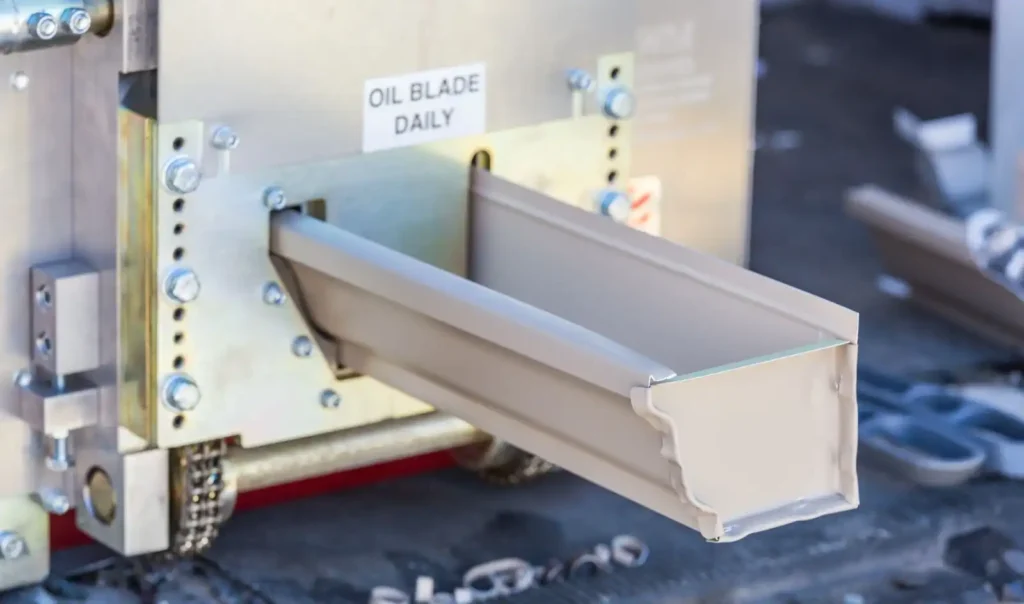
Most seamless gutters are roll-formed from aluminum because it’s light, rust-resistant, and available in many finishes. For this reason, Still, steel and copper can make sense for specific priorities like dent resistance or a premium exterior look.
Aluminum, Steel, Copper
- Aluminum: The most common choice for seamless systems. Also, It’s lightweight, resists rust, and comes in many finishes.
- Steel: Strong and more dent-resistant, but it needs a quality finish and proper handling to avoid corrosion over time.
- Copper: Premium look and long-term durability. Overall, It typically costs more and can take longer to source.
Ask how the installer handles hangers and fasteners. Also, Hidden hangers with screws are common because they keep lines straight and resist pull-out. If you’re adding gutter guards, confirm compatibility with the roof edge and whether the guard system changes how the gutter mounts.
Lead times vary. In addition, Standard aluminum with common colors usually schedules faster than specialty finishes, copper, or uncommon color matches. If timing matters, approve the material selection before you lock in an installation date.
Timeline And Work Phases
A clear plan reduces surprises. As a result, The best quotes spell out what gets replaced, where water will discharge, and what happens if hidden fascia damage is found.
From Measurement To Final Water Test
- On-site measurement: Measure rooflines, note valleys, and identify discharge options.
- Proposal: Confirm gutter size/profile, downspout count, and any guard or drainage add-ons.
- Scheduling: Set the install date and confirm access (gates, pets, parked cars).
- Fabrication: Form continuous runs to length and prep corners and outlets.
- Installation: Remove old gutters, inspect fascia, install new seamless gutters, and set downspouts.
- Cleanup: Collect debris and metal shavings so they don’t stain concrete or decks.
- Water test: Run water to confirm slope, confirm outlets flow, and check corners/end caps.
| Decision | What it affects | How to decide |
|---|---|---|
| 5-inch vs 6-inch | Overflow risk | Match to roof area and valley load |
| Downspout layout | Pooling and erosion | Route water to safe discharge points |
| Material/finish | Lead time and appearance | Pick early; confirm availability |
| Guards/add-ons | Maintenance and budget | Choose based on nearby trees and roof edge |
Budget Ranges & Timeline (Typical)
- Timing: Many standard homes install in a single day; complex rooflines take longer.
- Scheduling: Material availability and color choice can be the main bottleneck.
- Budget drivers: Linear footage, stories/height, corners, and downspouts matter most.
- Best next step: An on-site measure is the fastest way to price seamless gutters accurately.
How To Avoid Delays
Small issues can snowball when water is involved. In addition, A few up-front checks keep the job moving and reduce change orders.
Common Mistakes That Slow Gutter Projects
- Picking an install date before selecting the exact material and color
- Ordering seamless gutters in a specialty finish without confirming lead time
- Skipping the discharge plan and discovering drainage conflicts mid-install
- Assuming guards are maintenance-free and choosing the wrong style for local debris
- Not addressing soft fascia or missing drip edge until after old gutters come down
- Forgetting access constraints like locked side gates, pets, or parked vehicles
To keep the install day smooth, trim back branches near the roof edge, move breakables off patios, and point out any irrigation lines that could be hit by downspout extensions. Also, If you’re gathering estimates, ask each contractor to explain the downspout layout in plain language.
Want a quick measurement and a straightforward proposal? Call +1 (916) 234-6696.

Serving Homeowners In Sacramento
US Construction & Remodeling Corp. For example, helps Sacramento homeowners plan and install seamless gutters that fit the roofline and direct water away from the home. For a quick consult and estimate, call +1 (916) 234-6696, or request a time online at our free estimate page.
Sacramento-Specific Considerations
Most gutter replacements are straightforward, but some homes need related repairs at the roof edge or adjustments to how water drains. For this reason, When a project does require permitting, Sacramento typically uses an online permitting portal for applications, payments, and status updates, which can simplify tracking. Either way, scheduling before the heavier winter rains can reduce weather delays and help keep landscaping drier during the work.
Trust And Verification Checklist
Before you hire any contractor for gutters, make sure these items are clear in writing:
- Current California contractor licensing and proof of insurance (no verbal-only promises)
- Gutter size/profile, downspout count, and where each outlet will discharge
- Fastener and hanger method, plus how fascia and roof edges will be protected
- How changes are handled if hidden damage is found after removal
- A final water test and walkthrough, plus warranty terms documented
- Who is responsible for permits if the scope triggers them
Clear communication is part of workmanship. Additionally, If the plan changes, you should receive photos, options, and pricing before extra work starts.
Helpful Links
Frequently Asked Questions
Many homes can be completed in a single day once materials are ready. Complex rooflines, multiple stories, or added drainage work can extend the schedule.
Price scales with linear footage, number of corners, stories/height, and downspout count. Material choice, color availability, gutter guards, and any fascia repairs also matter.
Often, a like-for-like gutter replacement does not require a permit, but rules vary by jurisdiction and scope. If you’re changing structural elements at the roof edge or altering drainage in a way that affects the property, confirm requirements with your local building department.
It depends on roof area and how much water concentrates in valleys. Many standard homes use 5-inch profiles, while 6-inch systems can help on larger roof planes or where overflow has been an issue.
Guards can reduce clogs, especially with heavy leaf or pine-needle drop, but no system is completely maintenance-free. The best choice depends on your roof edge, nearby trees, and how often you’re willing to clean.
Ask each bidder to list the gutter size/profile, downspout locations, discharge method, and fastening approach. A final water test and written warranty terms should be included so you’re comparing the same scope.
Licensed, insured & trusted local contractor
US Construction & Remodeling Corp.
9821 Business Park Dr, Sacramento, CA, 95827
Phone: +1 (916) 234-6696
CSLB License #: 1117562 Fully licensed and insured.