Skip links

Design-Build Bar & Cafe Build-Outs (Sacramento)

For Sacramento facility teams running food-service spaces, the phrase design build bar cafe build outs usually signals one requirement: keep operations moving while the work meets code and inspection needs. This guide covers durable detailing, coordination, and documentation so you can protect the schedule and compare bids with confidence.

Quick checklist:

  • Define the scope and your must-have outcome (performance, budget, timeline).
  • Confirm what work is involved and the order of operations.
  • Finalize measurements and key selections before ordering long-lead materials.
  • Collect 2–3 quotes and compare line-by-line (scope, allowances, cleanup, warranty).
  • Create a simple schedule and pre-order the items that most often cause delays.

TL;DR: Successful build-outs lock the scope early, phase the work around service hours, and track inspections and closeout paperwork as part of the deliverable. Most schedule surprises come from MEP coordination, long-lead items, and inspection timing—not from finishes alone.

  • Confirm operating hours, noise limits, and access rules before design starts.
  • Identify long-lead equipment/finishes and decide who purchases what.
  • Map traffic for staff, customers, deliveries, and waste removal.
  • Define phasing to control downtime, dust, and safety separation.
  • Validate ADA impacts, egress, and fire/life-safety with the design team.
  • Align permit and inspection needs with the Sacramento plan-review path.
  • Set closeout expectations: as-builts, O&M info, warranties, and turnover training.

Operations Guide For Design Build Bar Cafe Build Outs

DecisionWhy it mattersQuick check
ScopeDefines what is included and prevents surprises.Write a line-item scope and allowances list.
Site constraintsAccess and hidden conditions can change the plan.Check access and existing surfaces before work starts.
SelectionsLong-lead items can drive the schedule.Confirm availability before starting.
PermitsSome scopes require approvals and inspections.Ask your city/county what applies to your project.

Facility and property managers need build-outs that support service hours, daily cleaning, and consistent inspections. For example, General contractors and project managers need trade handoffs that hold to a schedule and a scope that stays stable. As a result, The guidance below is written for commercial teams making decisions under real operational constraints.

Design-build works best when one team can coordinate drawings, procurement, and field sequencing as a single schedule. Additionally, Teams comparing design build bar cafe build outs proposals should ask to see how that schedule ties to submittals, long-lead ordering, and inspection milestones. For this reason, For scope context, see our design-build bar and cafe build-outs overview.

Materials And Detailing That Reduce Maintenance

In a high-traffic bar or cafe, maintenance problems often start at the details: exposed drywall corners, failing sealant joints, slippery transitions, and hard-to-clean wall assemblies. For this reason, Durable detailing reduces nightly clean-up effort and limits mid-year repairs that can force partial closures.

Maintenance-First Details That Pay Off

  • Floors: Specify commercial-rated systems with cleanable seams and slip resistance suited to wet zones; detail transitions at kitchens, also bars, and restrooms.
  • Bases and corners: Use robust base details and corner protection where carts, chairs, and mop buckets hit daily.
  • Walls behind service: Add cleanable wall protection at beverage stations, dish areas, and behind POS/counters to prevent soft finishes from failing early.
  • Ceilings and access: Keep access panels where valves, cleanouts, and controls need service; seal penetrations to support pest-control routines.
  • Millwork and tops: Favor durable edges, moisture-resistant toe kicks, and serviceable panels so plumbing and electrical stay accessible.
  • Labeling: Label shutoffs and provide a simple map so maintenance staff can respond quickly without guesswork.

Scope Checklist For Apples-To-Apples Bids

Bar and cafe build-outs fail on scope drift when the bid package leaves gaps. When design build bar cafe build outs must happen around operating hours, scope clarity also prevents last-minute shutdown requests.

  • Drawings and submittals: Clarify whether pricing includes design/engineering coordination, permit-ready drawings, and a submittal log.
  • MEP boundaries: Spell out electrical capacity needs, plumbing reroutes, HVAC changes, and any specialty systems tied to cooking or refrigeration.
  • Fire/life safety: Identify impacts to sprinklers, fire alarm devices, firestopping, rated assemblies, and (when applicable) kitchen hood/fire suppression.
  • Finishes and protection: List exact floor/wall/ceiling assemblies, base types, and protection details that make cleaning faster.
  • Owner-furnished items: Define who purchases, stores, installs, and warranties equipment, fixtures, and specialty appliances.
  • Operating constraints: Include access hours, noise rules, security requirements, elevator use, and debris routes.
  • Closeout: Require as-builts, warranty contacts, and O&M documentation so turnover is not an afterthought.
  • Explicit exclusions: Note utility-company work, landlord base-building upgrades, and unknown concealed conditions so assumptions are transparent.

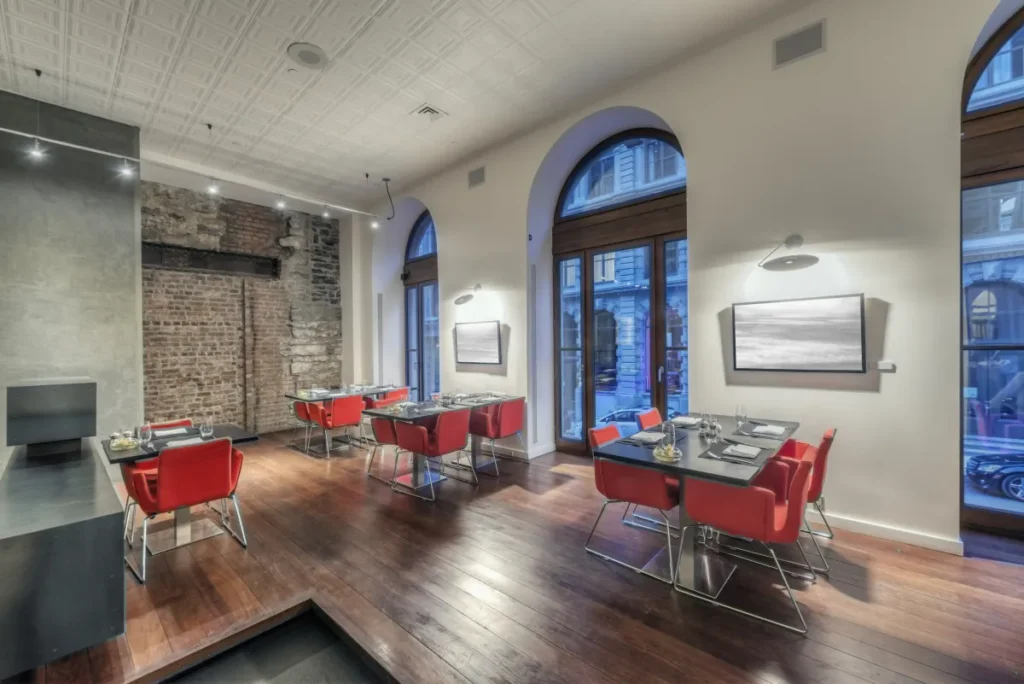
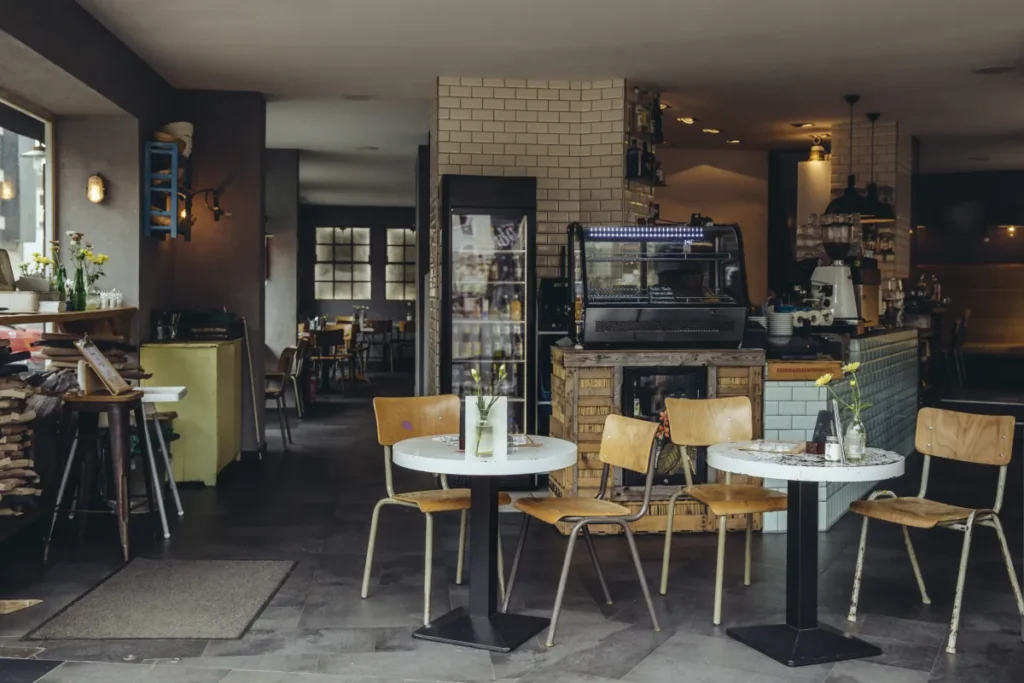
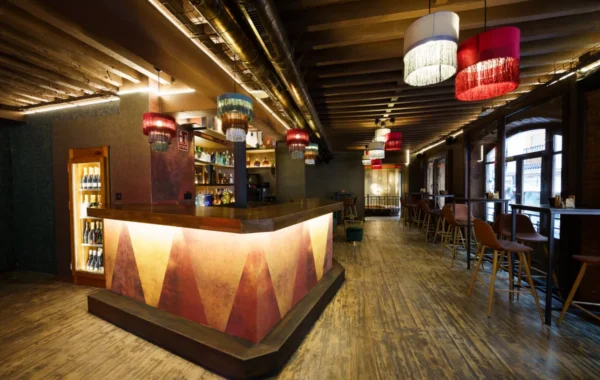
restaurant build outs modern restaurant interior red chairs

Traffic, Cleaning, And Wear Considerations

Traffic patterns drive wear more than most finish selections. In addition, In many design build bar cafe build outs, a quick traffic map exposes conflicts between the queue, staff routes, and cleaning access. In addition, Map the movement early and let that map shape the layout.

Traffic Mapping Checklist

  • Queue + pickup: Keep lines out of egress paths and away from doors that staff need for back-of-house access.
  • Staff-only routes: Separate staff paths from customer paths where possible to reduce collisions and dropped items.
  • Deliveries and waste: Plan for receiving, storage, and trash removal without crossing peak customer zones.
  • Restroom access: Keep restroom routes clear and avoid creating pinch points near seating or ordering.
  • Cleaning access: Confirm that mop sinks, floor drains (when used), and janitorial storage remain reachable during operations.

Cleaning-Driven Finish Decisions

Cleaning crews will find the weakest detail. Also, Because of that, the best specs focus on seams, edges, and transitions—not only surface appearance.

  • Wet zones: Use assemblies that handle frequent mopping and spills without swelling, delaminating, or trapping odors.
  • Behind counters: Add splash protection and durable corner details where syrups, ice, and hot liquids land.
  • Entry thresholds: Detail thresholds that reduce trip hazards while handling carts, dollies, and door sweeps.
  • Ceiling strategy: Choose ceiling details that allow service access and stay clean near cooking or high-humidity areas.

Coordination With Tenants Or Customers

Commercial build-outs often run inside shared buildings with neighbors, security rules, and fixed delivery windows. As a result, Coordination is not “soft” work; it determines whether your schedule survives surprises and whether customers stay safe.

Downtime And Phasing Strategies (Operations-First)

Phasing only works when it reflects real constraints like shutdown windows, inspections, and material lead times. Overall, For design build bar cafe build outs that must stay partially operational, these tactics reduce disruption while keeping the job moving.

  • Define “must-stay-open” zones and “work-only” zones on a plan, including fire exits and accessible routes.
  • Schedule noisy demo, coring, and overhead work for off-hours when the building allows it.
  • Use temporary partitions, floor protection, and controlled debris paths to limit dust tracking.
  • Plan MEP tie-ins around approved shutdown windows; document who restores service and when.
  • Hold finish installs until overhead inspections clear, then protect completed areas from remaining work.
  • Build inspection-ready milestones into the schedule so sign-offs happen without repeat visits.

Preconstruction Coordination Checkpoints

  1. Site walk + existing-conditions review: Verify panels, shutoffs, roof/ceiling access, and any base-building constraints.
  2. Concept layout + risk scan: Flag ADA, egress, and fire/life-safety impacts before finalizing a layout.
  3. Budget alignment: Confirm cost drivers early (MEP scope, specialty systems, and finish durability levels).
  4. Procurement plan: Identify long-lead items and decide storage, delivery windows, and who furnishes what.
  5. Field schedule: Set a weekly look-ahead cadence and a decision path for changes.

Tenant/Customer Coordination Plan

  • Safety separation: Keep public paths clearly separated from work zones with durable barriers and clear signage.
  • Noise and odor control: Coordinate loud work, ventilation, and any odor-producing activities with building management.
  • Access lists: Define who has keys, alarm codes, and escort requirements for after-hours work.
  • Daily housekeeping: Set expectations for end-of-shift clean-up so the space can open on time.
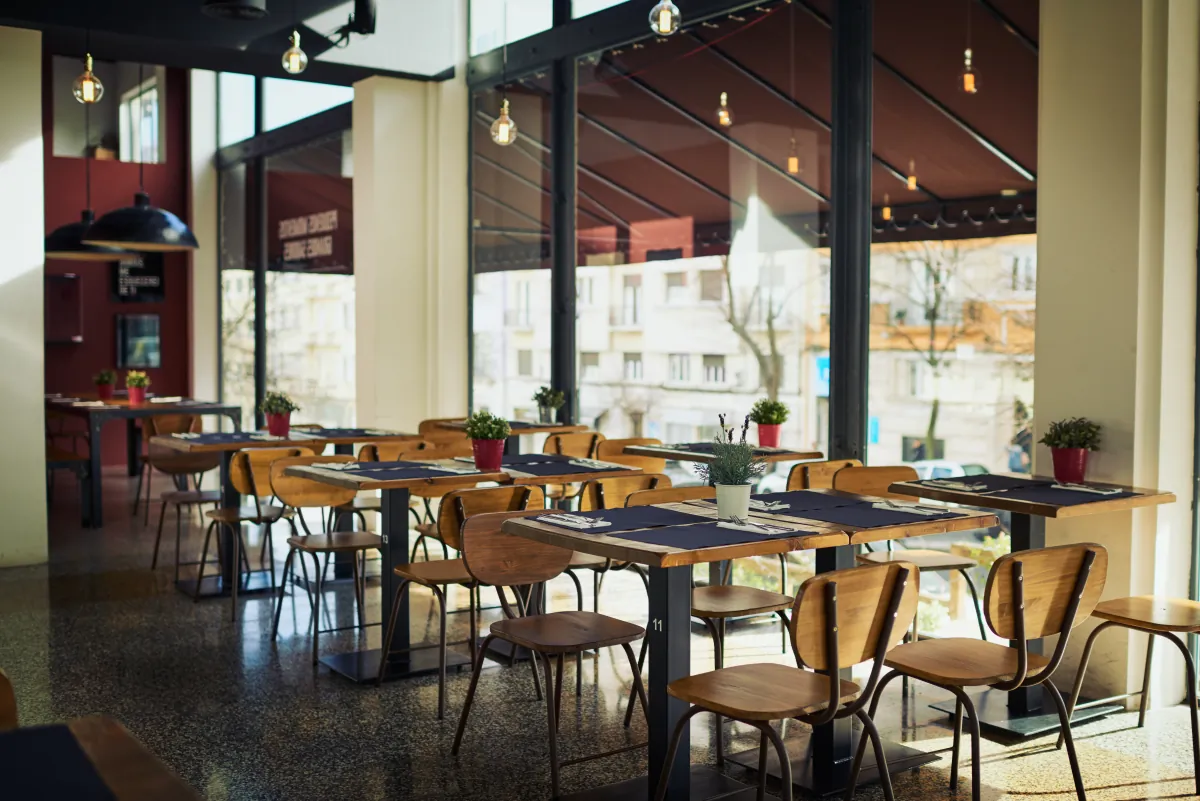
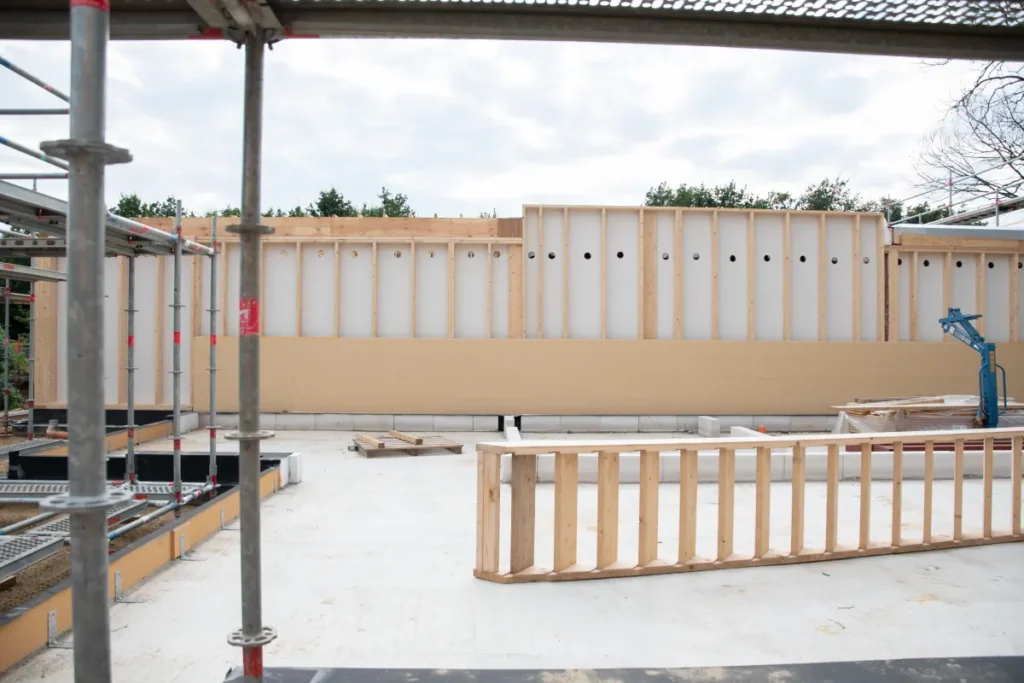
restaurant build outs still early day

Compliance & Documentation Requirements

US Construction & Remodeling Corp. Meanwhile, helps Sacramento commercial clients keep schedules intact by coordinating phasing, code/ADA checkpoints, inspections, and closeout documentation as a single plan. Also, If you are planning design build bar cafe build outs in Sacramento, call +1 (916) 234-6696 for a quick consult; for a site walk request, use https://usconstructioncali.com/free-estimate/.

ADA And Code Checkpoints That Change Scope

Accessibility and life-safety requirements can expand beyond finishes, so it helps to review them before ordering materials or relocating walls. For example, Confirm requirements with your design professional and the Authority Having Jurisdiction (AHJ) for the project address.

  • Accessible routes: Keep a compliant path from entry through ordering/pickup and to any public seating and restrooms.
  • Counters and POS: Confirm reach ranges and clear floor space at payment and pickup points.
  • Restrooms: Verify clearances, door swings, grab bar locations, and accessory heights.
  • Doors and thresholds: Check hardware, maneuvering clearances, and transitions that create trip hazards.
  • Egress: Maintain exit access, emergency lighting, and required signage during each phase.
  • Fire/life safety: Coordinate any impacts to rated assemblies, penetrations, alarms, sprinklers, and suppression systems.

Permits And Inspections In Sacramento

Commercial tenant improvements typically require plan review and inspections, and the schedule should treat those sign-offs as critical path items. Overall, In Sacramento, permitting and plan review commonly run through the City of Sacramento Community Development online portal (Accela Citizen Access), where applications, payments, and status tracking are handled online.

Practical tip: keep a simple inspection matrix (trade, trigger point, responsible party, lead time) and tie it to your weekly look-ahead. For example, That way, rough inspections, above-ceiling checks, and finals do not collide with reopening dates.

Closeout Deliverables To Request Up Front

Closeout is part of operations. As a result, If you request these items early, you reduce scramble at turnover and make warranty calls easier to manage.

  • Submittal register with approved cut sheets for major materials and equipment interfaces.
  • As-built markups reflecting field changes that affect maintenance or future remodels.
  • Warranty information and a contact list by trade, including start dates and coverage notes.
  • Operations and maintenance manuals (as applicable) and any startup/commissioning checklists for MEP systems.
  • Test reports and sign-offs that the AHJ or building requires for final acceptance.
  • Attic-stock list for touch-up materials and spare finish components.

Trust And Quality Signals You Can Verify

You do not need marketing claims to evaluate a build-out partner. Meanwhile, Ask for documentation you can review and confirm in the field.

  • Transparent scope: A written inclusions/exclusions list that matches the drawings.
  • Schedule logic: A phase plan that shows shutdown windows, inspections, and reopen dates.
  • Submittal discipline: A clear log so long-lead items do not become last-minute surprises.
  • Field protection: Evidence of dust control, protection of installed finishes, and safe public separation.
  • Closeout readiness: A defined turnover package instead of “we’ll email it later.”

Typical Timeline And Phasing Approach

Schedules vary, but design build bar cafe build outs tend to move faster when decisions, submittals, and inspections are tracked in the same cadence as field work.

Cost And Timeline Snapshot (High Level)

  • Plan review: Timing depends on scope clarity and jurisdiction review cycles; build float for revisions.
  • Construction duration: Driven by MEP complexity, specialty systems, and the hours you can work.
  • Budget drivers: Electrical capacity, plumbing reroutes, hood/suppression (when needed), and durable floor/wall systems.
  • Downtime strategy: Partial operation can reduce revenue impact, but it adds coordination and protection effort.
DecisionWhy it mattersConfirm early
MEP scope and capacitySets rough-in work and inspection sequenceLoads, shutoffs, and routing constraints
After-hours vs daytime workImpacts noise control and productivityAllowed hours, access rules, and security needs
ADA impactsCan expand work beyond finishesClearances, routes, restroom layout, and hardware
Long-lead itemsDrives procurement and install windowsSubmittals, storage plan, and delivery timing

Phasing Outline For Operating Locations

Even when you keep parts of the space open, the team still needs clean “inspection-ready” moments. For this reason, A workable plan usually separates enabling work, back-of-house tie-ins, and front-of-house finishes.

  • Enable: Install barriers, protection, and temporary routes; confirm emergency egress for each phase.
  • Back-of-house first: Complete rough MEP, above-ceiling work, and specialty penetrations before finishes lock in.
  • Front-of-house build: Sequence counters, walls, and flooring to avoid rework and protect completed surfaces.
  • Inspections and commissioning: Plan for roughs, finals, system checks, and any required training/turnover.

Phased Refresh For An Operating Cafe

Hypothetical example (for illustration): A facility manager needed to relocate a service counter and refresh finishes while keeping weekday service open. For this reason, The team pre-ordered long-lead items, built temporary separations after hours, and scheduled MEP tie-ins during approved shutdown windows. For design build bar cafe build outs like this, the phase plan matters as much as the finish schedule.

  • Before: Staff crossed the customer queue to reach the dish area, and the counter zone lacked durable wall protection.
  • After: The layout separated staff and customer paths, added cleanable wall systems behind service, and simplified daily clean-up routines.

The takeaway: phasing works when the schedule accounts for inspections, equipment startup, and turnover documentation—not only the physical install.

Helpful Links

Frequently Asked Questions

Start by defining what must stay open (public paths, restrooms, POS, back-of-house functions) and build a phase plan around that reality.

  • Use durable barriers and clear signage to separate the public from work zones.
  • Schedule shutdown-dependent tie-ins (electrical/plumbing) in approved windows.
  • Hold inspection-ready milestones so rough and final inspections do not delay reopening.

Ask each bidder to list inclusions and exclusions in writing, tied to the drawings and finish schedule. For design build bar cafe build outs bid reviews, require schedule assumptions, phasing, and closeout deliverables in the proposal.

  • MEP scope boundaries and any capacity upgrades
  • Fire/life-safety impacts (sprinklers, alarms, rated assemblies, suppression where applicable)
  • Operating constraints (hours, access, debris routes) and phasing assumptions
  • Submittals, inspections, and closeout deliverables (as-builts, warranties, operations and maintenance)

Accessibility can drive layout more than aesthetics. Common pinch points include counters/POS reach ranges, seating clearances, restroom layouts, and the accessible route through the space.

Confirm the exact requirements for your address with the design professional and the AHJ before finalizing walls, door swings, or fixed casework.

Treat plan review and inspections as critical path. Build float for revisions, and schedule rough/final inspections so they align with reopen dates.

In Sacramento, applications and status tracking commonly run through the City of Sacramento Community Development portal (Accela Citizen Access), so document submittals, corrections, and approvals in your project log.

A good closeout package reduces downtime after opening and makes warranty work faster.

  • As-built markups for MEP routing and access points
  • Warranty contacts and coverage start dates by trade
  • Approved cut sheets/submittals for key assemblies
  • Operations and maintenance manuals and startup/commissioning checklists (as applicable)
  • Inspection sign-offs and required test reports

Most delays come from coordination and approvals, not from basic carpentry.

  • Long-lead equipment and finish items without early submittals
  • Unexpected MEP capacity limits or reroute needs
  • Fire/life-safety coordination (penetrations, alarms, sprinklers, suppression systems)
  • Inspection timing and reinspection due to incomplete readiness

Licensed, insured & trusted local contractor

US Construction & Remodeling Corp.
9821 Business Park Dr, Sacramento, CA, 95827
Phone: +1 (916) 234-6696

CSLB License #: 1117562 Fully licensed and insured.

View our Google Business Profile

Related service

Looking for a step-by-step overview before you choose materials? Read Bar & Café Build-Outs.

Related articles

  • Kitchen Remodeling Cost in Novato: Ranges + Timeline
  • Roofing vs DIY in San Francisco: Practical Decision Guide
  • Roofing Timeline in Rancho Cordova: Checklist and FAQs

Leave a comment

This website uses cookies to improve your web experience.
Explore
Drag