Planning And Scope Decisions For Gutters Metal Roof
The planning stage determines whether your new gutters quietly do their job or become a recurring maintenance chore. Meanwhile, A good plan answers two questions early: “Where will the water go?” and “How will it be maintained?”
Downspout Layout Planning (Where The Water Goes)
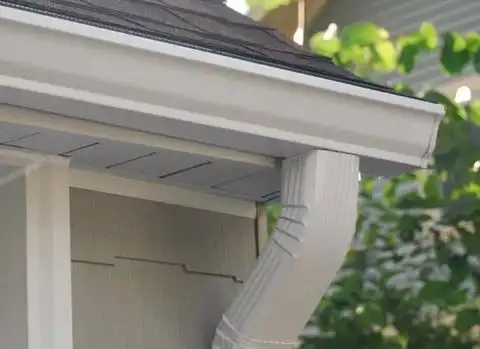
Downspouts are the exits for your gutter runs. Overall, Place them based on how your roof concentrates runoff, not on convenience alone. Complex rooflines may need extra downspouts so water doesn’t race past the outlets.
- Straight-run layouts: one long run with outlets at both ends to shorten flow distance
- Corner and wrap-around layouts: prioritize outlets near corners that see the most runoff
- Valley-fed areas: consider an outlet or downspout near the valley discharge point
- Discharge planning: use extensions or splash blocks so water exits away from the home
If your plan includes tying into underground drains, clarify who confirms the connection point and whether any approvals apply for your jurisdiction.
Budget Ranges & Timeline (Typical)
- Once materials are ready, many installs finish in a day; complex rooflines may take longer.
- Lead time usually depends on measuring, fabrication, and scheduling—install day is often the shortest part.
- Cost drivers include gutter size, material, downspout count, access (one-story vs multi-story), and any fascia repair.
- Add-ons like gutter guards or rainwater collection increase scope and should be priced separately.
Resale And ROI Priorities
Gutters don’t sell a home the way a kitchen does, but they protect expensive components that buyers notice when they fail. Also, The best ROI usually comes from solving visible symptoms: overflow, stains, and poor drainage near entries.
- Prioritize correct sizing and discharge before upgrading to premium materials.
- Choose colors and profiles that match the roofline for a clean, finished look.
- Improve drainage away from foundations and walkways to reduce nuisance water issues.
Optional Water Storage & Organization Add-Ons
If you want more than “move water away,” add-ons can make maintenance simpler and put runoff to work.
- Rain barrel or cistern connection: a downspout diverter can capture water for landscaping (plan a safe overflow route and check any local requirements).
- Cleanout points: accessible cleanouts help you flush long runs without dismantling sections.
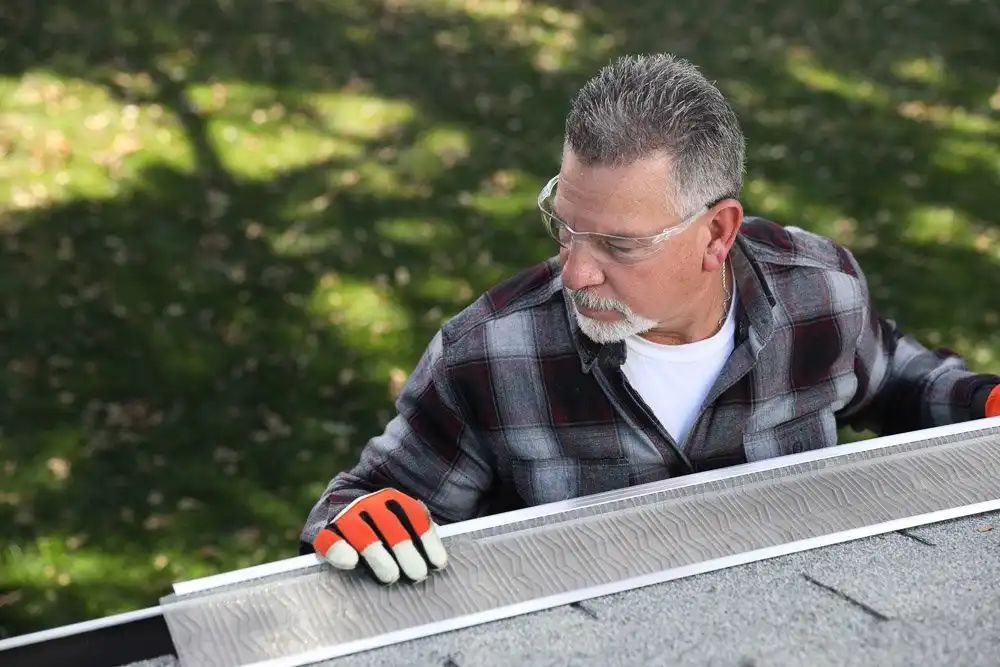
- Gutter guards: helpful in heavy leaf areas, but only when the layout allows inspection and cleaning.
Key Decisions At A Glance
| Decision | Why it matters | What to ask |
|---|
| Gutter size & shape | Controls capacity and overflow risk | “Why this size for my roof planes?” |
| Downspout plan | Determines where water exits the property | “Where will each downspout discharge?” |
| Material compatibility | Reduces corrosion and staining over time | “How do you avoid dissimilar-metal contact?” |
| Access & maintenance | Impacts cleaning frequency and cost | “How will I maintain this safely?” |
Materials, Permits, And Scheduling
For metal roofs, material choices aren’t just cosmetic. For example, You want gutters, fasteners, and sealants that work well together and hold up to sun and standing water at seams.
Sizes, Shapes, And Compatibility
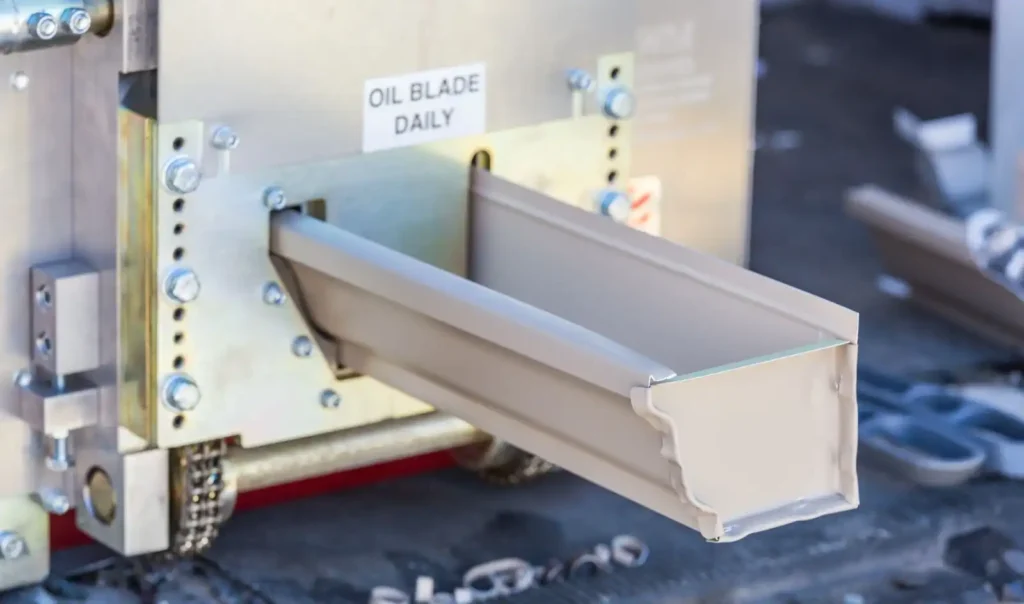
Most homes use seamless aluminum gutters, but metal-roof projects sometimes benefit from heavier materials or larger profiles depending on runoff and design.
- K-style gutters: common, higher capacity for their size, and easy to match to most fascia lines
- Half-round gutters: a clean look on modern exteriors; they flow well but need careful bracket spacing
- Aluminum: lightweight and cost-effective; thickness and coating quality matter
- Steel: tougher against ladders and impact; keep coatings intact to resist rust
- Copper: premium appearance and long life; confirm compatibility with nearby metals to reduce galvanic reactions
Ask how the installer handles dissimilar metals at transitions. Additionally, In many cases, isolating washers or compatible components prevents long-term corrosion where gutters meet metal trim, screws, or roof-edge pieces.
Permits And Scheduling In California
Many gutter replacements are straightforward, but rules can change when you alter drainage paths, repair structural wood, or connect to underground drainage. As a result, A contractor should explain whether permits apply for your scope and how inspections (if needed) could affect the schedule.
Scheduling also matters with metal roofs. Additionally, Crews should protect panels from scratches, manage ladder placement carefully, and avoid leaving sealants uncured in wet conditions.
How The Work Usually Unfolds
- Planning call to understand symptoms (overflow, staining, pooling) and timing goals.
- Site visit to measure roof planes, map gutter runs, and confirm downspout discharge.
- Written proposal listing gutter size, material, downspout count, accessories, and closeout testing.
- Fabrication and scheduling, with any permit or inspection steps identified upfront when required.
- Installation day: remove old gutters, make repairs if included, install new runs, and secure downspouts.
- Closeout: water test, final adjustments, cleanup, and a walkthrough of maintenance points.
Lock In Your Install Window
If you have a deadline (move-in, repainting, landscaping, or seasonal rains), talk timing before you approve materials. For example, Call +1 (916) 234-6696 for a quick timeline conversation, and share photos of your rooflines and problem areas to speed up the planning.
Related Upgrades That Often Pair Well With Gutter Work
When gutters fail, the root cause sometimes involves adjacent exterior details. For example, If you’re already budgeting for gutters metal roof drainage, consider whether any of these items should be addressed in the same visit.
- Fascia repair and soffit repair where old gutters pulled away
- Downspout extensions or splash blocks to control discharge
- Gutter guards sized to your roof and debris type
- Exterior paint touch-ups where staining occurred
- Roof maintenance that affects roof-edge drainage
You can also browse roofing and exterior services to see related scopes homeowners often bundle.
Quality Checks And Closeout
A good install should look clean from the street and perform under a hose test. As a result, Treat closeout like a final inspection: a few minutes of verification now can prevent months of drip marks and surprises later.
Quality Checks You Can Verify On Site
- Gutters slope consistently toward outlets (no standing water after a short test).
- Hangers/brackets feel solid with gentle hand pressure; sections don’t flex or sag.
- Seams, end caps, and corners are sealed neatly without gaps or excessive smearing.
- Downspouts are strapped securely and discharge where you expected.
- Water doesn’t overshoot the gutter at roof valleys or high-flow areas during the test.
- Work areas are cleaned up, including old fasteners and metal shavings.
Hypothetical Before-And-After Snapshot
Hypothetical example: A homeowner notices water spilling over a corner during heavy rain and staining the siding below a roof valley. As a result, The existing system uses undersized gutters with one downspout at the far end, so water rushes past the outlet.
After re-planning the layout, the new install uses a larger gutter profile, adds an outlet closer to the valley discharge, and routes the downspout to a safer discharge area with an extension. Additionally, The closeout water test confirms the corner stays dry and the discharge avoids the walkway.
Closeout Checklist And Maintenance
Before the crew leaves, make sure you have a maintenance plan you can follow.
- Keep a copy of the written scope, color/material notes, and any accessory model info.
- Inspect for debris based on nearby trees and roof pitch, especially after windy weather.
- Confirm how to safely clean guards (if installed) and where clogs usually form.
- Document any permit sign-offs or inspection notes when they apply to your project.