Skip links

Metal Roof vs Shingles Cost in California: Ranges + Timeline

Choosing between a metal roof and shingles in California is rarely just about looks; the metal roof vs shingles decision affects upfront cost, timeline, and long-term maintenance. The ranges below help you budget and ask better questions before you sign anything.

Quick checklist:

  • List the biggest cost drivers (roof size/pitch, material, tear-off, decking repair, and flashing/vents).
  • Pick a material system and verify underlayment, flashing, and ventilation details.
  • Clarify tear-off vs overlay and what happens if decking damage is found.
  • Compare 2–3 itemized bids (materials, disposal, permits, warranty).
  • Schedule around weather and confirm daily cleanup and protection.
  • Do a final walkthrough: flashing, vents, and warranty documentation.

TL;DR: Shingles usually come in lower upfront and can start sooner, while metal often costs more but can deliver longer service life with less routine maintenance when installed correctly. Either way, details like underlayment, flashing, and ventilation drive performance.

  • Get the roof square footage (not just house size)
  • Decide how long you plan to stay in the home
  • Ask for the full material system, including accessories
  • Confirm tear-off scope and how sheathing repairs are handled
  • Verify whether permits and inspections are included in the estimate
  • Request a written, line-item scope with a target start date

For a written, line-item estimate, call Call or request an on-site evaluation from US Construction & Remodeling Corp.

Cost Breakdown For Metal Roof Vs Shingles (What You Pay For)

Roofing prices in California swing based on roof size, pitch, access, and how much repair work shows up at tear-off. Overall, As a planning range, many asphalt shingle replacements land around $8–$15 per sq ft installed, while many metal roof installs land around $12–$25 per sq ft installed.

That gap is real, but the material alone rarely explains it. Additionally, When you compare metal roof vs shingles bids, you are really buying a complete system that manages water at every edge, valley, and penetration.

What Your Estimate Should Include

  • Removal of existing roofing layers and disposal
  • Inspection of the roof deck, also plus an allowance or unit price for repairs
  • Underlayment and waterproofing at valleys, edges, and transitions
  • New flashing at walls, chimneys, skylights, and all penetrations
  • Ventilation plan (intake and exhaust) to protect the attic and sheathing
  • Ridge caps, starter course, and edge metal (drip edge)
  • Permit and inspection handling where required
  • Jobsite protection and final cleanup

Ballpark Cost Table (California)

These ranges are meant for early budgeting. Also, A site visit is the only way to price your roof accurately.

Line item / driverShingles (typical range)Metal (typical range)Schedule impact
Roofing material$3–$7 per sq ft$6–$14 per sq ftShingles are often available quickly; metal may require ordering.
Labor and installation$4–$8 per sq ft$6–$12 per sq ftMore valleys and penetrations add install days on any roof.
Tear-off and disposal$1–$3 per sq ft$1–$3 per sq ftExtra layers or brittle decking can extend tear-off time.
Permits and inspections$200–$1,200+$200–$1,200+Turnaround depends on your city or county and inspection availability.
Contingency for repairs5–10% recommended5–10% recommendedWood replacement and ventilation changes can shift scope mid-job.

Hypothetical example: If your roof measures about 2,000 sq ft, shingles in the $8–$15 band plan roughly $16,000–$30,000 before repairs and permitting. For this reason, Metal in the $12–$25 band plans roughly $24,000–$50,000+.

If you want to tighten the range before an on-site visit, share a few photos (front, back, each side, plus any problem areas) and mention the number of stories and access limits. For example, That context helps an estimator flag likely add-ons early.

Where The Money Goes

Material choice drives the headline number, but labor drives the spread. In addition, A simple, walkable roof with few penetrations costs less to install in both systems, while steep slopes, complex valleys, and tight access push costs up fast.

change depending on the metal profile. As a result, Standing seam often costs more than metal shingles because it takes more precision at seams, trims, and transitions.

Prioritize Long-Term Value (Not Just The Lowest Bid)

For most homes, the best long-term value comes from spending on details that prevent leaks and rot. Those items also reduce the chance of mid-project surprises.

  • Ask for a clear flashing plan at chimneys, walls, and skylights
  • Confirm the ventilation approach and any needed intake upgrades
  • Choose an underlayment specified for your roof slope and roof type
  • Replace brittle pipe boots and aging vents during the re-roof
  • Plan for small wood repairs so the crew can fix issues immediately

Ready for a written scope with line items and a realistic schedule? Meanwhile, Call Call or schedule an estimate.


house siding replacement

Optional Upgrades That Add The Most Value

Once the roof is open, a few targeted upgrades can prevent avoidable problems. For this reason, The goal is to reduce weak points at edges, valleys, and penetrations, while keeping the scope aligned with your budget.

Upgrades Worth Considering

  • High-performance underlayment in valleys and low-slope areas: adds protection where water concentrates.
  • New flashing at walls and chimneys: older flashing often fails before the new roof does.
  • Ventilation improvements: balanced intake and exhaust helps the roof system and attic comfort.
  • Skylight replacement during re-roofing: avoids disturbing new roofing later.
  • Decking repairs or selective replacement: gives fastener strength and a flatter finish.

How To Choose Between Systems

Resale value rarely depends on one material label alone. In addition, Buyers and inspectors tend to focus on a watertight system, clean details, and closed permits where applicable. For example, The metal roof vs shingles choice should match your timeline and how long you plan to stay.

  • Keep your paperwork: product data, scope of work, and any inspection sign-offs.
  • Match the roof to the home and neighborhood expectations; extreme upgrades do not always pay back.
  • Prioritize visible quality: straight lines, consistent vents, and tidy flashing work.

Hypothetical example: If you plan to sell soon, a higher-end shingle system plus upgraded flashing and ventilation may pencil out better than a premium metal profile. In addition, If you plan to stay long-term, metal can make more sense even with the higher upfront cost.

Typical Timeline From Measurement To Sign-Off

  • Day 0: on-site measurements, photos, and scope discussion
  • Days 1–7: written estimate and material options (faster when access is simple)
  • Week 1–3: permitting and scheduling (varies by jurisdiction)
  • Week 1–4: material ordering; metal profiles sometimes take longer than shingles
  • Install window: 1–2 days for straightforward roofs, 3–7 days for complex roofs
  • Closeout: cleanup, final walkthrough, and any required inspection sign-off

On-Site Logistics To Plan For

Roof work is loud and messy by nature, so a little prep saves headaches.

  • Reserve driveway space for dumpsters and material drop
  • Move fragile items off garage shelves and attic areas below work zones
  • Plan for pets and kids during tear-off days
  • Ask how the crew will protect landscaping and AC units
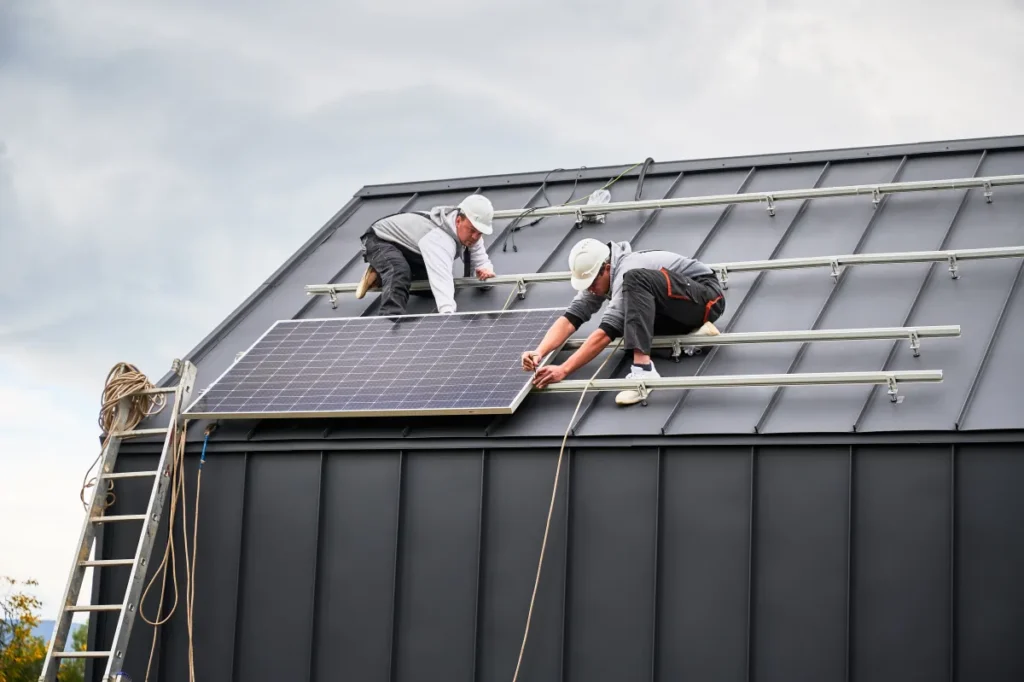
solar panel service engineer installing solar cell on the roof

Permits, Inspections, And Scheduling

In many parts of California, a full roof replacement (and many re-roof projects) requires a building permit and a final inspection. For this reason, Permits protect you as the homeowner because they document the work and create a clear inspection trail.

Permit Basics (Keep It Simple)

  • Ask your contractor whether your scope triggers a permit in your city or county.
  • Confirm who pulls the permit and whether fees are included in the written estimate.
  • Plan for inspection timing; it can affect start dates and closeout.

Sacramento note: permitting and plan review typically run through the City of Sacramento Community Development portal (Accela Citizen Access). In addition, Applications, payments, and status updates are usually handled online, which can speed communication when paperwork is complete.

Outside Sacramento, the same concept applies, but the portal and review timeline change by jurisdiction. As a result, Your estimator should tell you what to expect for your address.

A Quick Checklist

Even if you are comparing bids somewhere else in California, this checklist keeps the comparison fair. It also helps you spot low quotes that leave out critical roof details.

  • Request the quote in writing with line items for materials, labor, permits, and cleanup.
  • Confirm the exact roofing system (shingle type or metal profile) plus accessories.
  • Ask how flashing will be rebuilt at chimneys, walls, skylights, and pipe penetrations.
  • Verify the ventilation plan and whether intake upgrades are included if needed.
  • Get a clear plan for decking repairs: allowance, unit rate, and decision process.
  • Ask for the expected start date and how material lead times affect scheduling.

Financing Options To Compare (High Level)

Homeowners pay for roofing in a few common ways. Meanwhile, The right choice depends on your cash reserves and how long you plan to stay.

  • Cash savings: simplest when the budget is already set.
  • Home equity loan or HELOC: often used for larger upgrades; compare rates and fees.
  • Personal loan: can work when equity options are not a fit.
  • Credit card promotions: useful only if you can pay it off within the promo window.
  • Insurance claim: relevant only when a covered event caused the damage; keep scope aligned to the adjuster report.

To get the most accurate metal roof vs shingles estimate, prepare a few basics: your address, the number of stories, any leak history, photos of the roof from all sides, and any HOA requirements. Overall, From there, we will translate your goals into a written scope you can review.

Call Call or Free estimate. US Construction & Remodeling Corp. Additionally, is based in Sacramento and works with homeowners in Sacramento and nearby communities.

Helpful Links

Frequently Asked Questions

Upfront, metal usually costs more than an asphalt shingle system, especially for standing seam profiles. However, a complex shingle roof with steep pitch, multiple valleys, and lots of penetrations can narrow the gap. Compare installed price per square foot with the same scope (tear-off, waterproofing details, ventilation, permits, and cleanup).

The biggest cost drivers are roof size and complexity, then the unknowns found at tear-off.

  • Roof pitch and how walkable it is
  • Number of valleys, transitions, chimneys, and skylights
  • How many existing layers must be removed
  • Decking condition and any wood replacement needed
  • Access for crews, dump trailers, and material delivery
  • Local permit and inspection timing

Two to three detailed, written estimates is usually enough. Focus on whether each bid includes the same system components and the same repair plan, not just the bottom-line price. If one quote is dramatically lower, ask what was excluded.

Many California jurisdictions require a permit for re-roofing or full replacement, and some require inspections. Your contractor should confirm the rules for your exact address and outline who pulls the permit and how fees are handled in the written estimate.

Many straightforward roofs install in 1–2 days, while more complex roofs can run 3–7 days. The larger timeline is often driven by permitting and material lead times, and some metal profiles take longer to order than shingles.

Sometimes, but not always. Local code, the number of existing layers, deck condition, ventilation needs, and manufacturer requirements all matter. An on-site evaluation is the safest way to decide because overlays can hide decking issues that should be repaired.

Bring a few basics so the estimate can be accurate and specific.

  • Property address and number of stories
  • Photos from all sides, plus close-ups of problem areas
  • Any leak history and where you have seen staining
  • Your preferred material (shingles, metal shingles, or standing seam)
  • Any HOA requirements and your target timeframe

To schedule an on-site estimate, call Call or use this booking form.

Licensed, insured & trusted local contractor

US Construction & Remodeling Corp.
9821 Business Park Dr, Sacramento, CA, 95827
Phone: +1 (916) 234-6696

CSLB License #: 1117562 Fully licensed and insured.

View our Google Business Profile

Start with the pillar guide

For a complete overview (scope, timeline, and planning tips), see our main page: Roofing Remodeling.

Leave a comment

This website uses cookies to improve your web experience.
Explore
Drag