
Skip links

USC Residential Plumbing Project

Residential Shower Valve Leak Diagnosis and Replacement

US Construction & Remodeling Corp. performed and managed this residential shower-valve leak investigation and replacement project. A homeowner reported a wet area near the wall and baseboard behind the valve. After the trim was removed, moisture was observed around the valve area, rear-wall access was explained, and the homeowner authorized the replacement scope.
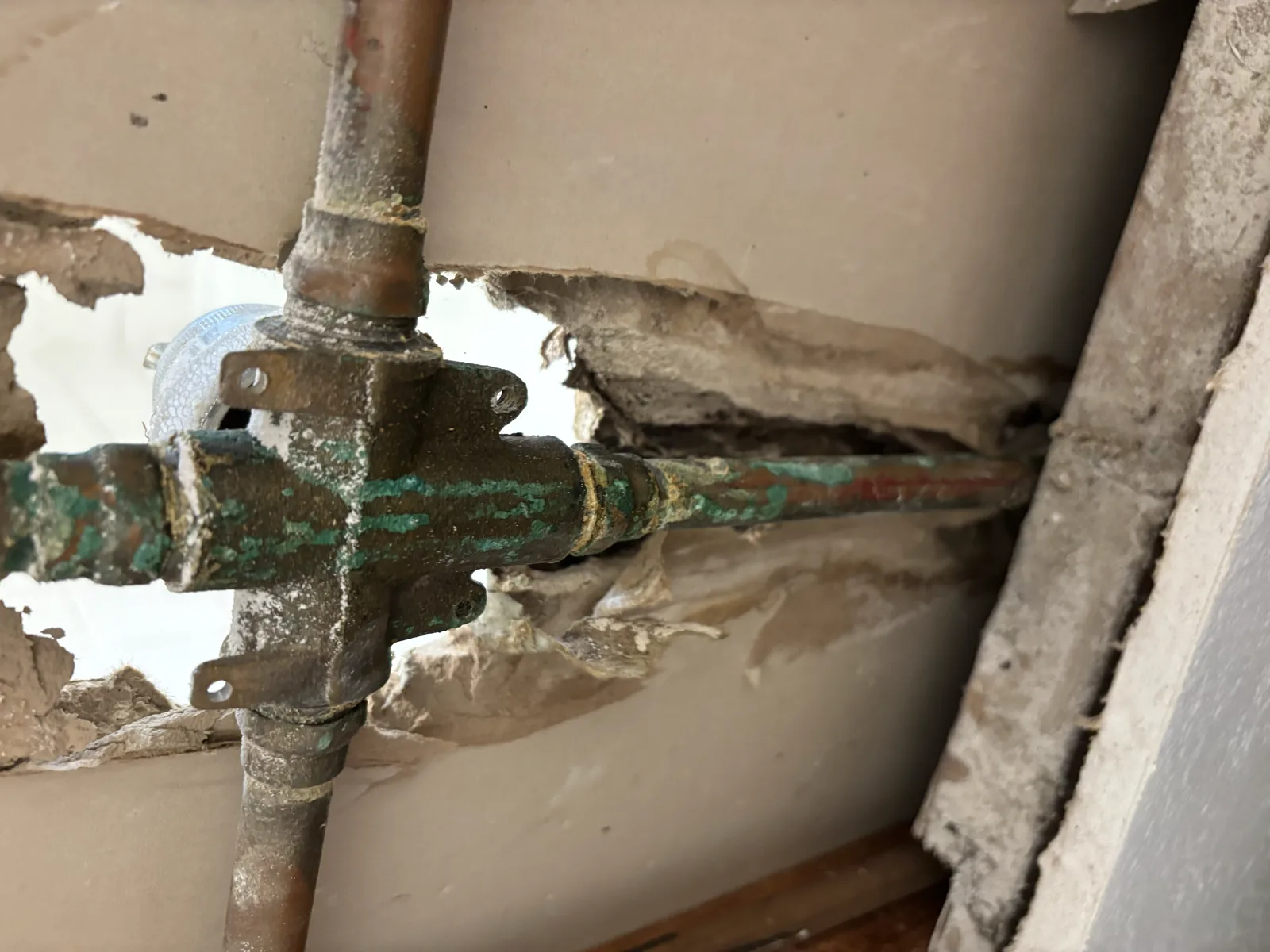
Opened residential wall showing the existing shower valve and copper piping during leak diagnosis before replacement.
Rear-wall access during the shower-valve investigation, showing the existing valve, copper piping, and visible green surface residue before replacement.

Project at a glance

Project details from the residential plumbing service visit

Project type

Residential shower-valve leak investigation and replacement.

Customer-reported symptom

A wet area near the wall and baseboard behind the shower valve.

Access method

Homeowner-authorized rear-wall drywall opening after the trim inspection.

Plumbing scope

Existing valve replacement with localized copper piping and fittings.

Wall repair

Drywall patching and finish restoration were arranged separately by the homeowner.

Photo documentation

An original service photograph documents rear-wall access and the existing valve condition.

Performed and managed by

US Construction & Remodeling Corp.

Customer privacy

The customer identity and property address are kept private.

Customer authorization

Access and replacement scope were reviewed before work proceeded.

What the homeowner noticed

The first sign was moisture outside the shower enclosure

The concern was a wet area near the baseboard and the wall surface behind the valve location—not a dripping showerhead or a visible leak at the handle.

Because a wet bathroom wall can have more than one source, the trim and valve area were checked before the drywall was opened.

What the service photo shows

Moisture traced at the valve area

Green surface residue is visible on portions of the existing valve and copper piping. After the trim was removed, the technician traced moisture at the valve area and recommended focused rear-wall access.

Diagnosis before demolition

The trim was removed before wall access was requested

1

Locate the closest plumbing source

The technician compared the wet area with the shower-valve position on the opposite side of the wall.

2

Remove the shower trim

The front trim and plate were removed first to inspect around the valve without immediately opening the drywall.

3

Observe the valve area

After the trim was removed, moisture was observed around the valve area. That finding supported a focused rear-access recommendation.

4

Confirm access and finish responsibilities

The owner was told that a small rear-wall opening was needed for replacement and that drywall finishing would remain a separate owner-managed scope.

5

Proceed only after authorization

Once the owner approved the approach, the wall was opened and the valve replacement was performed.

Authorized plumbing scope

The concealed valve was replaced through controlled rear access

The USC field interview records that the approved work was a concealed shower-valve replacement, together with the localized copper pipe and fittings needed for the connection. The owner had the selected replacement valve available at the property.

Controlled opening

The access opening was sized to reach and replace the concealed valve rather than opening a broad section of wall.

Valve and piping work

The approved plumbing scope included the replacement valve and the copper connection work required around it.

Finish boundary

Drywall patching and finish restoration were not included in this plumbing scope; the owner arranged that work separately.

Work documented during diagnosis

Focused rear-wall access reached the concealed valve

The service photograph documents the opened wall, existing shower valve, copper piping, visible surface condition, and focused access location.

The USC field record carries the project chronology from the first inspection through the authorized valve replacement and localized connection work.

Project pricing

Pricing follows access and approved scope

Final pricing depends on valve selection, access, localized piping, finish responsibilities, and site conditions. The customer reviews the scope and price before work begins.

How the work was coordinated

Plumbing access, replacement work, and wall repair responsibilities were set before work

Plumbing work

The service record covers homeowner authorization, rear-wall access, concealed valve replacement, and localized copper connection work.

Finish responsibility

The homeowner arranged drywall patching and finish restoration separately after the plumbing scope.

Customer privacy

The customer identity, property address, and private project details are kept confidential.

If you see a wet wall near a shower

Do not wait for the stain to spread

Avoid using the affected shower until the source is evaluated. If water is actively spreading and you already know the correct safe shutoff, isolate the water and call for current availability.

Helpful details for the call

  • Where the wet area first appeared
  • Whether moisture increases when the shower runs
  • Whether the wall is accessible from the rear
  • Any recent valve, trim, tile, or plumbing work
  • Photos of the wet area and shower trim

Residential plumbing project

Diagnose first. Explain the access. Authorize the scope.

This project shows why a wet wall should be traced before demolition and why the wall-repair responsibility should be clear before a concealed valve is replaced.

Photo taken by the USC team during rear-wall access for the shower-valve replacement. Customer identity and property address are kept private.

This website uses cookies to improve your web experience.
Explore
Drag