Bathroom Renovation Ideas
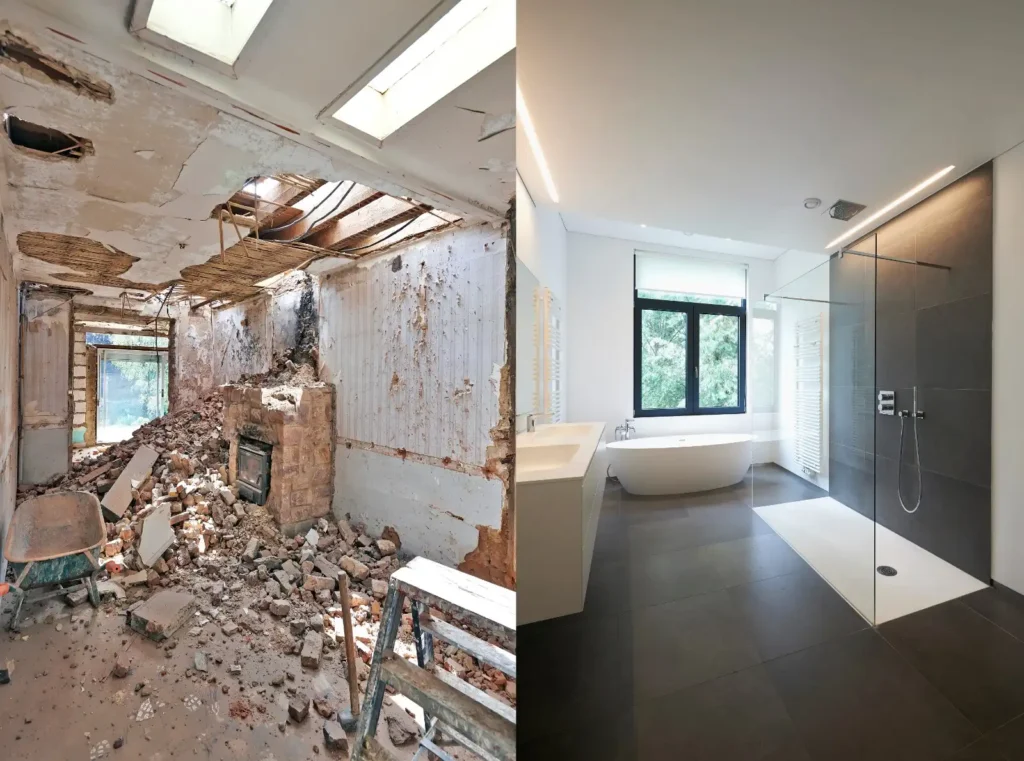
If you’re collecting ideas for a bathroom renovation, start with the upgrades that solve daily friction—poor lighting, tight clearances, and not enough storage—before you chase trendy finishes. This guide narrows the options to practical design moves that fit California homes.
Quick checklist:
- Define the scope and prioritize daily function (shower, storage, ventilation).
- Confirm what trade work is involved (plumbing, electrical, drywall) and the order of work.
- Choose finishes that hold up in wet areas and are easy to clean.
- Collect 2–3 quotes and compare line-by-line (scope, allowances, cleanup, warranty).
- Decide what needs to be ordered first (tile, fixtures, vanity) to keep the schedule moving.
TL;DR: Keep the layout efficient, invest in water management and ventilation, and use a simple palette with strong lighting. A few hero upgrades (shower, vanity, lighting) usually make the whole room feel new.
- Measure clearances (door swing, walk paths, knee room).
- Decide whether you’ll keep plumbing locations.
- Choose shower vs. tub goals for your household.
- Pick a vanity size and storage plan (drawers beat deep cabinets).
- Plan layered lighting and outlet locations early.
- Select flooring and shower tile that’s slip-resistant and easy to wipe down.
Modern Choices Without Over-Complicating It For Bathroom Renovation
| Decision | Why it matters | Quick check |
|---|---|---|
| Wet-area finishes | Wet zones need durable, easy-clean surfaces. | Choose materials rated for bathrooms and simple maintenance. |
| Ventilation | Helps prevent humidity and long-term damage. | Confirm fan sizing and vent routing. |
| Layout | Good layout improves daily usability. | Verify clearances and door swings. |
| Budget control | Keeps scope creep from blowing up the price. | Use allowances and a written change-order process. |
- Curbless or low-threshold shower entry (when feasible) with a linear drain.
- Large-format porcelain tile on shower walls to reduce grout lines.
- Built-in niches: one at arm height, one low for a footrest or razor.
- Semi-frameless glass to keep sightlines clean and easy to wipe.
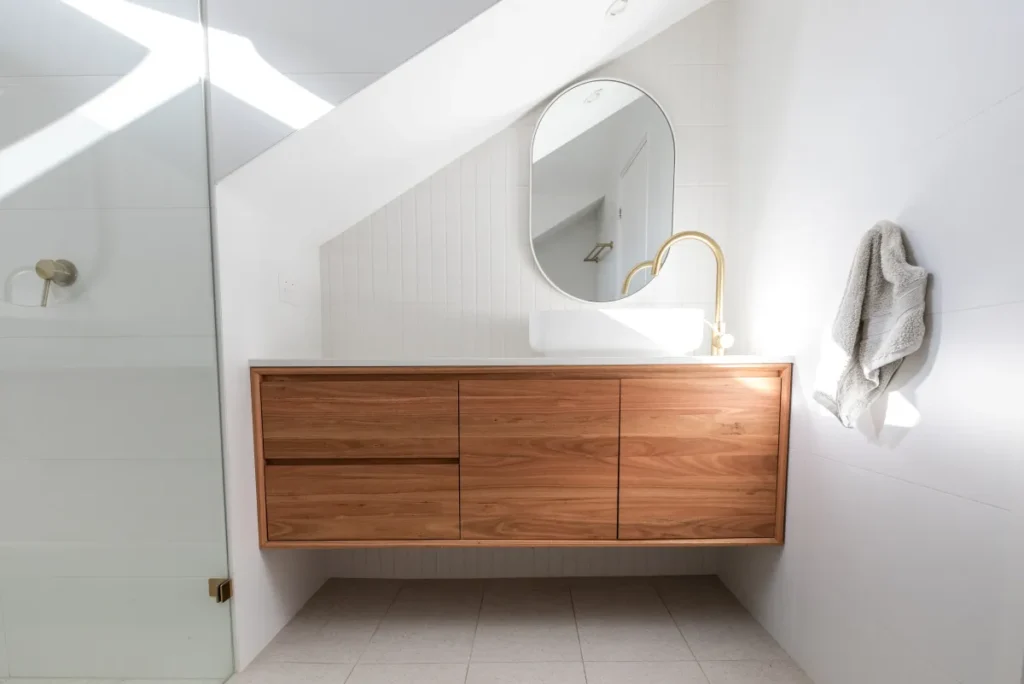
- Floating vanity with under-vanity lighting for a softer night path.
- Recessed medicine-cabinet mirror for hidden storage without bulk.
- Quartz or solid-surface vanity top with an undermount sink for quick cleanup.
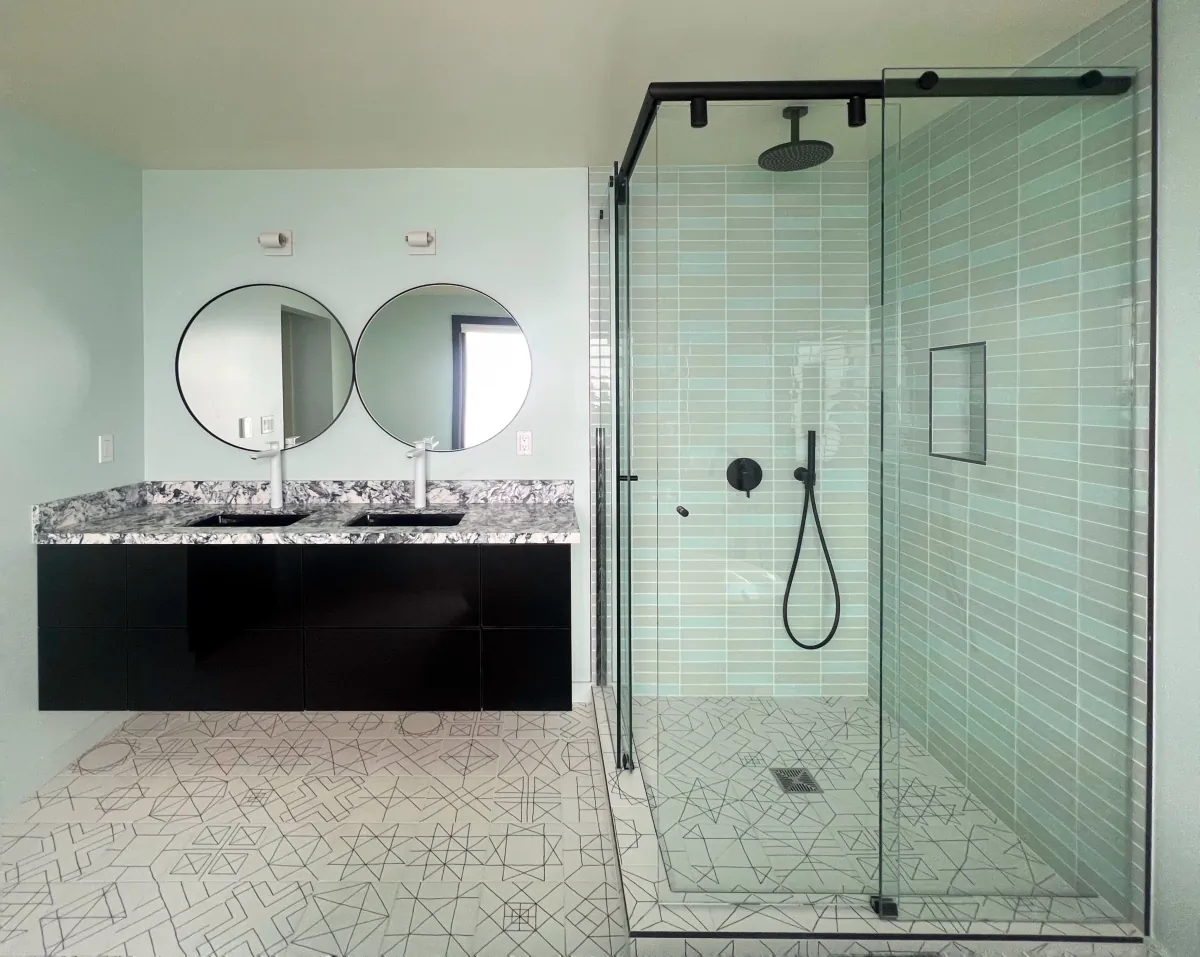
- Statement floor tile in a simple pattern, with calmer walls to balance it.
- One main hardware finish repeated across faucets, lighting, and accessories.
- Quieter exhaust fan with a humidity-sensing control to help the room dry out.
Pick two or three upgrades to carry the room—often the shower, vanity, and lighting—then keep the rest consistent. If an idea crowds the walkway or makes cleanup harder, skip it even if it looks great in photos.

What To Upgrade First (High Impact) For Bathroom Renovation
High-impact upgrades start with function, not décor. Lock the layout, lighting plan, and the surfaces that see the most water, then choose finishes that match your cleaning tolerance.
Galley, L-Shape, U-Shape, Island-Centered
A galley bathroom is long and narrow; keep fixtures tight to the walls and protect a clear path. An L-shape plan puts the vanity on one wall and the shower on an adjacent wall, which can open space for storage. A U-shape layout wraps fixtures around the room; it works when you keep comfortable clearances at the toilet and shower entry. An island-centered layout fits only in larger primary baths, where a freestanding tub or an island vanity becomes the focal point and you can still walk around it.
- Keep plumbing locations when possible; moving drains and vents drives cost and time.
- Decide shower size and door swing early so you don’t fight clearances later.
- Plan towel hooks, bars, and a hamper spot so the floor stays clear.
Small-Space Layouts That Feel Bigger
In a compact bath, you win by saving inches and reducing visual clutter.
- Use a pocket door or outswing door if the plan allows it.
- Choose a narrower-depth vanity with drawers.
- Use a fixed glass panel and a recessed niche in the shower.
- Choose one statement surface (floor or feature wall), not both.
Vanity Cabinets And Cabinet Door Styles
Common cabinet door styles include Shaker, slab, and recessed-panel. Whatever you choose, prioritize drawer storage, moisture-tolerant construction, and hardware you can service.
- Drawers reduce wasted space and keep daily items accessible.
- Confirm vanity height and sink style before selecting the faucet and mirror.
Countertop Options And Flooring Choices
Practical countertop options include quartz, solid surface, and porcelain slab. For flooring choices, porcelain tile is a durable default; pick a slip-resistant finish and avoid tiny mosaics if you don’t want extra grout.
Layered Lighting (Ambient, Task, Accent)
Use layered lighting (ambient, task, accent) so the room looks good and works well. Put mirror lighting on a dimmer, and keep the color temperature consistent across fixtures.
A Simple Planning Sequence
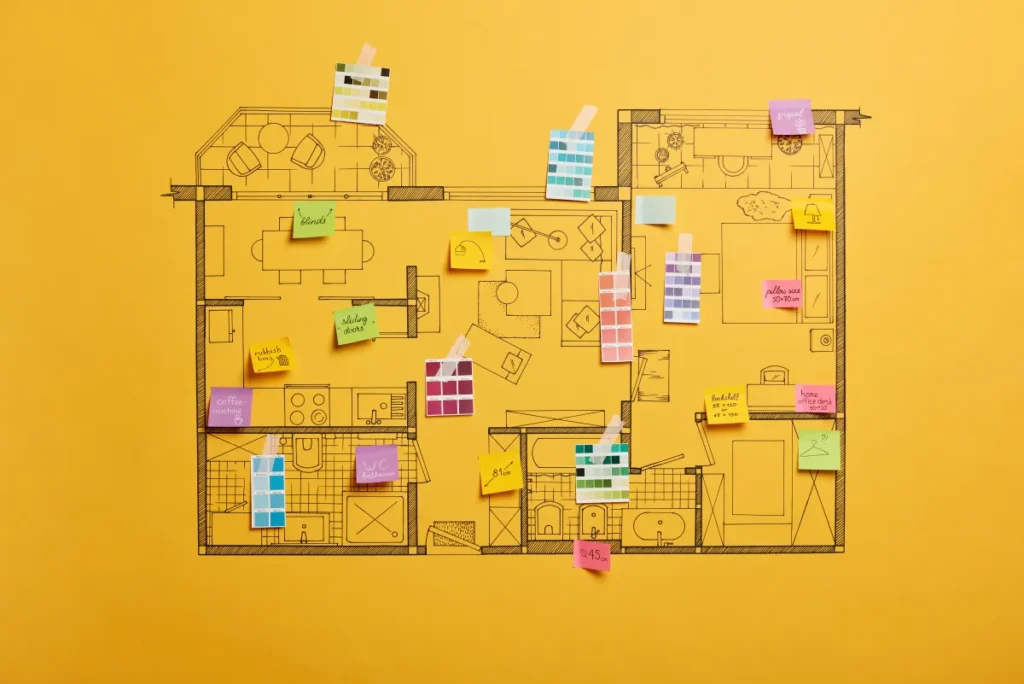
- Measure and document pain points.
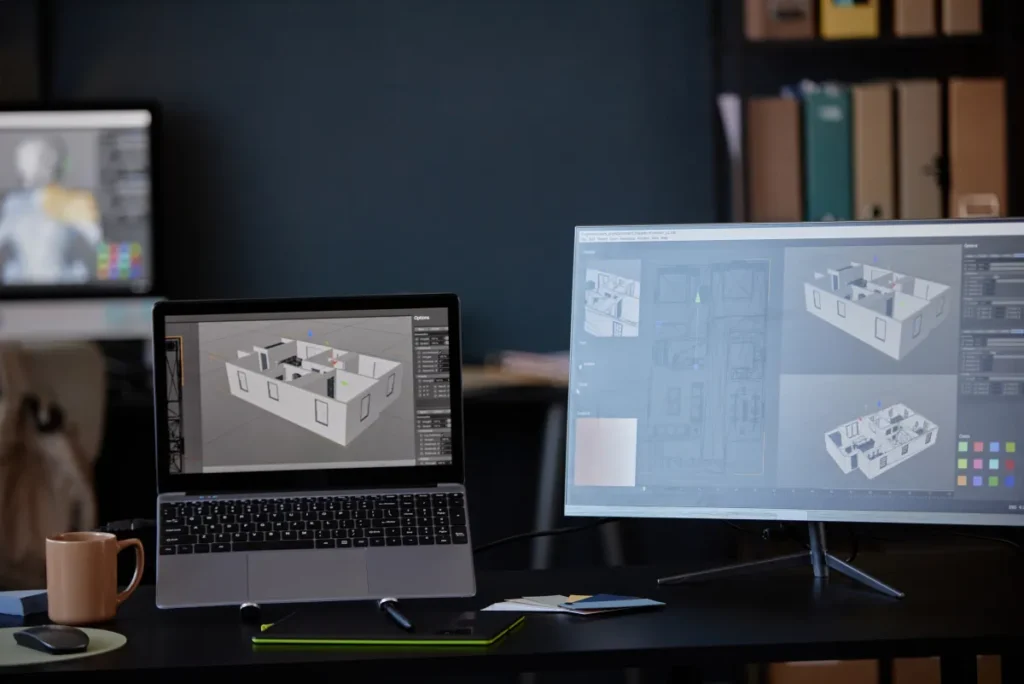
- Choose the layout and fixture sizes.
- Select long-lead items (vanity, tile, glass, lighting).
- Confirm permit needs with your local building department if scope changes utilities or walls.
- Schedule rough work, waterproofing, finishes, and any required inspections.
This approach keeps a bathroom renovation focused and prevents mid-project changes from rewriting the schedule.

Storage And Organization Upgrades
Based in Sacramento, US Construction & Remodeling Corp. helps homeowners across our California service areas turn bathroom renovation ideas into a clear scope—layout, materials, and install details—so the finished space works every day.
Call+1 (916) 234-6696 for a quick consult, or book a free estimate online.
Build It In, Don’t Stack It On
- Recessed medicine cabinet to clear the counter.
- Vanity drawers with dividers for daily items.
- Toe-kick drawer or tilt-out tray for small essentials.
- Tall linen tower or a vanity side cabinet for bulk storage.
- Shower niche sized for real bottles.
Organization Details That Feel Custom
- In-drawer charging (or a dedicated outlet inside the cabinet) for hair tools.
- Hooks placed by the shower exit for towels and robes.
Frequently Asked Questions
Focus on clear paths and hidden storage. Small baths feel bigger when you reduce visual clutter.
- Use a pocket door or outswing door if possible.
- Choose a narrower-depth vanity with drawers.
- Add a recessed medicine cabinet and a shower niche.
Choose based on how the bathroom is used. Many households keep at least one tub, while a walk-in shower can be more comfortable day to day.
- Keep a tub if it’s the only tub in the home or you bathe kids regularly.
- Go shower if you want easier entry and more elbow room.
- If you’re unsure, consider a tub with a simple glass panel.
If you’re prioritizing impact, start with the shower, vanity, and lighting. Those touchpoints change how the room feels every day.
- Shower: large-format tile, niche, and a clean glass solution.
- Vanity: drawers, good counter space, and a mirror that adds storage.
- Lighting: task lights at the mirror plus dimmable ambient light.
Sometimes. Cosmetic updates can be straightforward, but moving plumbing, adding circuits, or changing walls can trigger permits and inspections.
Confirm requirements with your city or county building department before work starts, especially if you’re opening walls or relocating fixtures.
For a quick estimate conversation, it helps to have a few basics ready. Call +1 (916) 234-6696 or use the online form.
- Bathroom dimensions and photos.
- Your must-haves (shower vs tub, storage needs, lighting goals).
- Any layout changes you’re considering.