
Skip links

COMMERCIAL HOT WATER SYSTEM SERVICE

Commercial Water Heater Repair in Sacramento

No hot water, a leaking commercial unit, slow recovery, a shutdown, an error code, or a recirculation problem can interrupt staff, tenants, customers, and required operations. Call with the property address, affected areas, equipment details, access conditions, and the person who can authorize work. We will confirm current availability and the appropriate next step.

ASSESS / COORDINATE / EXPLAIN / AUTHORIZE

Protect operations before choosing the repair

We identify what is affected, whether the property can remain open, who can authorize work, when equipment can be accessed, and how tank, tankless, multi-unit, or recirculation conditions change the service path. Scope and price are reviewed before authorized work begins.

ACTIVE LEAK / GAS / CARBON MONOXIDE

Handle a safety concern before requesting routine service

Water actively leaking: stop using the unit and stay away from hot water, wet electrical equipment, and unsafe wet areas. Use a known shutoff only when it is safely accessible, then call (916) 234-6696.

Smell natural gas or hear hissing: leave immediately. Do not use switches, flames, flashlights, phones, or vehicles until safely away. Call 911, then PG&E at Call. Review PG&E guidance.

Carbon-monoxide alarm: leave the building, call 911, and do not re-enter until emergency personnel say it is safe.
911
Gas odor or carbon-monoxide alarm: leave first

CHOOSE THE CLOSEST SERVICE PATH

Which commercial hot-water problem is affecting the property?

You do not need to diagnose the equipment before calling. Tell us what the business is experiencing, how much of the property is affected, whether another unit is still operating, and who can approve the next step. A field evaluation determines the actual repair scope.

01

No hot water or slow recovery

Tell us whether the entire building, one suite, one floor, a kitchen, or only selected fixtures are affected. Demand, controls, utilities, storage capacity, connected equipment, and recirculation can create similar reports.

02

Active leak

Water at a tank, valve, connector, relief discharge, condensate component, or nearby pipe needs source confirmation. A connection repair and a leaking tank body lead to very different decisions.

03

Error code or shutdown

Share the manufacturer, model, exact code, whether the unit restarts, and how long it operates. Codes and safe diagnostic sequences are model-specific; we do not use a universal code table.

04

Planned repair or replacement

Use this path for recurring failures, poor repair value, insufficient capacity, a scheduled shutdown, or a planned equipment change. Utilities, access, operating hours, permits, and business priorities shape the proposal.

NO HOT WATER / TEMPERATURE / FLOW / CODES

Commercial symptoms need system-level evaluation

No hot water or slow recovery: tell us whether every area is affected, when demand is highest, whether another unit is still operating, and whether the problem is constant or intermittent. Storage, recovery, utilities, controls, connected equipment, demand, and recirculation may all matter.

Temperature changes: note whether the change occurs in one tenant space or throughout the property, during simultaneous use, after a schedule change, or after another unit starts. A fixture, mixing condition, recirculation control, demand pattern, scale, or equipment failure may be involved.

Active water or relief discharge: keep people away from the wet area and report the visible source. Water may come from an accessible connection, valve, condensate component, nearby pipe, or the tank or internal body. Do not plug or modify a relief discharge.

Ignition, venting, or condensate concerns: gas equipment may require review of visible venting, combustion-air conditions, condensate routing where applicable, controls, and ignition-related components within the approved scope. Staff should not remove covers, open venting, bypass controls, or repeatedly reset equipment to troubleshoot it.

OPERATIONS / EQUIPMENT / ACCESS / AUTHORIZATION

What we evaluate before recommending commercial work

Business impact

Whether the property can remain open, which tenants or operations are affected, whether alternate equipment is carrying part of the load, the acceptable shutdown window, and who must receive updates.

Authorization

The requester’s role, who can approve diagnostic work and additional repairs, lease or property-management boundaries, purchase-order requirements, access contacts, and after-hours approval limits.

Equipment and system

Manufacturer, model, gas or electric configuration, storage or tankless type, approximate age and capacity, connected units, recirculation, controls, service history, display status, and exact error code.

Visible site conditions

Mechanical-room or roof access, service clearance, water connections and shutoffs, visible corrosion or leakage, venting and combustion-air conditions where applicable, condensate routing, electrical access, and previous modifications.

Demand and recirculation

Peak operating periods, affected fixtures or zones, simultaneous use, recovery pattern, return-loop behavior, pump and control conditions within scope, and whether another connected unit changes the symptom.

Repair, replace, or plan

Component availability, tank or heat-exchanger condition, recurrence, repair value, capacity, utility limits, replacement requirements, permit responsibility, testing, downtime, and the property team’s priorities.

Business continuity

We ask whether the property can remain open, which operations or tenants are affected, whether unaffected equipment can support limited use, and whether work should occur before opening, after closing, or during a planned shutdown. We do not promise zero downtime.

Commercial storage tanks

A storage system may involve recovery rate, capacity, fuel or power, controls, accessible connections, relief discharge, recirculation, and tank condition. A leaking external connection and a leaking tank body do not have the same repair path.

Commercial tankless systems

Tankless equipment can involve model-specific codes, flow recognition, ignition, listed venting, condensate, utilities, controls, scaling or maintenance, and connected-unit communication. We do not claim every brand, model, or input size.

Multi-unit and recirculation systems

When several heaters or a return loop serve the property, the symptom may involve one failed unit, staging controls, a pump, balancing, a return path, demand, or the common system. Replacing the first visible component without checking the system can miss the actual cause.

When repair may be practical

Repair may offer value when the failure is isolated, the heat exchanger and overall unit remain serviceable, an appropriate part is available, the issue is not repeatedly returning, and the proposed repair fits the expected remaining value.

When replacement may be stronger

Replacement deserves comparison when heat-exchanger or internal-body problems are confirmed, failures repeat, critical parts are unavailable, repair value is poor, capacity no longer fits, or the owner wants a supported technology or feature change.

FROM INTAKE TO AUTHORIZED WORK

What happens during commercial water-heater service

Call for current same-day and after-hours availability. On-site response depends on location, time, technician availability, safe mechanical-room or roof access, equipment type, property authorization, site conditions, required parts, supplier hours, and permit requirements. Arrival, completion, and zero downtime are not guaranteed.

01

Collect the property and impact details

Share the address, business type, affected areas, operating status, requester role, approval contact, access window, equipment arrangement, manufacturer, model, exact code, visible leak, and safe photos. Gas odor and carbon-monoxide alarms follow the emergency path.

02

Screen safety, access, and availability

We separate emergency instructions from routine scheduling, confirm current availability and applicable service-call terms, identify the authorized contact, and ask who can provide mechanical-room or roof access.

03

Evaluate the operating system

The reported business impact, equipment, connected units, visible conditions, controls, code information, access, utilities, and relevant recirculation or demand pattern are reviewed within the approved diagnostic scope.

04

Review, authorize, and schedule the next step

The authorized representative receives the proposed repair, stabilization, replacement, or further-testing scope and price before work proceeds. Special parts, permits, or a planned shutdown may require a return visit.

PRICE / DOWNTIME / REPLACEMENT / PERMITS

Commercial scope and operating conditions determine the price

A responsible price depends on the equipment type and capacity, number of connected units, diagnostic time, manufacturer-specific parts, access, operating-hour restrictions, requested after-hours work, visible leakage or corrosion, recirculation, gas or electrical conditions, venting, condensate, and whether another visit is required.

A replacement discussion adds equipment selection, removal, capacity and recovery needs, utility requirements, water connections, gas or electrical work, listed venting, condensate, access corrections, planned shutdown time, disposal, permit fees, inspection follow-up, testing, warranty information, and scope exclusions. The authorized representative should receive the proposed scope and price before additional work begins.

Repair and equipment replacement are not always the same permit question. The City of Sacramento minor-permit information lists residential and commercial water heaters. The City’s inspection guidance applies only inside City jurisdiction; nearby cities and unincorporated Sacramento County may use another department. The proposal identifies permit and inspection responsibility for the approved scope.

Property and facility teams can also review USC commercial plumbing service when the hot-water problem is part of broader fixture, piping, drainage, tenant-improvement, or coordinated commercial work.
Emin, Chief Designer at US Construction and Remodeling Corp.

Prepared by Emin

Service structure · Chief Designer
Emin organized the commercial user journeys, business-continuity questions, authorization flow, tank and tankless distinctions, multi-unit and recirculation context, safety language, official sources, and mobile reading sequence. Meet the USC team.
Umit Sahin, contractor reviewer at US Construction and Remodeling Corp.

Technically reviewed by Umit Sahin

Contractor review · Project oversight
Umit reviewed commercial intake, equipment and access boundaries, tank and tankless service paths, multi-unit and recirculation considerations, repair-versus-replacement decisions, business authorization, permits, testing, and field limitations. California contractor license #1117562.

SERVICE / AUTHORIZATION / DOWNTIME / PERMITS

Commercial water heater repair FAQ

Why does our business have no hot water?

A loss of hot water can involve the water heater, controls, utilities, a connected unit, recirculation, demand, or another system condition. Tell us whether the entire property or only one area is affected, whether equipment is running, and whether a code or leak is visible. An on-site evaluation identifies the actual repair path.

What should staff do when a commercial water heater is actively leaking?

Stop using the affected equipment and keep people away from hot water, wet electrical equipment, and unsafe wet areas. If authorized building staff already know the correct equipment shutoff and it is safely accessible, isolate the water supply. Do not plug or modify a relief-valve discharge line. Call (916) 234-6696.

Do you service commercial tank and tankless water heaters?

The intake covers commercial storage tanks, tankless equipment, connected multi-unit arrangements, and recirculation concerns when they are within the approved scope. Support still depends on the manufacturer, model, fuel or power type, capacity, access, parts, site conditions, and a field evaluation. We do not claim every brand or model.

Can commercial service be scheduled the same day or after hours?

Call (916) 234-6696 for current availability. Same-day and after-hours appointments may be available depending on location, time, technician availability, safe mechanical-room access, equipment type, required parts, building authorization, and current workload. Arrival, completion, and zero downtime are not guaranteed.

Can a recirculation problem look like a water-heater failure?

Yes. In a commercial system, slow delivery or uneven temperatures may involve a recirculation pump, controls, balancing, a return path, another connected unit, demand, or the water heater itself. The complete operating pattern should be evaluated before replacing equipment.

When should a commercial water heater be replaced instead of repaired?

Replacement deserves comparison when the tank or internal body is leaking, failures repeat, critical parts are unavailable, repair value is poor, capacity no longer matches demand, or connected installation conditions need correction. Age is one factor, not a diagnosis by itself.

Who should request service: a tenant, owner, or property manager?

A tenant may report the problem, but repair authorization can depend on the lease and property-management process. Tell us your role, who can approve diagnostic or repair work, whether other occupants are affected, and who can provide equipment-room access.

Does commercial water-heater work require a permit?

Permit responsibility depends on the property address, jurisdiction, equipment, and approved scope. Diagnosis and focused repair are not the same as replacement or system changes. The City of Sacramento lists commercial water heaters in its minor-permit program, while nearby jurisdictions may use another process.

How much does commercial water-heater repair cost?

Pricing depends on equipment type and capacity, the failed component, diagnostic time, access, operating-hour constraints, parts, recirculation or multi-unit conditions, connected gas or electrical work, permits, and return visits. The proposed scope and price are reviewed before additional work begins.

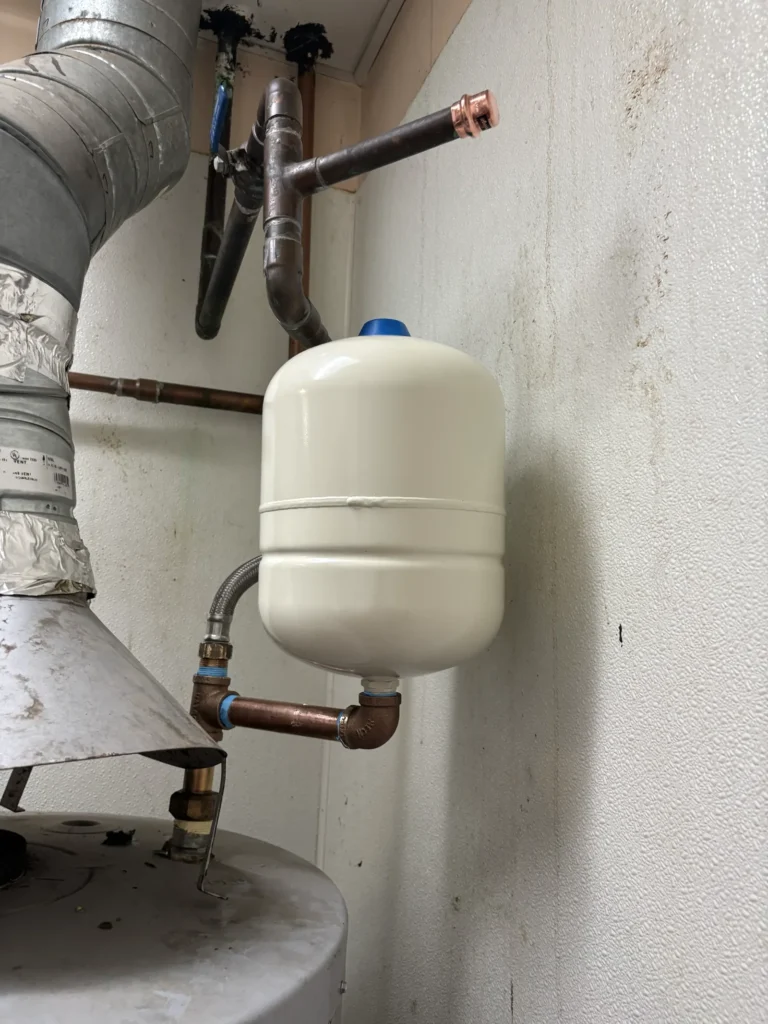
DOCUMENTED FIELD WORK

Commercial water-heater work documented by USC

This case study follows a restaurant no-hot-water call through restored operation.

REQUEST COMMERCIAL WATER HEATER REPAIR

Call now or send the property, impact, and equipment details

Start the commercial service request

Use the form when you can safely wait for a response. For active water leakage, call first. For gas odor or a carbon-monoxide alarm, leave the property and follow the emergency instructions instead of submitting.
    Safety: Do not use this form for a suspected gas or carbon-monoxide emergency. Evacuate and call 911, then PG&E for suspected natural gas from a safe location. For an active water leak, call (916) 234-6696.

    Check current availability
    Call (916) 234-6696

    US Construction & Remodeling Corp.
    4424 Freeport Blvd Ste 4, Sacramento, CA 95822
    California contractor license #1117562.

    Commercial water heater service is coordinated through the Sacramento plumbing services group.
    Commercial plumbing service
    About the USC team

    Scheduling and completion depend on the verified unit, symptom, access, safe working conditions, part or equipment availability, permit path, and approved scope.
    This website uses cookies to improve your web experience.
    Explore
    Drag