Skip links

PLANNED & FAILURE-DRIVEN WATER HEATER REPLACEMENT

Water Heater Replacement in Sacramento

Replace a failed, leaking, undersized, or aging water heater with a scope built around the property instead of a one-size-fits-all unit. Call with the address, current equipment, visible condition, and the replacement options you want to compare.

ASSESS / SIZE / PROPOSE / REPLACE

Compare the complete replacement scope

Equipment, capacity, access, connections, permit responsibility, removal, testing, and warranty terms are defined before work is authorized. Current scheduling is confirmed by phone.

ACTIVE LEAK / GAS / CARBON MONOXIDE

Handle an emergency before planning replacement

Water actively leaking: stop using the unit and stay away from hot water, wet electrical equipment, and unsafe wet areas. Use a known shutoff only when it is safely accessible, then call (916) 234-6696.

Smell natural gas or hear hissing: leave immediately. Do not use switches, flames, flashlights, phones, or vehicles until safely away. Call 911, then PG&E at Call. Review PG&E guidance.

Carbon-monoxide alarm: leave the building, call 911, and do not re-enter until emergency personnel say it is safe.
911
Gas odor or carbon-monoxide alarm: leave first

WHEN REPLACEMENT DESERVES A CLOSER LOOK

Replace for a verified reason, not only because of age

A leaking tank body, recurring failures, unavailable parts, extensive deterioration, poor capacity, or a planned efficiency conversion can make replacement the stronger path. A serviceable external component may still support repair. The actual condition and written scope control the recommendation.

01

The tank or unit body is leaking

Water from an accessible connection may allow focused repair. Water from the tank or internal body usually changes the conversation to replacement. The source must be verified before equipment is ordered.

02

Failures keep returning

Repeated shutdowns, recurring service calls, extensive corrosion, or obsolete parts may make another repair poor value. We compare repair scope, equipment condition, and expected service life.

03

Hot-water demand changed

A household addition, simultaneous fixture use, commercial demand, or consistently short hot-water duration may indicate a capacity or recovery mismatch rather than a simple component failure.

04

You are planning an upgrade

Owners may compare a similar tank unit with heat-pump or tankless options. Available utilities, space, electrical service, venting, condensate, operating pattern, and permit conditions determine feasibility.

TANK / TANKLESS / HEAT-PUMP OPTIONS

Choose equipment after the property is evaluated

A similar gas or electric tank replacement can be a direct path when capacity, utilities, venting, clearances, and connections remain appropriate. Even a like-for-like installation may require current safety components, permit documentation, or corrections to existing conditions.

Heat-pump water heaters can reduce electric water-heating energy use, but the review must cover electrical capacity, installation volume, airflow, condensate routing, sound, temperature, location, and local program rules. Tankless equipment requires demand and flow review together with gas or electrical capacity, venting, condensate where applicable, water quality, service access, and maintenance expectations.

Commercial water-heater replacement can involve larger storage or recovery needs, recirculation, downtime planning, access, business-hour coordination, and jurisdiction-specific permit or inspection steps. The proposal should identify the selected equipment and every connected responsibility.

SIZE THE SYSTEM / DEFINE THE CONNECTIONS

What we review before proposing equipment

Existing equipment

Fuel or power, tank or tankless configuration, manufacturer, model, approximate age, capacity, visible condition, failure history, and the source of any leakage.

Hot-water demand

Occupancy, fixture use, simultaneous demand, peak-use pattern, commercial operating needs, recovery expectations, and whether the present unit ever met the property’s needs.

Site and access

Equipment location, stairs, doorways, platforms, working clearance, drain pan, discharge route, protection of finished areas, removal path, and safe service access.

Water and utility connections

Accessible water piping and shutoffs, gas supply or electrical service, venting, condensate, recirculation, seismic restraint, expansion control, and connected correction work.

Conversion feasibility

A gas-to-electric, tank-to-tankless, or other equipment change can require utility upgrades and new installation conditions. The proposal must identify those items rather than treating the change as a simple swap.

Permit and completion

Governing jurisdiction, permit and inspection responsibility, removal and lawful disposal, startup, temperature setting, visible leak testing, customer orientation, warranty information, exclusions, and follow-up.

When repair may still be practical

If the failure is isolated, the tank or internal body is not leaking, an appropriate part is available, and the surrounding installation remains serviceable, repair may still offer better value than replacement.

When replacement may be stronger

Replacement deserves consideration when the unit body leaks, deterioration is extensive, failures repeat, critical parts are unavailable, repair value is poor, or capacity and installation no longer fit the property.

Like-for-like or conversion

A similar unit may minimize connected changes. A heat-pump, tankless, fuel-change, or capacity upgrade can add electrical, gas, venting, condensate, space, demand, or utility requirements that must be priced explicitly.

Equipment and capacity

The proposal should identify model, type, capacity, efficiency information, recovery or flow assumptions where relevant, fuel or power needs, manufacturer requirements, and compatibility with the verified site.

Permit and inspection responsibility

The written scope should say who obtains the permit, which jurisdiction controls the address, what inspection is expected, and how any correction discovered during inspection will be handled.

Authorization before ordering

Before equipment is ordered or work begins, the customer should receive the proposed scope, price, exclusions, deposit and payment milestones, estimated scheduling assumptions, warranty information, and change-order path.

FROM INTAKE TO STARTUP

What happens during a replacement project

Call for current scheduling and urgent-failure availability. Timing depends on location, technician schedule, verified equipment, supplier availability, site conditions, permit requirements, and connected corrections. Same-day arrival or completion is not guaranteed.

01

Document the existing condition

Share the property address, current equipment, capacity, fuel or power, visible failure, access, and safe photos. Gas odor and carbon-monoxide alarms follow the emergency path.

02

Evaluate and compare options

The site, demand, utilities, connections, corrections, permit path, and equipment availability are reviewed before a replacement option is recommended.

03

Approve the written scope

You review equipment, labor, removal, permit responsibility, connected work, exclusions, timing assumptions, warranty information, and price before authorization.

04

Replace, test, and document

Approved equipment is removed and installed, applicable connections and operation are tested, the work area is reviewed, and permit or inspection follow-up is completed according to scope.

PRICE / PERMIT / REBATE ELIGIBILITY

A complete proposal is more useful than a unit-only price

Replacement cost can be affected by equipment type and capacity, access, removal path, emergency stabilization, water connections, gas or electrical work, venting, condensate, platforms, drain pan and discharge routing, seismic restraint, recirculation, corrosion, previous modifications, code corrections, permit fees, inspection follow-up, restoration, and special-order equipment.

The written proposal should identify the equipment, removal and disposal, installation responsibilities, required connected work, permit and inspection responsibility, warranty information, scheduling assumptions, exclusions, and price before equipment is ordered.

The City of Sacramento minor-permit information identifies residential and commercial water heaters as minor-permit work. The City’s inspection guidance applies only to addresses within City jurisdiction; surrounding communities may use another building department.

SMUD heat-pump water heater incentives: current program pages describe rebates that can reach $4,000 for qualifying projects, subject to funding, equipment, installation, property, and participating-contractor requirements. Check current SMUD terms before equipment is ordered. No rebate amount or approval is guaranteed.

US Construction serves Sacramento and surrounding communities. Property and facility teams can review commercial plumbing service for coordinated work.
Emin, Chief Designer at US Construction and Remodeling Corp.

Prepared by Emin

Service structure · Chief Designer
Emin organized the customer decision path, equipment comparisons, safety language, permit and rebate references, form flow, internal links, and mobile reading sequence. Meet the USC team.
Umit Sahin, contractor reviewer at US Construction and Remodeling Corp.

Technically reviewed by Umit Sahin

Contractor review · Project oversight
Umit reviewed replacement triggers, equipment and capacity questions, access, connected scope, permit responsibility, customer authorization, testing, and field limitations. California contractor license #1117562.

BEFORE EQUIPMENT IS ORDERED

Water heater replacement FAQ

How do I know whether to repair or replace my water heater?

The decision depends on the verified failure, tank or heat-exchanger condition, repeat service history, part availability, installed capacity, site corrections, and the value of repair compared with replacement. Age matters, but age alone is not a diagnosis.

What should I do when a water heater is actively leaking?

Stop using the unit and keep people away from hot water, wet electrical equipment, and unsafe wet areas. If you already know the correct water shutoff and it is safely accessible, close the supply serving the unit. Do not plug or modify a relief-valve discharge line. Call (916) 234-6696.

Can you replace gas, electric, heat-pump, and tankless water heaters?

The replacement path begins by confirming the existing equipment, property demand, available utilities, access, venting, electrical capacity, condensate needs, and governing permit requirements. Not every equipment type or conversion fits every property, so the written proposal controls the approved scope.

How long does water heater replacement take?

Timing depends on equipment availability, access, existing-condition corrections, utility work, permit requirements, and inspection scheduling. Call for current availability. Same-day arrival or completion is not guaranteed.

Does Sacramento require a permit for water heater replacement?

Permit and inspection responsibility depends on the project address and governing jurisdiction. The City of Sacramento identifies residential and commercial water heaters as minor-permit work. Addresses elsewhere in Sacramento County or nearby cities may use a different building department.

Are SMUD heat-pump water heater rebates guaranteed?

No. Programs, funding, equipment eligibility, installation requirements, and participating-contractor rules can change. Eligibility must be confirmed before equipment is ordered, and the final rebate decision belongs to the program administrator.

Will the old water heater be removed?

Removal and lawful disposal should be stated in the written proposal together with equipment, connection work, permit responsibility, testing, warranty information, exclusions, and any restoration or access work.

DOCUMENTED FIELD WORK

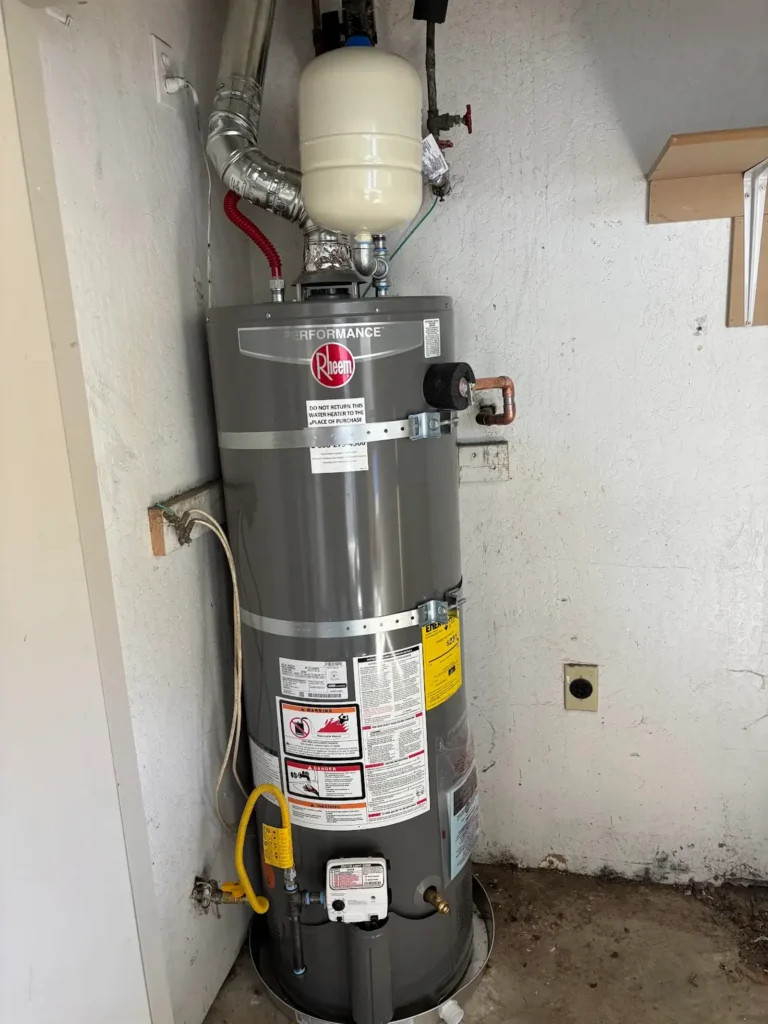
A completed USC water-heater replacement

The Roseville case study documents a finished residential installation and the connected components visible at closeout.

REQUEST WATER HEATER REPLACEMENT

Call now or send the property and equipment details

Start the replacement review

Use the form when you can safely wait for a response. For active water leakage, call first. For gas odor or a carbon-monoxide alarm, leave the property and follow the emergency instructions instead of submitting.

    Safety: Do not use this form for a suspected gas emergency. Leave the area and call 911, then PG&E from a safe location. For an active water leak, call (916) 234-6696.

    Check current availability
    Call (916) 234-6696

    US Construction & Remodeling Corp.
    4424 Freeport Blvd Ste 4, Sacramento, CA 95822
    California contractor license #1117562.

    Water heater replacement is coordinated through the Sacramento plumbing services group.
    Commercial plumbing service
    About the USC team

    Scheduling and completion depend on the verified condition, access, equipment, supplier availability, permit path, connected work, and inspection requirements.
    This website uses cookies to improve your web experience.
    Explore
    Drag