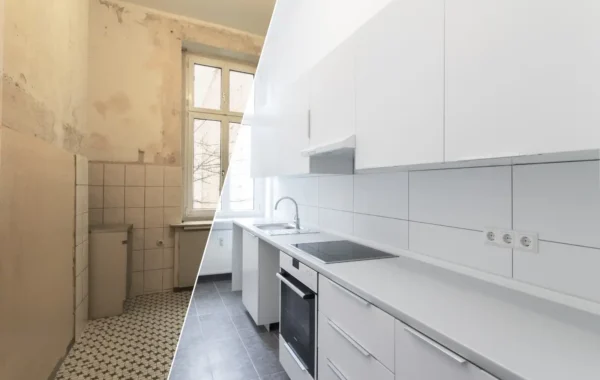
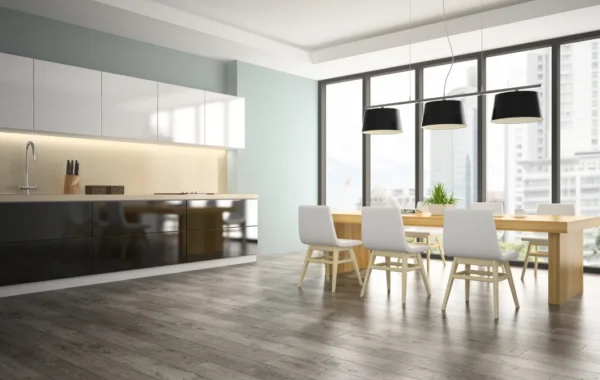
Common Upgrade Paths (What Changes Most)
Replacing kitchen flooring touches more than the material under your feet. In addition, It can change how cabinets sit, how countertops read in the light, and how the whole kitchen connects to nearby rooms.
Material Choices That Fit Real Life
- Rigid-core LVP: Comfortable and water resistant, with a wood look that works with many styles. Additionally, It performs best on a flat subfloor and needs clean transitions at doorways.
- Porcelain tile: Extremely durable and water resistant. Meanwhile, It can feel harder and colder, so many homeowners balance it with mats and good lighting. Additionally, A stiff, flat substrate matters to prevent cracks.
- Engineered hardwood: A warmer feel and real wood character. Overall, It needs fast spill cleanup and the right protection near the sink and dishwasher.
- Modern laminate: Can look sharp and handle daily wear, but water management at seams still matters. For example, Confirm what the specific product allows for wet-mopping.
- Sheet flooring: Fewer seams and easy cleanup, especially in tight kitchens. Also, Subfloor smoothness is critical because imperfections can telegraph through.
Layout And Flow (Galley, L-Shape, U-Shape, Island-Centered)
Flooring lines guide the eye. As a result, Done well, they make traffic lanes feel clear and keep the room from feeling chopped up.
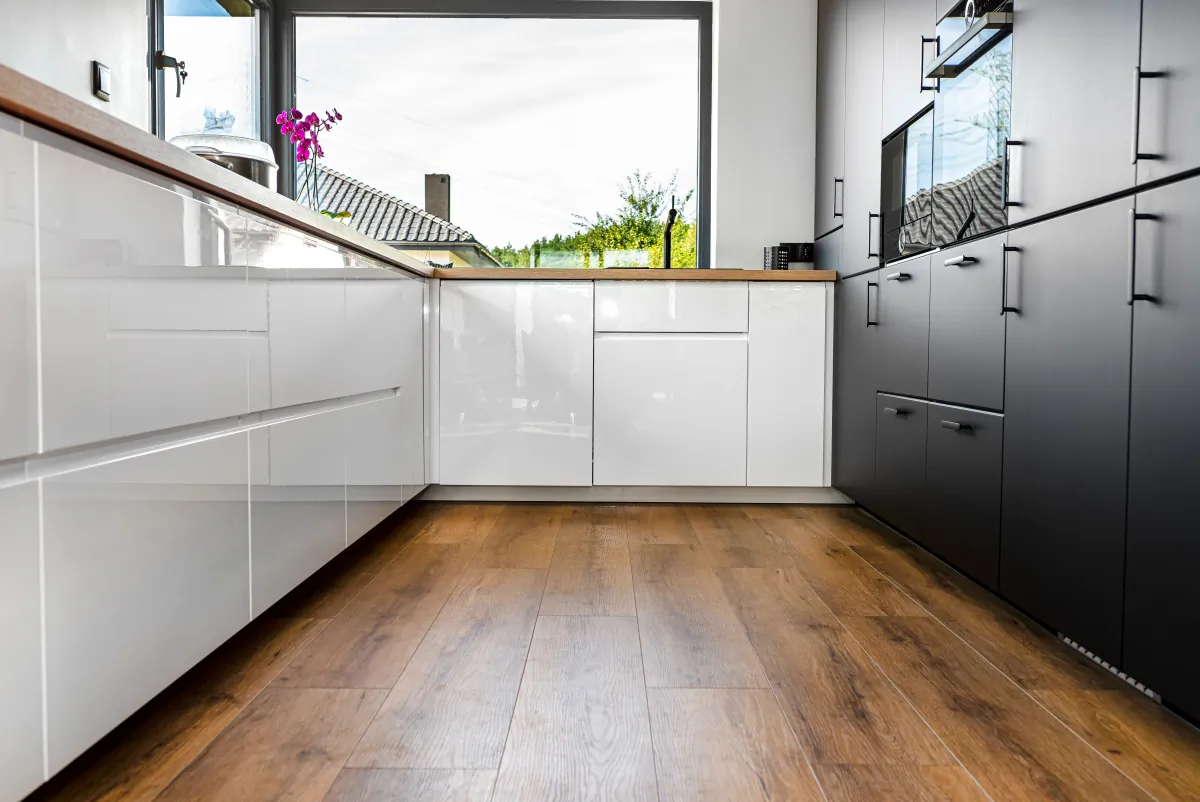
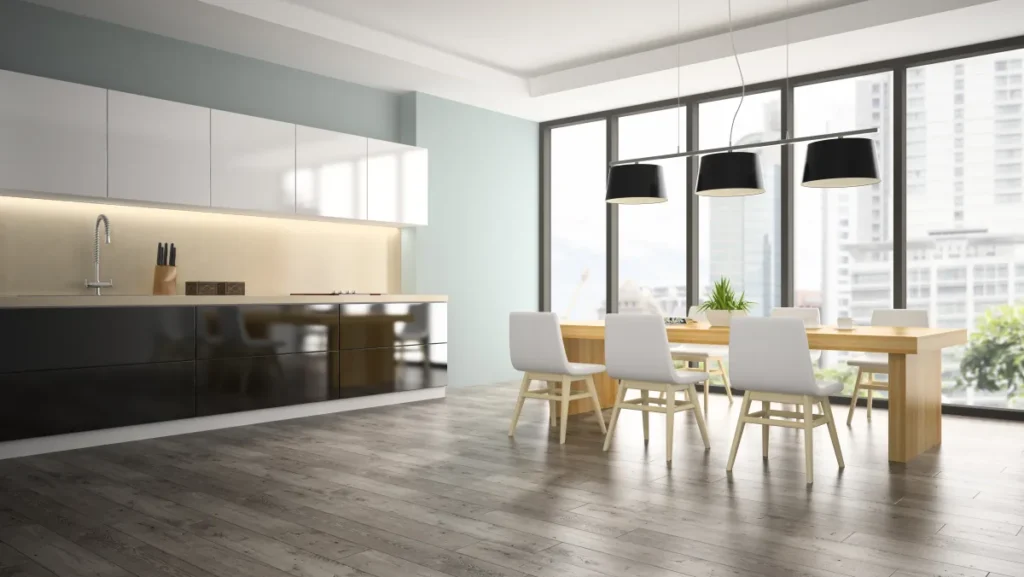
- Galley kitchens often look best when planks or tiles run along the longest sightline
- L-shape layouts benefit from consistent flooring through the turn to keep the space feeling continuous
- U-shape kitchens can feel crowded, so lighter tones and fewer transitions usually help
- Island-centered kitchens work well when you align the pattern to the island and main entry
If cabinets are staying, floor height still matters at toe-kicks and appliances. Also, If cabinets are changing, running the flooring wall-to-wall can simplify future updates and reduce seams.
Cabinets, Countertops, Lighting
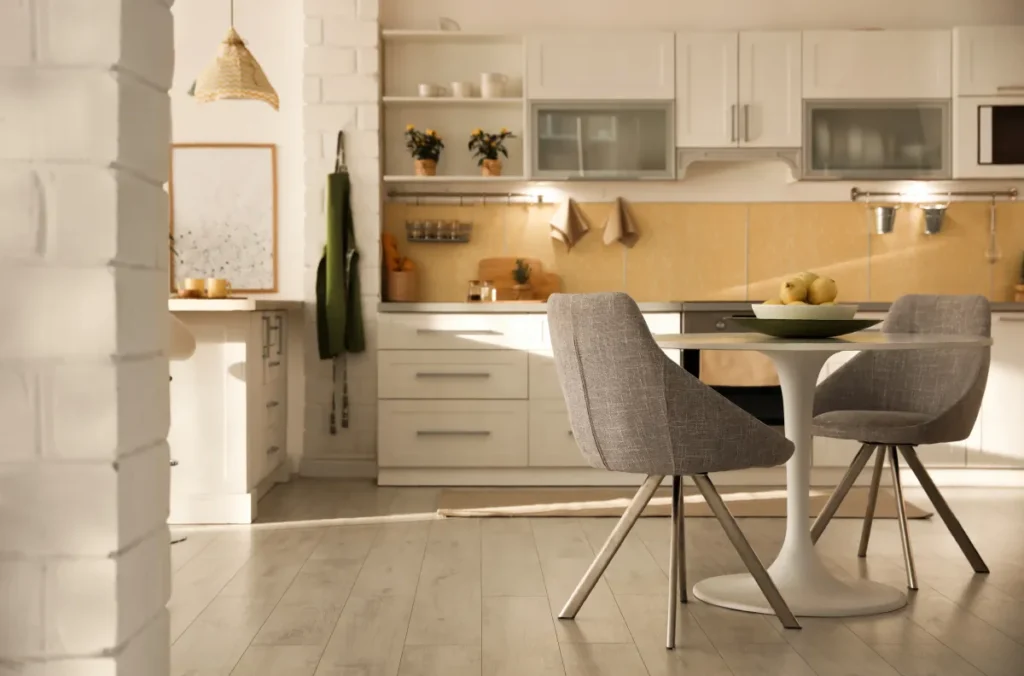
Kitchen flooring looks different under each lighting layer, and it should complement your big-ticket finishes. Compare samples next to cabinet and countertop choices in both daylight and evening light.
- Cabinet door styles: shaker pairs well with most wood-look floors; slab/flat-panel often suits wider planks; raised-panel usually looks best with quieter patterns
- Countertop options: quartz and granite can read cooler; butcher block adds warmth; laminate and porcelain offer many patterns—use them to balance the floor, not compete with it
- Layered lighting: use ambient ceiling light for overall tone, task under-cabinet light for true color at counters, and accent lighting (pendants or toe-kick LEDs) to reduce harsh shadows
A common mismatch is a highly patterned floor paired with heavily veined countertops. For this reason, Keeping one element calmer usually makes the kitchen feel more intentional.
Storage And Organization Upgrades That Pair Well
If you’re already moving appliances and emptying base cabinets, small storage upgrades can be efficient to add. They can also influence cabinet sizes, which affects where seams and transitions land.
- Deep drawer bases for pots and pans
- Pull-out trash and recycling near the main prep zone
- Vertical tray dividers for sheets and cutting boards
- Pantry pull-outs or a tall pantry cabinet to reduce countertop clutter
- Blind-corner solutions so dead space becomes usable storage
Layout And Flooring Strategies
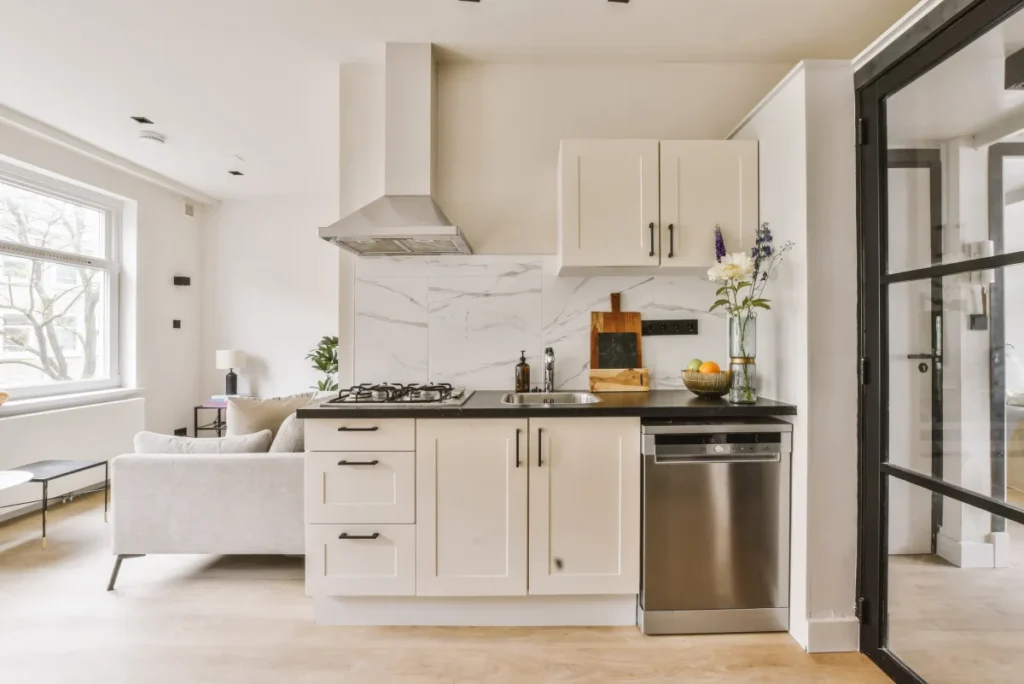
In a compact kitchen, flooring can either calm the space or make it feel busy. For example, A few decisions have an outsized impact.
- Use the same flooring into the next room when possible to visually expand the footprint
- Choose larger formats (wide planks or larger tiles) to reduce visual breaks
- Avoid high-contrast grout in tiny kitchens unless you want a bold grid look
- Keep transitions low-profile to make the room feel less chopped up
Maintenance Tips By Surface
- LVP: wet-mop friendly, but use pads under chairs and avoid dragging appliances
- Tile: sweep often to protect grout; use a pH-neutral cleaner and refresh sealer if needed
- Engineered hardwood: wipe spills quickly and use breathable mats at the sink area
- Laminate: keep water from sitting at seams and avoid steam mops unless the product allows it
Budget Ranges And Timeline (Typical)
Budget ranges swing because the floor is more than the finish layer. As a result, Subfloor repairs, leveling, transitions, and appliance handling can matter as much as the material itself.
Budget Ranges & Timeline (Typical)
- Installed cost often lands around $8–$25+ per sq. Also, ft., depending on material and prep
- Subfloor repairs and leveling can be a minor add-on or a major line item, depending on what’s found
- A straightforward kitchen floor replacement typically takes about 2–5 working days once materials are delivered
- When cabinets, countertops, plumbing, or electrical work are involved, timelines stretch due to coordination and inspections
| Decision | Why it matters | Often affects |
|---|
| Material type | Water tolerance, feel underfoot, upkeep | Cost, durability, maintenance |
| Subfloor condition | Flatness and stiffness prevent failures | Prep time, noise, long-term performance |
| Cabinets staying vs. changing | Changes layout, floor coverage, toe-kick height | Timeline, transitions, budget |
| Transitions to other rooms | Height changes affect safety and look | Trim work, thresholds, scheduling |
Resale Value And ROI Priorities
Kitchen flooring rarely sells a home by itself, but it strongly affects how updated the kitchen feels. As a result, Durable, neutral choices tend to appeal to more buyers and reduce the chance of quick wear showing up during showings.
- Prioritize a flat, quiet floor—buyers notice squeaks and uneven transitions
- Choose water-tolerant surfaces if the sink and dishwasher see heavy use
- Keep the palette consistent with adjoining floors in open plans
- Use bold patterns as accents instead of covering the entire kitchen
Permits And Scheduling Notes
Most kitchen flooring swaps are straightforward, yet permits and inspections can come into play when the scope expands beyond surface replacement.
When Permits Enter The Conversation
Permit requirements vary across California jurisdictions, and they depend on what you change. Meanwhile, A like-for-like flooring replacement may not need a building permit, while moving plumbing, adding circuits, or changing walls often does.
- Water damage repairs may involve more than flooring, especially if subfloor sections need replacement
- Changing the kitchen layout can trigger multiple trades, which increases inspection coordination
- If older materials raise lead or asbestos concerns, handle testing and safety practices before demolition
How A Contractor-Led Kitchen Flooring Job Usually Runs
- On-site walk-through to confirm scope, measure, and check height transitions
- Subfloor inspection (moisture, flatness, squeaks) and a prep plan
- Material selection and ordering with the correct underlayment and trim pieces
- Scheduling around appliance moves and any cabinet or countertop work
- Protection setup (dust control and protection on access paths)
- Demolition and disposal, then subfloor repair or leveling if needed
- Installation, transitions, and trim work, followed by detailed cleanup
- Final walk-through with care instructions and punch-list closeout
Scheduling Reality Checks
- Some products need acclimation time, and moisture mitigation can add days
- Tile grout and certain adhesives need cure time before heavy use and appliance reinstallation
- Plan for a buffer if the subfloor has squeaks, rot, or uneven areas that need repair
- If you’re trying to hit a firm date, confirm lead times before ordering so delivery isn’t the bottleneck
Aligning trades is where many timelines slip. For example, A short planning conversation can clarify the critical path early.