Skip links

Metal Roof Cost in California: Pricing + Week-by-Week Timeline

If you're comparing roofing options, the metal roof cost can feel all over the map in California. This guide breaks down the major price drivers, shows realistic budget tiers, and maps out a week-by-week timeline so you can plan before you sign.

Quick checklist:

  • List the biggest cost drivers (roof size/pitch, material, tear-off, decking repair, and flashing/vents).
  • Pick a material system and verify underlayment, flashing, and ventilation details.
  • Clarify tear-off vs overlay and what happens if decking damage is found.
  • Compare 2–3 itemized bids (materials, disposal, permits, warranty).
  • Schedule around weather and confirm daily cleanup and protection.
  • Do a final walkthrough: flashing, vents, and warranty documentation.

TL;DR: Installed pricing swings most based on panel type, roof complexity, and what we find after tear-off. For a timeline-first plan for your home, book a planning call or call +1 (916) 234-6696.

  • Pick your system: exposed-fastener panels or standing seam
  • Confirm whether the quote includes full tear-off and disposal
  • Ask how deck repairs are priced if damaged wood is found
  • Get the material lead time in writing (color and profile matter)
  • Verify who handles permits/inspections and related fees
  • Request a line-item scope and a target start-to-finish schedule

How Much Does Metal Roof Cost In Sacramento?

US Construction & Remodeling Corp. is based in Sacramento, so we'll use Sacramento pricing as a practical reference point. If you're elsewhere in California, the same cost drivers apply; the final number shifts with local labor rates, permit fees, and roof layout.

Typical Installed Range (Real-World Budgeting)

For many homes, a complete metal roof replacement in the Sacramento market often pencils out around $12 to $25+ per square foot installed. Exposed-fastener panel systems tend to start lower, while standing seam and more complex roofs push higher.

Cost Drivers That Move The Needle

  • Panel system: exposed-fastener vs standing seam
  • Tear-off and disposal: one layer vs multiple layers of old roofing
  • Roof complexity: valleys, dormers, skylights, chimneys, and steep pitch
  • Deck condition: plywood replacement adds labor and materials
  • Access: tight driveways, multi-story staging, and landscaping protection
  • Finish and color: some profiles and colors have longer lead times
DecisionCost impactSchedule impact
Exposed-fastener panelsLower materials and labor in many casesOften quicker to install
Standing seamHigher materials pricing and detail workMay add time for fabrication and install
Multiple existing layersMore tear-off, disposal, and laborExtra days for removal and prep
Custom color/profileCan increase materials pricingLead time can add weeks
Deck repairs after tear-offAdds plywood and laborUsually adds 0.5–2 days

Want numbers that match your roof and your preferred start date? Request a timeline-focused estimate or call +1 (916) 234-6696.
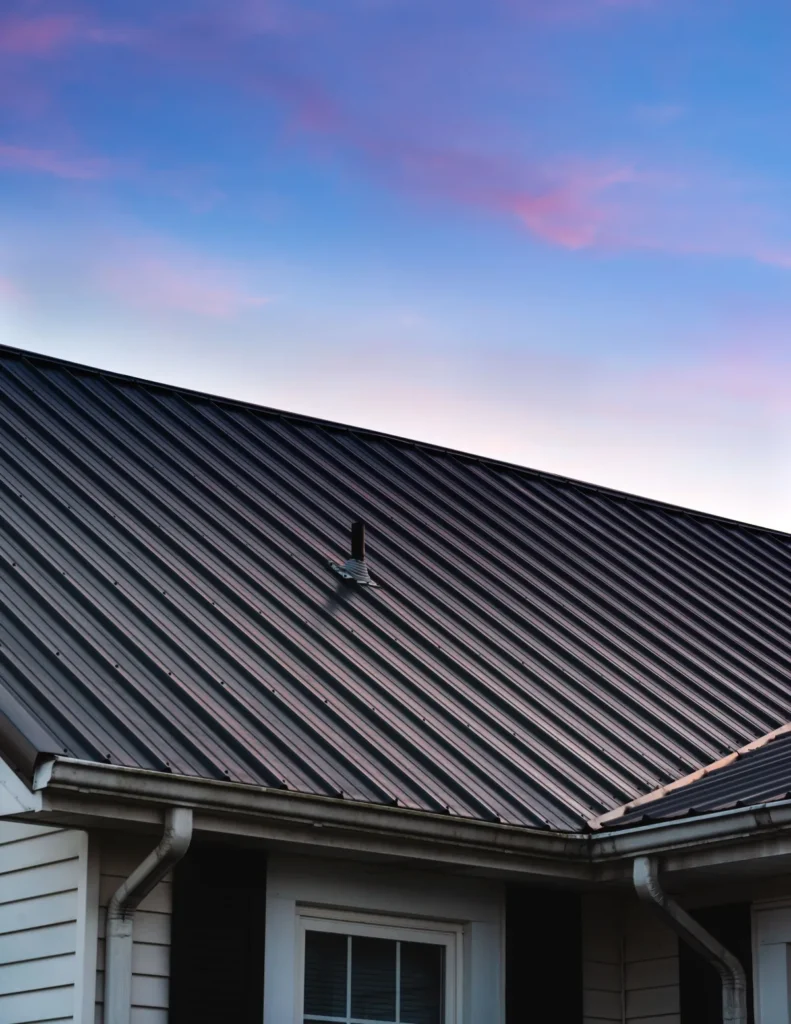
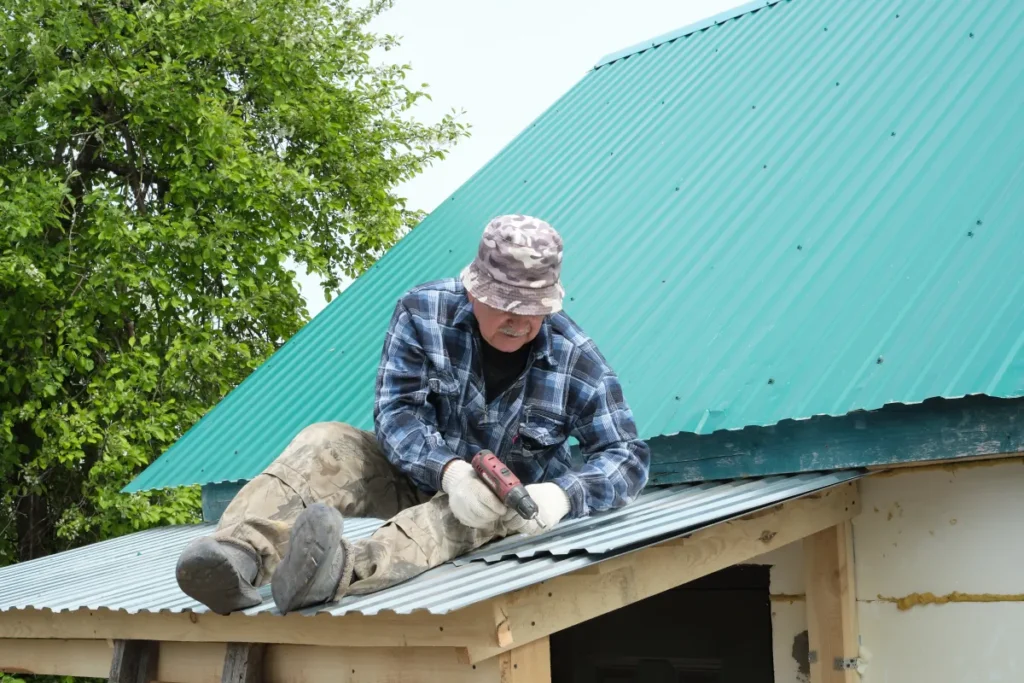
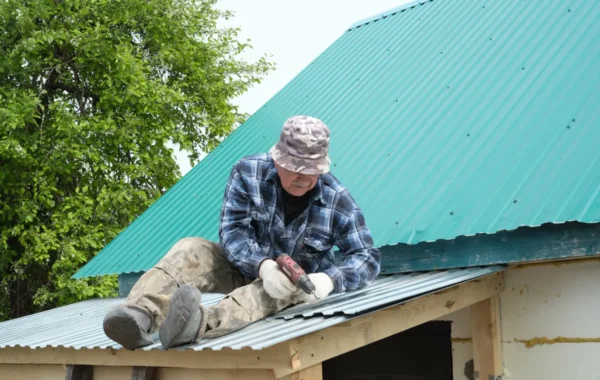
metal roof installation a retiree demonstrates self sufficiency by persona

Basic Vs Mid-Range Vs High-End

Use these tiers to sanity-check quotes and understand what you're paying for. Exact pricing depends on roof size and complexity, so treat the numbers as planning ranges until you have a site-specific scope.

Basic (Value-Focused Metal Panels)

Common budget range: $9–$14 per sq ft installed on simpler roofs.

  • Typically an exposed-fastener panel system
  • Standard colors and trims
  • Fewer penetrations and straightforward geometry

Mid-Range (Balanced Durability And Detail)

Common budget range: $14–$22 per sq ft installed for many California homes.

  • Upgraded panel profile or entry standing seam options
  • More trim/detail work around skylights, chimneys, and walls
  • Allowance for minor deck repairs

High-End (Premium Standing Seam And Complex Roofs)

Common budget range: $22–$35+ per sq ft installed when the roof is steep, cut up, or uses premium materials and finishes.

  • Standing seam with higher detail requirements
  • Custom colors/profiles and heavier trim packages
  • More time for staging, safety, and careful layout

Line-Item Ranges

This table shows typical line items that make up a metal roofing quote. Your estimate may combine items, but you should still be able to see where the money goes.

Line itemTypical rangeNotes
Materials (panels, trim, fasteners)$4–$14 / sq ftSystem type and finish drive this
Labor (installation crew)$5–$12 / sq ftSteepness, complexity, and access matter
Tear-off and disposal$1–$3 / sq ftMore layers usually cost more
Moisture protection layer$0.75–$2.00 / sq ftVaries by roof design and product spec
Permits and inspections$250–$1,500+Set by your local jurisdiction
Contingency (repairs found after tear-off)10–15% of totalHelps avoid surprises mid-project

Quick Timeline Reality Check

  • Site visit and measurements: 1–3 days
  • Permit coordination (when required): 1–6+ weeks
  • Material ordering: 1–4 weeks (longer for custom)
  • On-roof installation: 2–7 days for many homes
  • Final inspection and punch list: 1–10 days

If you'd rather plan the schedule first and lock pricing second, that's a smart move for roofing. Call +1 (916) 234-6696 or book your estimate.

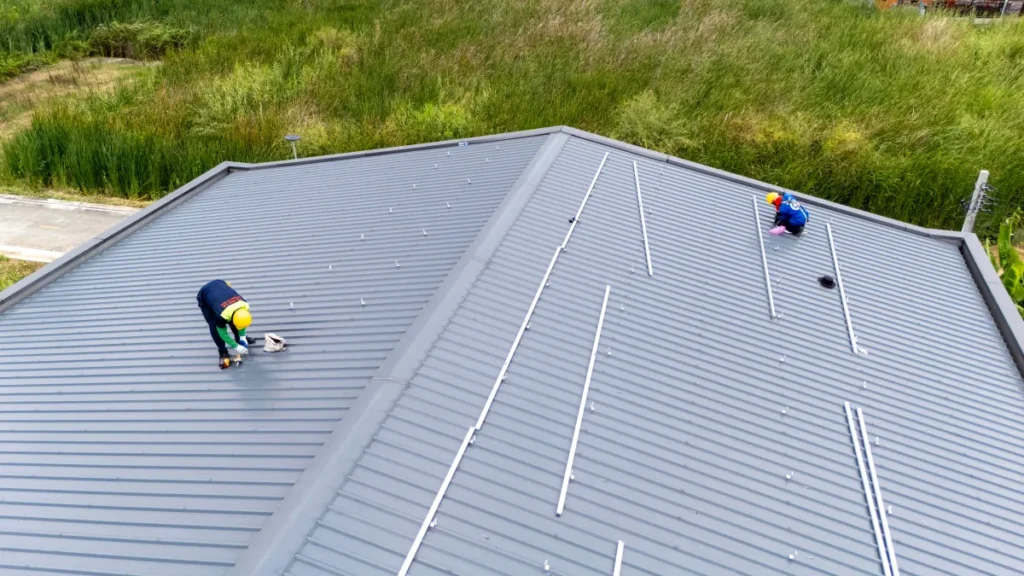
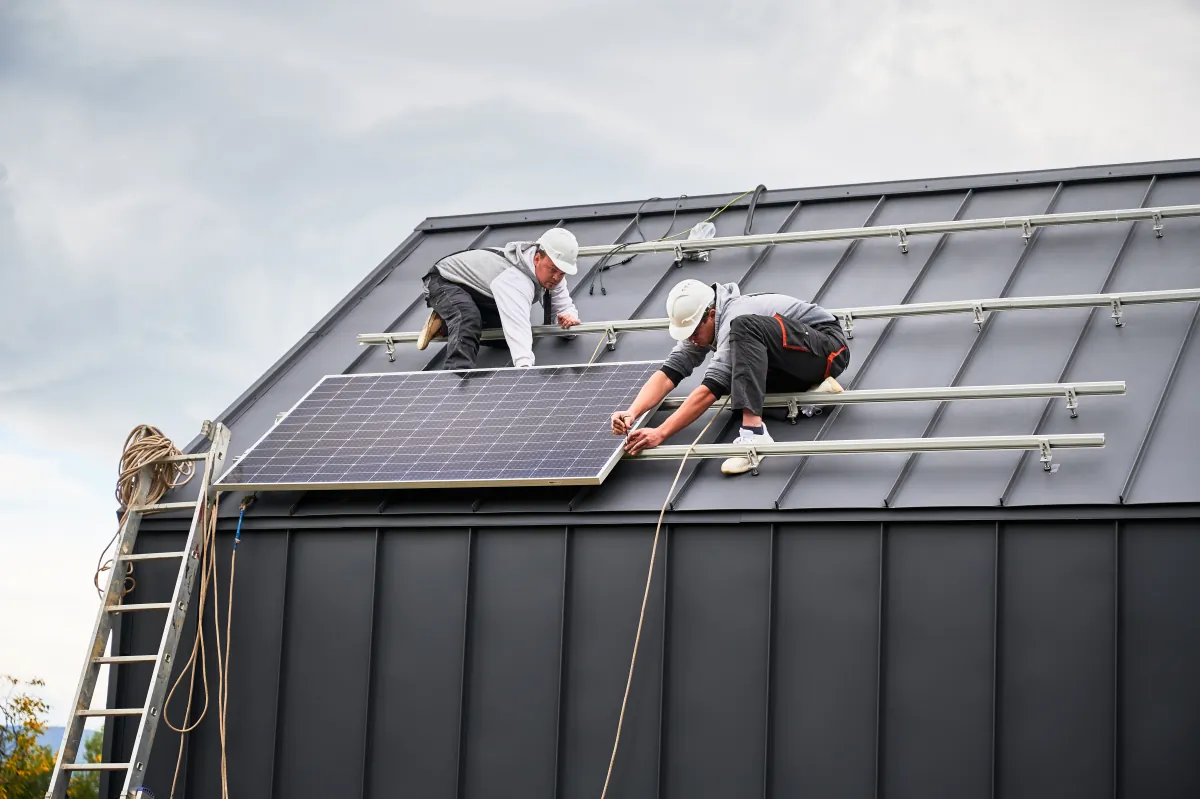
metal roof installation men technicians mounting photovoltaic solar moduls

Hidden Costs To Plan For

The fastest way a metal roof cost quote goes sideways is when the scope doesn't match the roof you actually have. Planning for the common add-ons below keeps you in control and helps prevent last-minute decisions.

Permits And Inspections (California Overview)

Many California cities and counties require a permit for reroofing, especially if you're changing materials or replacing damaged sheathing. Inspections can be part of the process, and fees vary by jurisdiction, so confirm early who pulls the permit and what the timeline looks like.

Common Hidden Line Items

  • Deck/sheathing replacement: damaged or undersized wood discovered after tear-off
  • Chimney and wall transitions: detail work where roofs meet vertical surfaces
  • Skylights or roof vents: reworking penetrations to match the new roof system
  • Gutters and edge metal: upgrades to match new drip edges and water flow
  • Solar panel removal and reinstall: if your roof has PV equipment
  • Access and protection: driveway protection, landscaping, and extra staging

Common Planning Mistakes To Avoid

  • Comparing bids that use different systems (exposed-fastener vs standing seam) without calling it out
  • Skipping a written allowance for deck repairs and then getting stuck with change orders
  • Assuming material lead times are short for every color and profile
  • Not asking who is responsible for permit coordination and inspection scheduling
  • Choosing the lowest number without confirming disposal, cleanup, and site protection are included

ROI And Resale Considerations

Metal roofing can improve buyer appeal because it looks clean, holds up well, and needs less ongoing maintenance than many alternatives. Still, resale value rarely tracks dollar-for-dollar with your invoice, so focus on choices that buyers can see and trust.

  • Pick a system and finish that fits the home style and the neighborhood
  • Prioritize clean transitions at chimneys, walls, and roof edges
  • Keep documentation organized (product info, permit records when applicable, and invoices)

What To Request In Any Estimate

Before you approve a contract, ask for a line-item scope that includes the exact panel system, tear-off plan, disposal, and how repairs are handled if conditions change. That clarity makes the schedule easier to commit to and keeps the budget from drifting.

To talk through options and timing with a Sacramento-based team serving homeowners across California, call +1 (916) 234-6696 or request a free estimate.

Frequently Asked Questions

Many homeowners see installed pricing land somewhere in the broad $9–$35+ per sq ft range, depending on the system and roof complexity. The fastest way to narrow it down is a site visit that confirms tear-off layers, penetrations, and access.

  • Lower end: simpler roofs with exposed-fastener panels
  • Higher end: standing seam, steep or complex roofs, and longer lead-time materials

Standing seam often costs more because it typically requires more detail work and premium materials. It can be a smart choice when you want a clean look, fewer exposed fasteners, and a system that fits higher-end architecture.

The best approach is to compare two quotes on the same roof: one exposed-fastener option and one standing seam option, both with matching scopes.

Permits are common for reroofing in many California jurisdictions, especially if you change materials or replace damaged sheathing. Requirements and fees vary by city and county, so confirm early who will handle the permit and inspection scheduling.

For many homes, on-roof work runs about 2–7 days, with more time for steep or complex roofs. The full project timeline is usually longer because ordering materials and permits (when required) can add weeks.

Sometimes an overlay is possible, but it depends on local code, the condition of the existing roof, and whether the deck and structure can support the system. A site inspection is the right place to confirm if an overlay makes sense or if a full tear-off is the safer choice.

If you bring these details to the estimate, you’ll get a clearer price range and a more reliable schedule:

  • Your preferred metal system (exposed-fastener or standing seam)
  • Any known leaks, skylights, or prior repairs
  • Solar equipment details (if applicable)
  • Your ideal start window and any deadline

To get started, call +1 (916) 234-6696 or request a free estimate.

Service info for Sacramento

For the complete overview of process and planning in Sacramento, visit Roofing Remodeling (Landing Page).

Leave a comment

This website uses cookies to improve your web experience.
Explore
Drag