Bathroom Tile Design Ideas for CA Homes: Guide
Tile changes how a room feels the moment you walk in. A smart bathroom tile design can make a small space look larger, keep the room brighter, and reduce the number of places grime likes to hide.
TL;DR: Choose one “hero” tile, keep the supporting tiles simple, and decide grout + trim before you order. Plan lighting early, since the same tile reads warmer or cooler depending on bulbs and natural light. If you want a contractor’s perspective on what will install cleanly on your timeline, US Construction & Remodeling Corp. can review your options on a planning call. Quick checklist:
- Pick one focal tile and two supporting tiles
- Confirm floor traction for wet areas
- Choose grout color and joint width early
- Plan niche/bench locations on the tile grid
- Decide tile height for each wall zone
- Order tile, trim, and fixtures before demo
10 Design Ideas Homeowners Actually Use For Bathroom Tile Design
| Decision | Why it matters | Quick check |
|---|---|---|
| Wet-area finishes | Wet zones need durable, easy-clean surfaces. | Choose materials rated for bathrooms and simple maintenance. |
| Ventilation | Helps prevent humidity and long-term damage. | Confirm fan sizing and vent routing. |
| Layout | Good layout improves daily usability. | Verify clearances and door swings. |
| Budget control | Keeps scope creep from blowing up the price. | Use allowances and a written change-order process. |
- One statement, two supports: Use a bolder tile on one shower wall, then keep the floor and remaining walls calm.
- Large-format shower walls: Bigger porcelain on walls reduces grout lines and reads cleaner from the doorway.
- Vertical stack for height: Stack subway-style tile vertically to make low ceilings feel taller.
- Patterned floor, simple walls: Let the floor do the talking while wall tile stays light and quiet.
- Full-height shower tile: Running shower wall tile to the ceiling looks finished and cuts down on painted-wall maintenance.
- Wainscot tile for protection: Tile the lower half of a high-splash wall, then paint above for balance and budget control.
- Niche as the accent: Skip the old stripe band and instead use a contrasting tile only on the niche back.
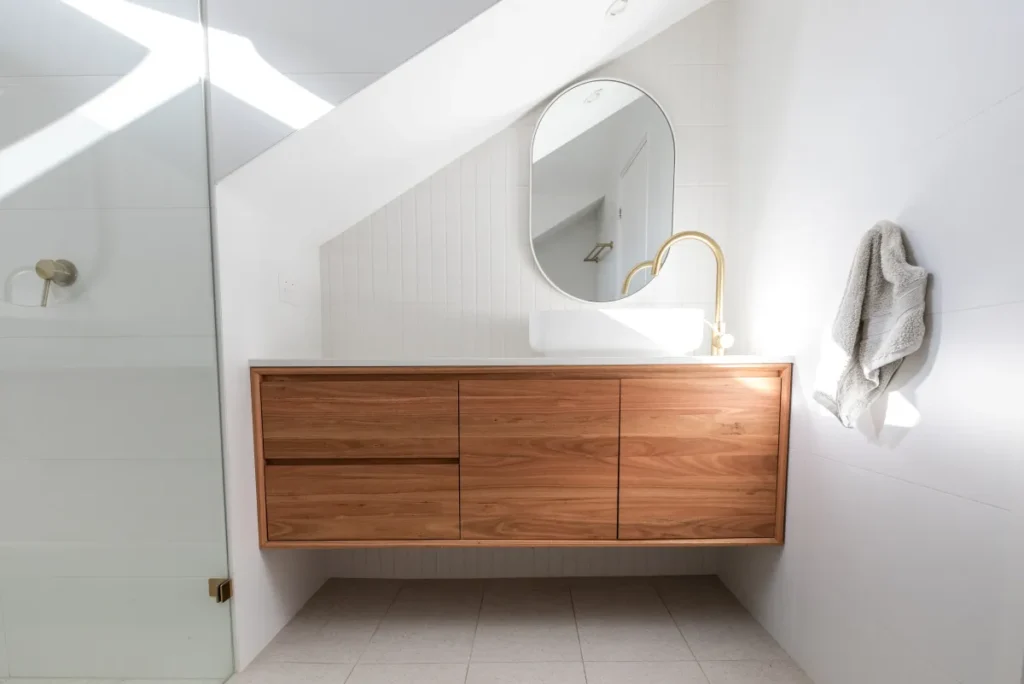
- Tile “frame” behind the vanity: A single tiled panel behind the mirror adds structure without busy patterns.
- Contrast with grout on purpose: Either match grout to tile for a smooth look or go bold for a grid—avoid “almost matching.”
- Warmth without real wood: Wood-look porcelain (or a warm stone look) softens white tile without adding fragile materials.
Design ideas help, but clear decisions are what keep the room from feeling random. A good bathroom tile design stays consistent when you step back and look at the whole space.
Choose A Style Direction (Modern, Warm, Classic)
Pick a style lane and repeat the same cues across tile shape, grout tone, and metal finishes. That consistency matters more than chasing the newest pattern.
Modern
Use clean lines: large-format porcelain, straight stacks, and lower-contrast grout. Keep accents minimal and let lighting do the “drama.”
Warm
Choose creamy whites, beige, and soft greige, then add texture with handmade-look ceramic or subtle stone looks. Warm metal finishes and wood tones pair well here.
Classic
Subway, hex, and marble-look porcelain feel timeless when you keep the palette tight and use consistent trims at edges and corners.
Hypothetical example: A warm direction could be a creamy 4x4 wall tile, a light terrazzo-look floor, brushed nickel trims, and a white oak vanity.
Planning Mistakes That Age Tile Quickly
Most “bad tile” outcomes come from planning gaps, not the tile itself. Tighten these details early and your bathroom will look intentional.
- Mixing too many tile types in a small room
- Choosing tile before confirming niche, valve, and plumbing locations
- Skipping a plan for outside corners, curb edges, and niche trims
- Picking glossy floor tile that becomes slippery when wet
- Not testing grout color samples under your actual bathroom lighting

Layouts That Improve Flow And Storage For Bathroom Tile Design
Tile looks better when the layout works. When the shower, vanity, and toilet have the right clearances, you get cleaner tile lines, fewer awkward cuts, and less visual clutter.
Describe Your Layout In One Line (So Everyone’s On The Same Page)
Designers often borrow kitchen terms to communicate quickly. Here’s how they translate to bathrooms:
- Galley: A long, narrow room with fixtures along one or both sides. Keep the floor tile direction consistent down the length to avoid choppy breaks.
- L-shape: Fixtures wrap a corner. Plan where wall tile turns the corner so your grout lines still look intentional.
- U-shape: Three “sides” of the room get fixtures or built-ins. Choose one focal wall and keep the other surfaces simpler.
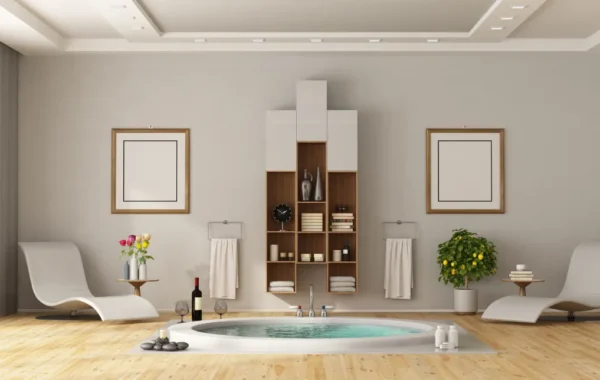
- Island-centered: A larger bath with a centered element (often a freestanding tub) that behaves like an island. Tile becomes the “rug,” so perimeter cuts and symmetry matter more.
Small-Space Layouts That Still Feel Open
In a compact bathroom, fewer visual transitions almost always win. Keep tile changes purposeful and you’ll make the room feel calmer.
- Use one main floor tile throughout the bathroom to reduce visual breaks.
- Keep shower wall patterns simple; save mosaics for a niche or small accent zone.
- Run tile to the ceiling in the shower to draw the eye up, especially in rooms with limited natural light.
- Choose a lighter grout on walls if you want a softer look; reserve darker grout for floors where traffic shows.
Storage Moves That Keep Tile Lines Clean
Storage decisions change where tile breaks and where waterproofing details live. Plan these early so your tile layout doesn’t get “patched” later.
- Recessed medicine cabinet: Frees countertop space without adding visual bulk.
- Shower niche aligned to the grid: Size niches so they land on grout lines, not awkward slivers.
- Floating vanity: Keeps more floor visible and makes cleaning easier around the toe-kick area.
- Tall, narrow cabinet: Adds storage without eating up walking space in tight bathrooms.
Vanity Cabinet And Countertop Pairings
Tile doesn’t stop at the shower. Your vanity cabinet style and countertop choice can either support the tile, or compete with it.
- Cabinet door styles: Shaker doors pair well with simple subways and stone looks, slab doors suit larger-format modern tile, and raised-panel doors lean more traditional.
- Countertop options: Quartz is a common durable choice, porcelain slabs can look sleek and thin, solid-surface offers a seamless look, and granite brings natural variation.
- Backsplash strategy: Decide whether you want a short tile backsplash, a full-height tiled wall, or no tile behind the vanity (paint + moisture-resistant finishes) before the layout is finalized.
How A Tile Plan Turns Into A Finished Install
In California, a bathroom project typically follows a predictable sequence. The exact steps depend on your scope and local permit rules, so confirm requirements with your city or county building department when you change plumbing, electrical, or the layout.
- Measure the room and note out-of-plumb walls, window locations, and existing plumbing.
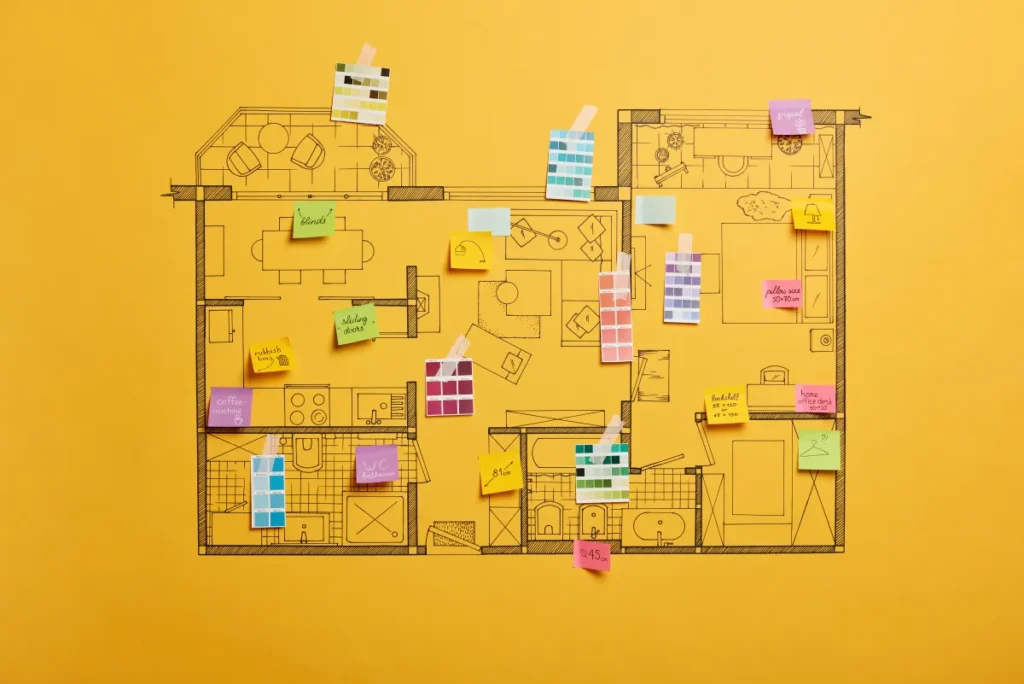
- Create a tile layout map (starting point, feature wall, niche size, grout joint, and trim locations).
- Select tile, grout, trims, and fixtures; order early so lead times don’t control the schedule.
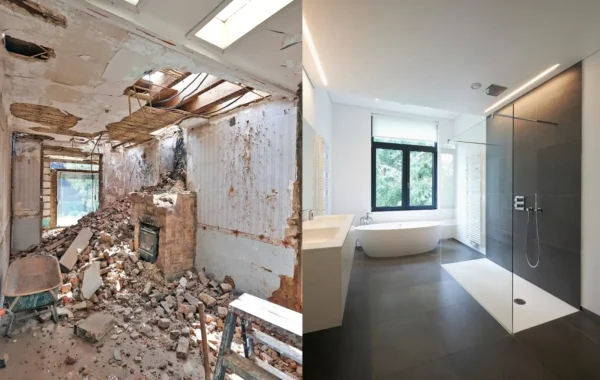
- Complete demolition and any required rough-in work.
- Prep substrates and complete waterproofing in wet areas before any tile goes up.
- Install tile, grout, and allow proper cure time; then install fixtures, glass, and accessories.
- Finish punch-list items and complete any required inspections, depending on the work performed.
| Decision | Good default | What it affects |
|---|---|---|
| Shower wall layout | Simple stack or offset | Cut complexity, niche alignment |
| Floor tile finish | Matte/textured porcelain | Traction, daily safety |
| Grout color | Match or intentional contrast | Maintenance look, visual “busyness” |
| Trim strategy | One consistent metal finish | How “finished” edges look |
Finishes That Look Good Longer (Practical Picks)
Bathrooms punish materials. Steam, soaps, hard water, and daily abrasion show up fast, so practical picks matter as much as style.
Tile And Finish Choices That Hold Up
- Porcelain: Dense, low-absorption, and available in convincing stone and concrete looks.
- Ceramic: Excellent for walls and lighter-wear zones, with lots of color options.
- Natural stone: Beautiful, but it can need sealing and careful cleaners; plan for ongoing maintenance if you choose it.
- Wet-zone traction: Prioritize slip resistance on floors and shower pans, even if you keep walls smoother.
Grout That Stays Cleaner
Grout does a lot of visual work. Matching grout looks calmer and hides irregular cuts; contrasting grout highlights the pattern and can show wear sooner.
- Choose grout width intentionally (tighter joints read more modern).
- Consider stain-resistant grout options if you want lower-maintenance light colors.
- Test grout samples in your bathroom lighting before you commit.
Maintenance Habits That Protect Tile And Grout
Good maintenance doesn’t require harsh chemicals. A few habits keep tile looking sharp and help you catch small issues early.
- Squeegee shower walls after use and run the exhaust fan to reduce mineral buildup.
- Use a pH-neutral cleaner designed for tile and stone; avoid abrasive powders.
- Re-caulk changes of plane (corners and transitions) when you see cracking or separation.
- Follow manufacturer guidance for sealing, especially with natural stone and some cement grouts.
Small Details That Change The Feel (Lighting/Hardware)
Tile doesn’t live in isolation. Lighting temperature, mirror size, and metal finishes decide whether the tile feels crisp, warm, or flat.
Layered Lighting That Flatters Tile
Plan for three layers—ambient, task, and accent—so the bathroom works in the morning and still feels relaxing at night.
- Ambient: Even overhead light that prevents shadows across the room.
- Task: Mirror lighting placed to reduce facial shadows for grooming.
- Accent: A niche light, toe-kick glow, or a small decorative fixture to add depth.
Hardware And Trim Coordination
Choose a small set of finishes and repeat them. That keeps the room from feeling like a mix of leftovers and helps the tile read as “designed.”
- Coordinate tile edge trims with your faucet and shower trim (or keep trims neutral in chrome/nickel).
- Pick one drain finish and stick with it; drains stand out on patterned floors.
- Keep switch plates, towel bars, and cabinet pulls consistent so the room feels cohesive.

Budget & Timeline Snapshot (Typical)
US Construction & Remodeling Corp. helps Sacramento homeowners and California clients lock tile choices early, so material lead times and waterproofing details don’t derail the schedule. Bring your inspiration photos, and we’ll translate them into a layout plan that fits your space and budget.
Book a planning call to talk through timing and selections, or call Call.
Budget Ranges & Schedule (Typical)
- Tile refresh (same layout): often $3,000–$10,000 and about 1–2 weeks on site after materials arrive.
- Partial remodel (new vanity + tile, same footprint): often $10,000–$25,000 and about 2–4 weeks on site.
- Full remodel (layout changes, plumbing/electrical work): often $20,000–$45,000+ and about 3–6 weeks on site.
- Main drivers: waterproofing scope, wall/floor prep, tile size/pattern, and specialty material lead times.
Resale And ROI Priorities
If resale matters, prioritize choices that feel clean and broadly appealing. You don’t need “boring,” but you do need cohesion.
- Invest in a bright, well-finished shower and durable floor tile with good traction.
- Keep bold patterns to one focal area (niche back, floor “rug,” or a single feature wall).
- Choose widely available hardware finishes so future replacements match without a full redo.
Helpful Links
Related reading
- Bathroom Remodel 3D Design: Tile, Fixtures & Lighting Preview
- Kitchen Remodel 3D Ideas: Layout Planning Guide
- Standard Bathroom Sink Size: California Homeowner Guide
- Small Bathroom Designs With Shower: California Guide
- Wood Siding Homes: A California Guide
- Home Siding Options in California: Materials, Checks & Timeline
Frequently Asked Questions
Porcelain is a common go-to because it’s dense and handles moisture well. For floors, prioritize traction and cleanability over a glossy look.
- Choose a matte or lightly textured finish in wet areas.
- Use smaller tiles (or mosaics) where you need more slope, such as shower pans.
- Ask for slip-resistance guidance from the tile manufacturer or supplier.
Often, yes. Full-height tile makes the shower feel taller and reduces painted surfaces in a high-moisture zone. If you’re balancing budget, prioritize full height on the main shower walls first.
Two or three tile types usually looks the most intentional: one for the shower walls, one for the floor, and an optional small accent (like a niche back). More than that can feel busy, especially in smaller bathrooms.
Epoxy grout can be a smart upgrade if you want better stain resistance and less routine scrubbing. It costs more and can be more demanding to install, so it works best when you value long-term maintenance savings.
Reduce visual breaks and keep patterns simple. A few targeted choices usually create the biggest impact.
- Use one main floor tile throughout the room.
- Keep grout close in tone to the tile for a calmer look.
- Run shower tile to the ceiling and use strong, even lighting.
It depends on the scope. A cosmetic re-tile may not require a permit, while moving plumbing, altering electrical, changing ventilation, or modifying walls often can. Check with your local city or county building department so the project stays compliant.
Licensed, insured & trusted local contractor
US Construction & Remodeling Corp.
4424 Freeport Blvd, Sacramento, CA, 95822
Phone: +1 (916) 234-6696
CSLB License #: 1117562 Fully licensed and insured.
Related articles
- Gutters Contractor In San Francisco
- Bathroom Ideas for California Homes: Layout, Materials & Value
- Siding Permit Requirements in Arden: Checklist, Timeline & FAQs